

How to Beat Jet Lag: Science-Backed Tips That Work
Jet lag is the price you pay for crossing time zones quickly. Your body’s internal clock says it is 3:00 AM, but the sun is up and your hotel breakfast closes in an hour. You are exhausted at noon and wide awake at midnight. For a trip that is only 7-10 days long, losing 3-5 days to jet lag feels like a waste.
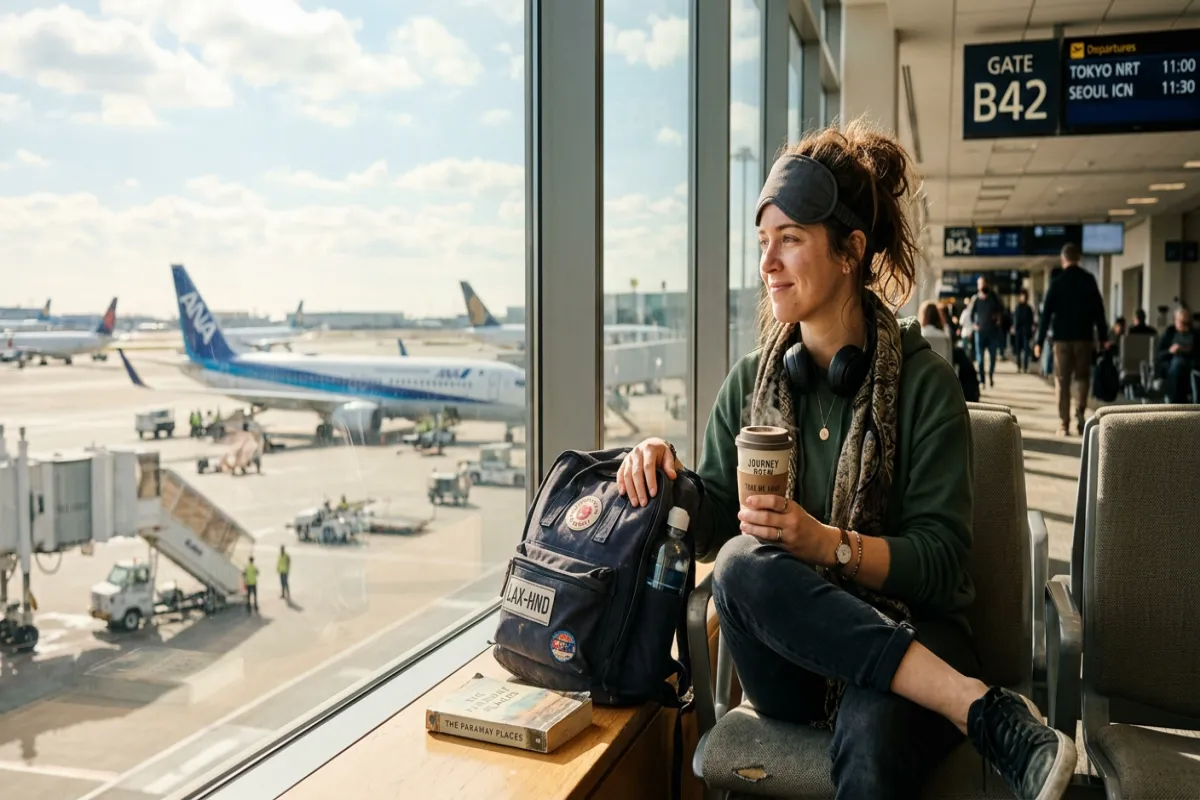
The good news: jet lag is not random. It follows predictable biological patterns, and research from sleep scientists gives us clear strategies to reduce it. This guide covers what actually works, based on published studies, not wellness blog speculation.
What Causes Jet Lag
Your body runs on a 24-hour internal clock called the circadian rhythm. This clock is controlled by the suprachiasmatic nucleus (SCN) in your brain, which uses light signals from your eyes to synchronize sleep, hormone release, body temperature, and digestion with the local day-night cycle.
When you fly across time zones, your internal clock stays locked to your departure time zone. The result is a mismatch between your biology and your environment. Your SCN needs to shift, but it can only adjust by about 1-1.5 hours per day naturally. That means a 6-hour time zone change takes 4-6 days to fully resolve without intervention.
Symptoms Beyond Sleepiness
Jet lag is not just about being tired. Common symptoms include:
- Difficulty falling asleep or staying asleep at appropriate times
- Daytime fatigue and brain fog
- Digestive issues (your gut has its own circadian clock)
- Difficulty concentrating and slower reaction times
- Mood changes, irritability
- Reduced appetite or appetite at odd hours
A study published in The Lancet found that cognitive performance drops measurably for several days after crossing 6+ time zones. This is relevant if you are traveling for business meetings or need to make decisions in the first day or two.
Pre-Flight Preparation (2-3 Days Before)
The single most effective jet lag strategy starts before you board the plane. Shifting your sleep schedule in the right direction gives your circadian clock a head start.
For Eastward Travel
You need to advance your clock (go to sleep earlier, wake up earlier). For 2-3 days before departure:
- Go to bed 30-60 minutes earlier each night
- Wake up 30-60 minutes earlier each morning
- Get bright light exposure immediately after waking (sunlight or a 10,000 lux light therapy lamp)
- Avoid bright light in the evening, especially blue light from screens
- Take 0.5mg melatonin 5 hours before your current bedtime on the last 1-2 nights before departure
For Westward Travel
You need to delay your clock (stay up later, sleep in later). For 2-3 days before departure:
- Go to bed 30-60 minutes later each night
- Sleep in 30-60 minutes later each morning (if your schedule allows)
- Get bright light in the evening
- Avoid bright morning light (sunglasses if you go outside early)
This pre-shift approach is supported by research from the Sleep Research Society, which found that pre-adapting sleep schedules by even 1-2 hours significantly reduced jet lag severity on arrival.
When building your travel itinerary on Yopki, block out the 2-3 days before departure as “pre-adjustment days” and note your target sleep and wake times. Having it in your trip plan makes it easier to follow through.
During the Flight
The flight itself is a transition period. Use it strategically.
Set Your Watch Immediately
As soon as you board, change your watch and phone to the destination time zone. Start thinking in destination time. This mental shift influences your behavior for the rest of the flight.
Sleep Strategically
Whether to sleep on the plane depends on when you land:
- Landing in the morning: Sleep on the plane. You need to arrive with enough energy to stay awake through a full day. Bring an eye mask, earplugs, and a neck pillow.
- Landing in the evening: Stay awake during the flight (or limit sleep to a short nap). You want to be tired enough to fall asleep at a normal destination bedtime.
- Landing mid-afternoon: A few hours of sleep on the plane is fine, but set an alarm so you do not sleep the entire flight. You still need to make it to a reasonable bedtime.
Hydration and Diet
- Drink water consistently. The cabin humidity is 10-20%, far below the 30-60% your body prefers. Dehydration worsens fatigue and headaches. Aim for 8 ounces per hour of flight time.
- Limit alcohol. Alcohol disrupts sleep quality, dehydrates you, and impairs your circadian adjustment. One glass of wine is fine. Three is not.
- Limit caffeine after the midpoint of your flight. Caffeine has a 5-6 hour half-life. Drinking coffee 6 hours before your destination bedtime will make it harder to fall asleep on arrival.
- Eat according to destination time. If it is breakfast time at your destination, eat breakfast foods. Your digestive clock responds to meal timing.
Arrival Strategy
The first 24 hours at your destination are the most critical window for circadian adjustment. What you do during this period determines how quickly you adapt.
Sunlight Is the Primary Tool
Sunlight is the strongest signal your circadian clock responds to. It is more powerful than melatonin, caffeine, or willpower. But the timing of light exposure matters enormously.
For eastward travel (you need to advance your clock):
- Seek bright morning sunlight as early as possible after arrival
- Spend 30-60 minutes outdoors in the morning
- Avoid bright light in the late afternoon and evening
- Wear sunglasses if you must be outdoors in the evening
For westward travel (you need to delay your clock):
- Avoid bright morning light for the first 1-2 days (wear sunglasses outdoors in the morning)
- Seek bright afternoon and early evening light
- Stay active and outdoors in the late afternoon
Research published in the Journal of Clinical Endocrinology and Metabolism demonstrated that properly timed light exposure can shift the circadian clock by 2-3 hours per day, roughly doubling the natural adjustment rate.
Melatonin Timing
Melatonin is not a sleeping pill. It is a timing signal that tells your body “night is coming.” Its effectiveness depends entirely on when you take it.
- Eastward travel: Take 0.5-3mg at your destination’s bedtime for the first 3-4 nights. This helps your body recognize the new nighttime.
- Westward travel: Melatonin is generally less useful. If you wake up too early (4:00 AM local time), take 0.5mg to help you fall back asleep.
- Dose: Research from MIT suggests 0.3-0.5mg is actually more effective than higher doses for circadian shifting. Higher doses (3-5mg) work more as a mild sedative but do not improve the clock-shifting effect.
Meal Timing
Your digestive system has its own circadian clock. Eating at local meal times helps reinforce the new schedule. Even if you are not hungry, have a small breakfast at the local breakfast time and a proper lunch and dinner on the local schedule. Avoid heavy late-night meals, which confuse your gut clock.
Exercise
Moderate exercise on arrival day helps with adjustment. A 30-minute walk, jog, or hotel gym session in the morning or afternoon can reduce fatigue and help reset your body clock. Avoid intense exercise within 2-3 hours of your intended bedtime, as it raises core body temperature and delays sleep onset.
East vs. West: Why Direction Matters
Research published in the journal Chaos (2016) confirmed what frequent travelers know from experience: eastward travel causes worse jet lag than westward travel of the same distance.
Why Eastward Is Harder
Your natural circadian period is slightly longer than 24 hours (about 24.2 hours for most people). This means your body naturally wants to stay up later and wake up later. Westward travel aligns with this tendency. You delay your clock, which is what your body already wants to do. Eastward travel fights it. You need to advance your clock, falling asleep earlier than your body wants.
Recovery Time by Direction
- 3 time zones west: 2-3 days recovery
- 3 time zones east: 3-4 days recovery
- 6 time zones west: 4-5 days recovery
- 6 time zones east: 6-8 days recovery
- 9 time zones west: 5-7 days recovery
- 9 time zones east: 8-12 days recovery
For trips crossing 9+ time zones, some researchers suggest it may actually be faster to adjust by going “the wrong way around.” For example, if you fly 10 zones east, your body might adapt faster by delaying 14 hours (westward direction) rather than advancing 10 hours.
The First 3 Days: A Recovery Plan
Day 1
Arrive and resist the nap. If you must nap, limit it to 20-30 minutes before 2:00 PM local time. Get outside for sunlight. Eat at local meal times even if your appetite is off. Go to bed at a normal local time (10:00-11:00 PM). Use melatonin if traveling east.
Day 2
You may wake up very early (3:00-5:00 AM). That is normal. Stay in bed in the dark until at least 6:00 AM if possible. Get morning sunlight. Plan lighter activities for the morning when your energy is highest and avoid critical decisions during your afternoon energy dip. Go to bed at the normal time again.
Day 3
Adjustment should be noticeably better. Continue the light exposure and meal timing strategy. Most travelers crossing 5-6 time zones feel 80% adjusted by Day 3 with active management.
Plan your first days at a destination with jet lag in mind. Build recovery time into your Yopki travel itinerary. Schedule easy, flexible activities for Day 1-2 (walking tours, neighborhood exploration, casual dining) and save the packed sightseeing days for after you have adjusted.
Planning a long-haul trip? Our destination guides for Japan, Australia, and Europe include jet lag recovery tips specific to each time zone difference.
What Does Not Work
Some popular jet lag “cures” have little or no scientific support:
- Fasting for 16+ hours: The “Argonne diet” gained media attention, but controlled studies have not confirmed it works better than simple meal timing.
- Grounding or earthing: Walking barefoot to “reset your electrical charge” has no scientific basis for jet lag.
- Homeopathic jet lag remedies: Products like No-Jet-Lag tablets have not demonstrated effectiveness in controlled trials.
- Sleeping pills as a primary strategy: Sleeping pills can help you sleep but do not shift your circadian clock. You wake up rested but still on the wrong time zone. They are useful as a short-term tool alongside light and melatonin, but not as a standalone solution.
Tips for Frequent Travelers
If you cross time zones regularly for work, these additional strategies help. For a full trip planning framework that accounts for jet lag, see our complete trip planning guide.
- Stay on home time for short trips. If your trip is 48 hours or less, it may be easier to eat and sleep on your home schedule rather than adjusting twice.
- Choose flights strategically. Red-eye flights that land in the morning work well for eastward travel. Daytime flights work better for westward travel.
- Invest in good sleep tools. A quality eye mask (Manta Sleep is popular), moldable earplugs, and a compact neck pillow make a measurable difference over time.
- Track your patterns. Note which strategies work best for your body. Individual variation in circadian flexibility is significant.
Frequently Asked Questions
How long does jet lag last?
Jet lag typically lasts 1-1.5 days per time zone crossed. A 3-zone change takes 3-5 days to fully adjust. A 9-zone change can take 7-12 days without intervention. Strategic light exposure, melatonin timing, and meal scheduling can cut recovery time roughly in half.
Does melatonin help with jet lag?
Yes. Melatonin is one of the most studied and effective jet lag tools when taken at the right time. For eastward travel, take 0.5-3mg at your destination’s bedtime. Timing matters more than dose. Start with 0.5mg.
Is jet lag worse going east or west?
Eastward travel causes worse jet lag because it requires advancing your body clock (going to sleep earlier), which works against your body’s natural tendency to drift later. Eastward trips take about 50% longer to recover from than equivalent westward trips.
Should you sleep on the plane to avoid jet lag?
If you land in the morning, sleep on the plane so you can power through the day. If you land in the evening, stay awake so you are tired enough to sleep at a normal local bedtime. The goal is arriving ready to sync with local time.
What is the best way to prevent jet lag?
Combine three strategies: shift your sleep schedule 1-2 hours toward your destination time for 2-3 days before departure, use timed light exposure and melatonin, and adopt the local meal and sleep schedule immediately on arrival. No single trick eliminates jet lag, but these strategies together reduce recovery time by 50% or more.
Planning an international trip? Build your itinerary on Yopki with jet lag recovery days built in. Schedule lighter activities for your first days and save the must-do sightseeing for when your body has caught up.