| US National Parks Quick Facts | |
|---|---|
| Total Parks | 63 national parks in the US system |
| Annual Pass | America the Beautiful Pass: $80/year, covers all parks |
| Most Visited | Great Smoky Mountains, Grand Canyon, Zion, Yellowstone, Rocky Mountain |
| Best For Beginners | Zion, Grand Canyon, Acadia, Great Smoky Mountains |
| Best Time | April to October for most parks (varies by region) |
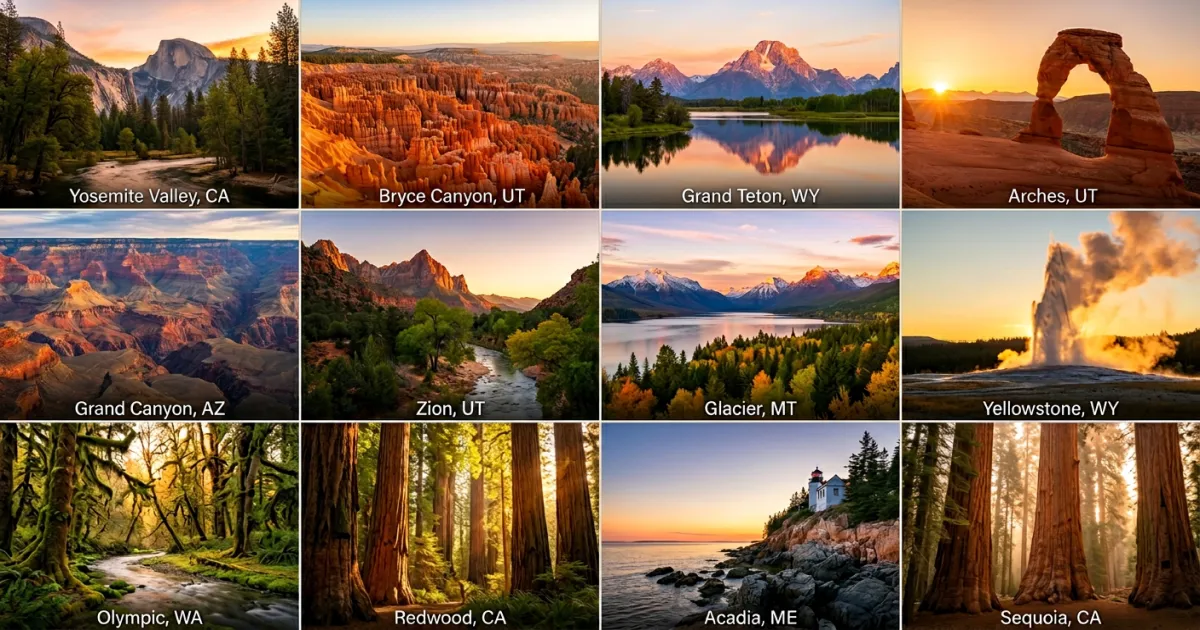
The US National Park System protects some of the most spectacular landscapes on Earth, from the geysers of Yellowstone to the granite walls of Yosemite to the slot canyons of Utah. With 63 national parks spread across the country, choosing where to start can feel overwhelming. This guide breaks down the best parks by region and interest, with practical tips for planning your first or next national parks trip.
For a broader trip planning framework, our how to plan a trip guide covers the fundamentals.
Essential Tips for National Park Trips
Buy the America the Beautiful Pass ($80). It covers entry to all 400+ national park sites for a full year. Individual park entry runs $30 to $35 per vehicle, so the pass pays for itself after 2 to 3 parks.
Book early. Popular parks in summer book up months ahead. Campgrounds at Yellowstone, Zion, and Yosemite release 6 months in advance and fill within hours. In-park lodges book 6 to 12 months out.
Check for timed entry or permits. Arches, Rocky Mountain, Glacier, and Haleakala (sunrise) now require advance reservations during peak season. Zion’s Angels Landing requires a lottery permit. Check NPS.gov before every trip.
Arrive early. Parking lots at popular trailheads fill by 8 to 9 AM in summer. First-come-first-served campgrounds fill by early afternoon. The early bird avoids the crowds and the heat.
Shoulder season is your friend. September and October offer smaller crowds, pleasant weather, and fall colors at many parks. April and May bring wildflowers and fewer people. You trade peak conditions for a dramatically better experience.
Best Parks by Region
The West: Canyon Country
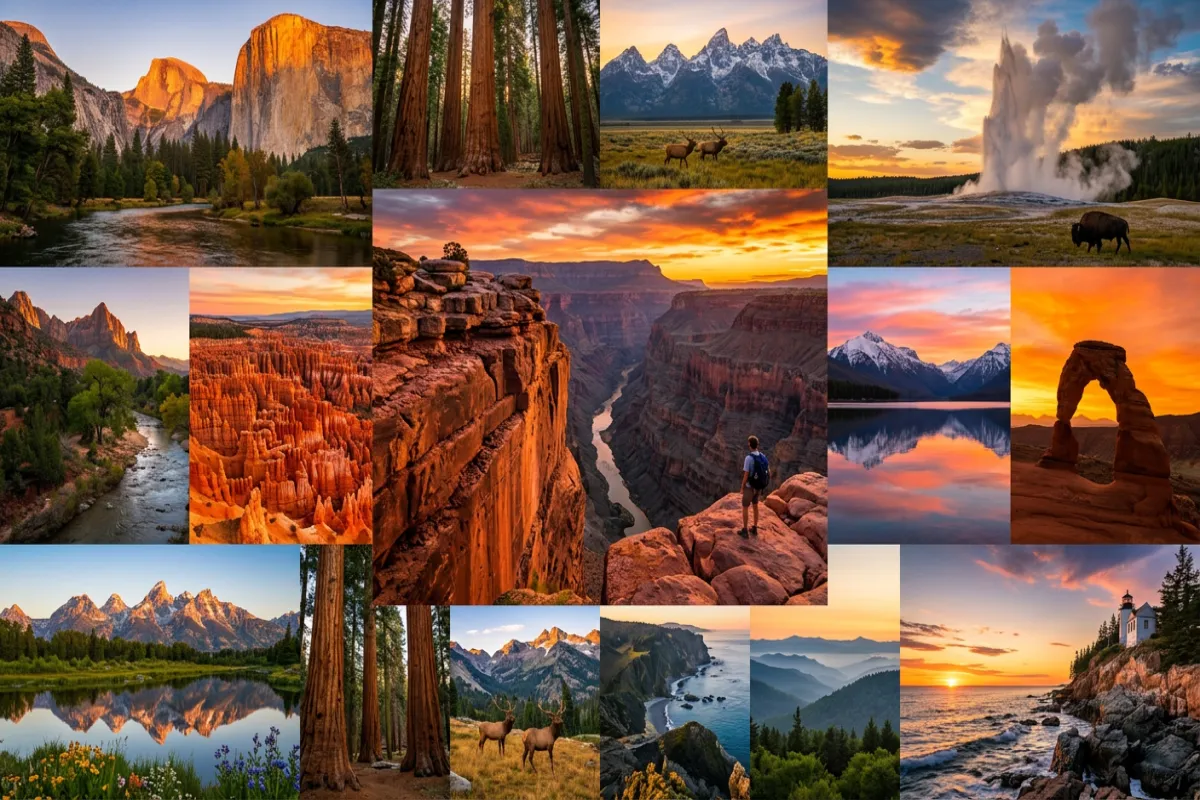
Utah and Arizona have the highest concentration of dramatic parks in the country. Red rock canyons, natural arches, and desert landscapes that look like another planet.
- Grand Canyon – The South Rim is the most accessible and iconic. Walk along the rim, hike Bright Angel Trail, or raft the Colorado River. Open year-round.
- Zion – Red cliffs, The Narrows slot canyon, and Angels Landing. Utah’s most visited park. Shuttle system in the main canyon (March through November).
- Utah’s Mighty Five – Zion, Bryce Canyon, Capitol Reef, Arches, and Canyonlands make one of the best road trip loops in America. See our dedicated Utah parks guide.
The West: Mountains and Volcanoes
- Yosemite – Granite walls, waterfalls, and giant sequoias. Half Dome and El Capitan are iconic. Yosemite Valley is the most visited area; Tuolumne Meadows offers more solitude.
- Glacier – Going-to-the-Sun Road is one of the most spectacular drives in North America. Alpine lakes, glaciers (shrinking), and grizzly bears. Timed entry required in summer.
- Sequoia and Kings Canyon – Home to the largest trees on Earth by volume. Less crowded than Yosemite with equally impressive scenery.
- Redwood – The tallest trees on Earth along Northern California’s coast. Free entry. Combine with the California coast road trip.
The Northwest: Wilderness
- Olympic – Temperate rainforest, wild Pacific beaches, and alpine peaks in one park. The Hoh Rainforest is unlike anything else in the lower 48.
- Denali – North America’s highest peak (20,310 feet) and 6 million acres of Alaskan wilderness. Bus tours deep into the park for grizzlies, caribou, and wolves.
Yellowstone and Grand Teton
The crown jewels of the system and the parks that started it all.
- Yellowstone – The world’s first national park. Geysers (Old Faithful), hot springs (Grand Prismatic), canyons, and the best wildlife viewing in the lower 48 (Lamar Valley for wolves, bison, bears).
- Grand Teton – The most dramatic mountain front in the Rockies. Jenny Lake, Snake River floats, and the town of Jackson as your base.
The East Coast
- Acadia – New England’s only national park, on the Maine coast. Cadillac Mountain (first sunrise in the US from October through March), carriage roads, and rocky shores.
- Great Smoky Mountains – The most visited national park in the US (free entry). Appalachian forests, waterfalls, and wildlife. Gateway towns of Gatlinburg and Pigeon Forge.
The Tropics
- Haleakala (Maui) – Watch sunrise from 10,000 feet above a volcanic crater. Permit required for sunrise viewing. The drive up and the crater hike are unforgettable.
- Everglades – The largest tropical wilderness in the US. Airboat tours, alligators, and the unique River of Grass ecosystem. Best from December through April (dry season).
- Virgin Islands (St. John) – Two-thirds of St. John is national park. Some of the best beaches and snorkeling in the Caribbean. No passport needed.
Best National Park Road Trips
Utah Mighty Five Loop (7-10 days)
Start in Las Vegas or Salt Lake City. Drive a loop through Zion, Bryce Canyon, Capitol Reef, Arches, and Canyonlands. About 900 miles total. See our Utah National Parks guide for the full itinerary.
Yellowstone and Grand Teton (5-7 days)
Fly into Jackson Hole. Explore Grand Teton (2 days), drive through Yellowstone (2 to 3 days), and return via the scenic route. See our Yellowstone guide.
California Parks Loop (7-10 days)
Combine Yosemite, Sequoia/Kings Canyon, and Death Valley with the California coast for a diverse road trip through mountains, deserts, and coastline.
Alaska’s Big Three (10-14 days)
Fly into Anchorage. Drive to Kenai Fjords (2 days), Denali (2 to 3 days), and Fairbanks (2 days). The drives between parks are spectacular.
Budget Tips for National Park Trips
Camping is the best value. Park campgrounds run $20 to $35 per night. National Forest and BLM land near parks often has free or very cheap ($5 to $15) camping. You stay in the landscape instead of driving to it.
Pack your own food. In-park dining options are limited and overpriced. A cooler with sandwich supplies, fruit, and snacks saves significantly. Cook at your campsite for the best value.
Free entrance days. The NPS offers several free-entry days each year (typically MLK Day, National Park Week in April, Veterans Day, and a few others). Check NPS.gov for the current year’s dates.
Typical daily costs: Budget ($60 to $100/day camping and cooking), mid-range ($150 to $250/day with lodging and restaurants), luxury ($300 to $500+/day with in-park lodges and guided tours).
Planning Tools
Ready to start building your national parks trip? Our free AI trip planner can generate a custom itinerary based on your dates, budget, and interests. Or browse all our destination guides for park-specific planning details.