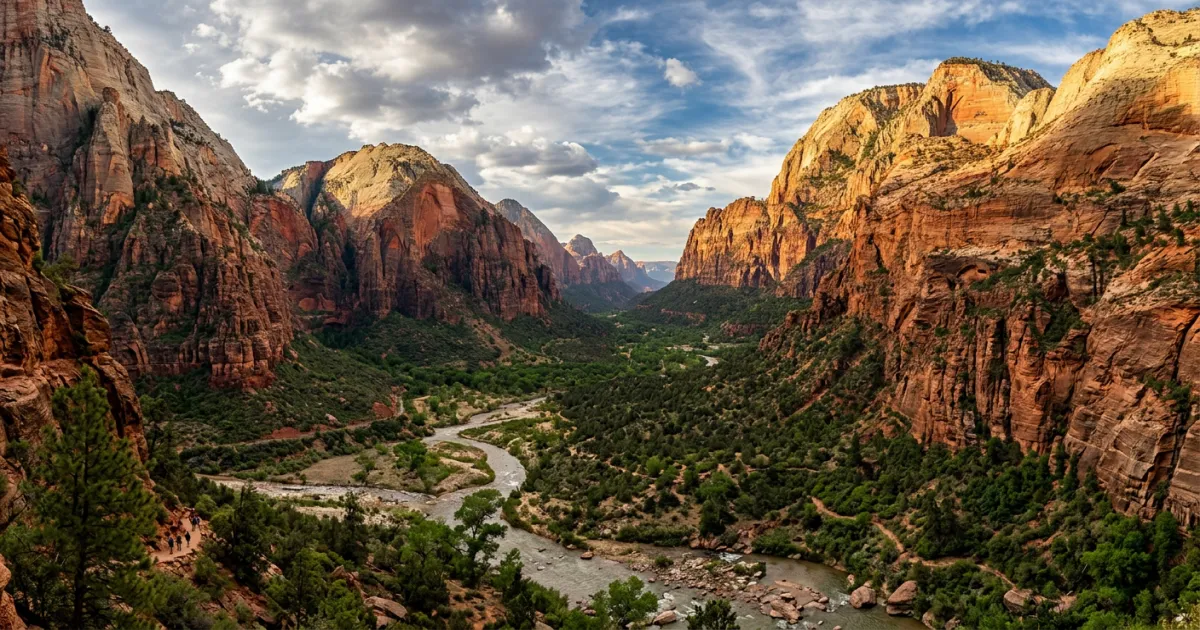
Zion National Park is one of the most dramatic landscapes in the American West. Towering sandstone cliffs in shades of red, orange, and cream rise over 2,000 feet above the Virgin River, which carved this canyon over millions of years. The park is home to two of the most famous hikes in the national park system: Angels Landing (a knife-edge ridge with chains) and The Narrows (hiking upstream through a slot canyon). This guide covers everything you need to plan your trip. For a broader approach, see our step-by-step trip planning guide.
Key Planning Facts
- Location: Southwestern Utah, about 2.5 hours northeast of Las Vegas and 4.5 hours south of Salt Lake City
- Currency: US Dollar (USD)
- Language: English
- Park entrance fee: $35 per vehicle (7-day pass). America the Beautiful annual pass: $80 (covers all national parks)
- Best months to visit: Late September to October and April to May
- Average daily budget: $100 to $250 per person depending on camping vs. hotel
- Time zone: Mountain Time (MT). Utah does not observe daylight saving time
- Nearest town: Springdale, Utah (directly at the park’s south entrance)
- Angels Landing permit: Required. Lottery system through recreation.gov. $6 application fee + $3 per person if selected
Best Time to Visit Zion
Fall (September to November)
The best overall time. Late September through October offers mild temperatures (60 to 80 degrees Fahrenheit in the canyon), smaller crowds after Labor Day, stunning fall foliage, and good conditions for most hikes including Angels Landing and The Narrows. November gets cooler and quieter.
Spring (April to May)
Warming temperatures (55 to 80 degrees Fahrenheit), wildflowers, and strong waterfalls from snowmelt. April can still be cool, and some higher-elevation trails may have snow. The Narrows may be closed in early spring due to high water. May is excellent.
Summer (June to August)
Hot. Canyon temperatures regularly exceed 100 degrees Fahrenheit in July and August. The Narrows is accessible (water levels permitting) and the cool river water is refreshing. Peak crowds. The shuttle system runs, and the main parking area fills by 8 AM. Start hikes early (before 7 AM) to beat the heat. Monsoon season (July to September) brings afternoon thunderstorms and flash flood risk in slot canyons.
Winter (December to February)
Cold (30 to 55 degrees Fahrenheit) with occasional snow. The fewest visitors and a beautiful, quiet park. Many trails are accessible, though chains on Angels Landing can be icy. The shuttle does not run continuously in winter (check current schedule). Fewer services in Springdale. A peaceful time to visit if you are prepared for cold.
How Long to Spend in Zion
2 to 3 days covers the highlights: one day for the main canyon (scenic drive, Riverside Walk, Angels Landing if you have a permit), one day for The Narrows, and optionally one day for the Kolob Canyon section or the East Side (Canyon Overlook Trail). A single full day is possible but rushed. 4 to 5 days lets you hike more trails and combine Zion with Bryce Canyon (1.5 hours east).
Budget and Costs
Daily Budget Ranges
- Budget (camping): $60 to $100 per person per day. Campground ($30 to $45 per night), packed food, free hiking, shuttle
- Mid-range: $150 to $250 per person per day. Springdale hotel ($150 to $300 per night), restaurant meals, Narrows gear rental
- Comfortable: $300 and up per person per day. Zion Lodge ($200 to $430 per night) or upscale Springdale hotel, guided tours, dining out
Key Costs
- Park entrance: $35 per vehicle (7-day pass). $20 per person on foot or bike. America the Beautiful annual pass: $80
- Angels Landing permit: $6 per application (up to 6 people) + $3 per person if selected. Lottery through recreation.gov. Seasonal lottery opens quarterly. Day-before lottery applications accepted 12:01 AM to 3 PM Mountain Time daily
- Narrows gear rental: $25 to $50 per person (dry pants, neoprene socks, hiking stick, waterproof boots). Available from multiple outfitters in Springdale. Highly recommended for comfort and safety
- Springdale hotels: $93 to $150 off-peak, $200 to $400 peak season. Book well in advance for summer and fall weekends
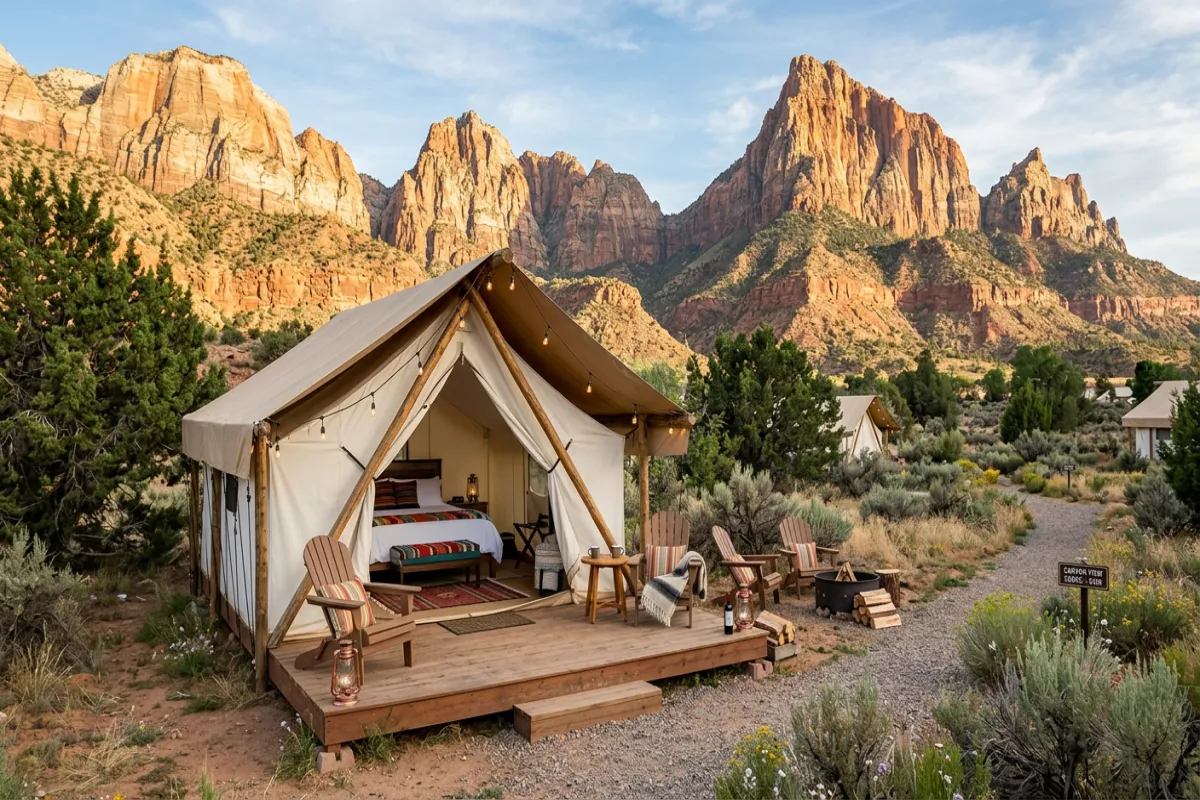
- Camping: Watchman Campground: $30 per night (reservable). South Campground: $25 per night (first-come, first-served). Lava Point: $25 per night (primitive, seasonal)
- Meals in Springdale: Casual restaurant: $15 to $30. There are limited dining options, so consider bringing food, especially for camping trips
Use our free travel budget template to plan your Zion expenses.
Getting There and Getting Around
Driving
From Las Vegas: 2.5 hours northeast via I-15. From Salt Lake City: 4.5 hours south. From Bryce Canyon: 1.5 hours west. From Grand Canyon North Rim: about 3 hours. A rental car is needed to reach Zion, but within the canyon you use the shuttle system.
Shuttle System
Zion Canyon Scenic Drive is closed to private vehicles from early spring through late fall. The free park shuttle runs from the Zion Canyon Visitor Center to the Temple of Sinawava (end of the road) with 9 stops along the 6-mile route. Shuttles run every 5 to 10 minutes during peak season. In winter, private vehicles can drive the scenic drive when the shuttle is not operating.
The Springdale shuttle connects the town to the park visitor center (free, runs on a separate loop).
E-Bike Alternative
Renting an e-bike in Springdale and riding the scenic drive is increasingly popular. It provides flexibility to stop anywhere without waiting for the shuttle. E-bike rentals are available from multiple outfitters in Springdale ($50 to $80 per day).
Parking
The main visitor center parking lot fills by 8 AM during peak season. Park in Springdale and take the town shuttle. Do not count on finding parking at the visitor center after early morning.
Must-See Hikes and Experiences
Angels Landing
One of the most famous hikes in the national park system. A 5.4-mile round-trip trail with 1,488 feet of elevation gain ending on a narrow ridge with 1,000-foot drops on both sides. The final half-mile uses chains anchored in rock. Not for those with a fear of heights. The views from the top over Zion Canyon are extraordinary. Permit required through the lottery system on recreation.gov. Apply for the seasonal lottery quarterly or the day-before lottery.
The Narrows
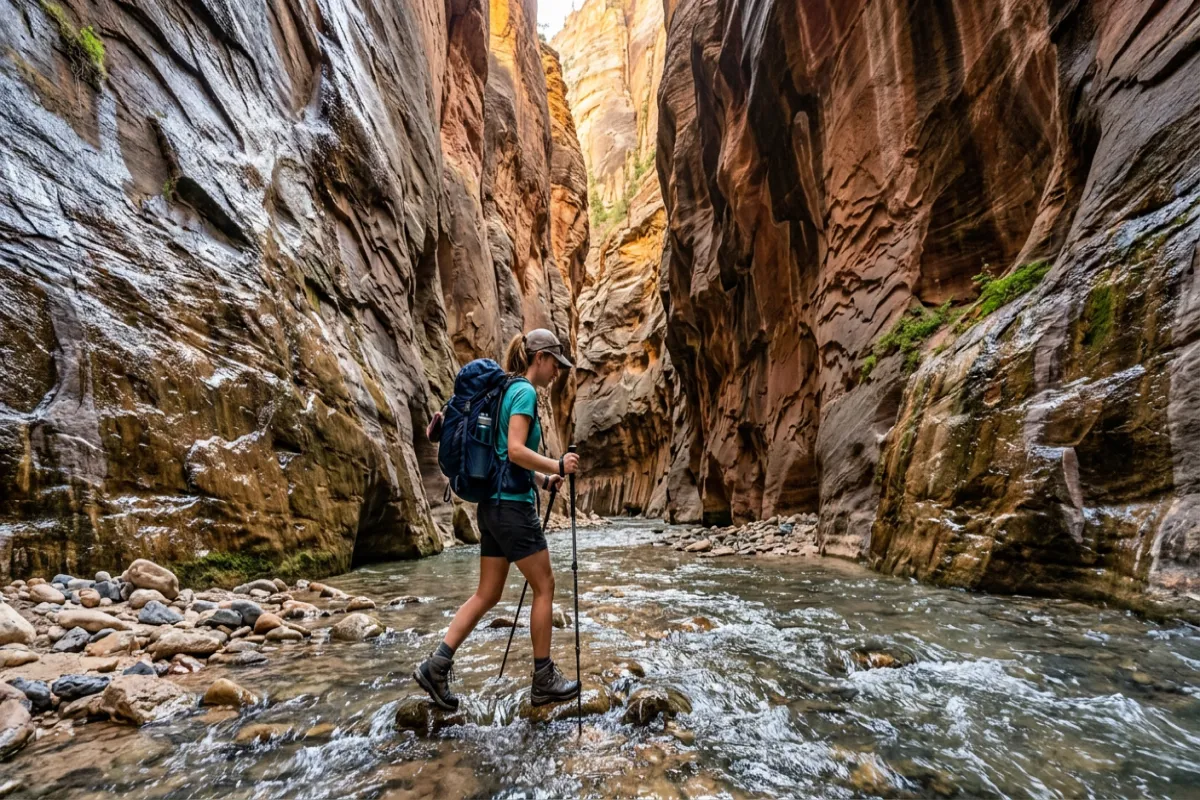
Hike upstream through the Virgin River in a narrow slot canyon with walls up to 2,000 feet high. You walk in the river for most of the hike (water ranges from ankle to waist-deep depending on flow). The bottom-up hike (starting from the Riverside Walk) does not require a permit. Rent specialized footwear (dry boots, neoprene socks, and a walking stick) from Springdale outfitters. Flash flood danger is real; do not hike if rain is forecast. No permit needed for the day hike from the bottom.
Canyon Overlook Trail
A 1-mile round-trip trail near the east entrance tunnel with dramatic views of lower Zion Canyon. Short, moderately steep, and one of the best views-per-effort ratios in the park. Good alternative if you do not get an Angels Landing permit.
Observation Point
The highest viewpoint in Zion Canyon at 6,521 feet. The main trail (East Rim Trail) is 8 miles round trip with 2,148 feet of elevation gain. Also accessible from the east side via a shorter route. Less crowded than Angels Landing with arguably better views.
Emerald Pools
Three pools connected by a moderate trail system. Lower Emerald Pool is an easy 1.2-mile round trip (accessible, paved). Middle and Upper pools add more distance and difficulty. A good option for families and those wanting a gentler hike.
Zion Canyon Scenic Drive
The 6-mile drive (by shuttle or e-bike) through the heart of the canyon. Sheer sandstone walls, the Virgin River, and pull-offs for short walks. The Big Bend viewpoint is one of the best photo spots in the park.
Kolob Canyon
A separate, less-visited section of Zion accessible from I-15 (about 40 minutes from the main canyon). Kolob Arch is the second-longest natural arch in the world (287 feet). The 5-mile Timber Creek Overlook Trail offers views without crowds. An excellent addition if you have an extra day.
Safety and Practical Tips
- Flash floods: The most serious danger in Zion. Never hike The Narrows or any slot canyon if rain is forecast. Check the NOAA flash flood forecast and NPS current conditions before hiking. Monsoon season (July to September) brings afternoon storms
- Heat: Summer canyon temperatures exceed 100 degrees Fahrenheit. Start hikes before 7 AM. Carry at least 1 liter of water per hour of hiking. Heat exhaustion and heat stroke are real risks
- Angels Landing chains: The final section has chains bolted into rock along a narrow ridge. Do not attempt in wet, icy, or windy conditions. Wear grippy shoes. Keep one hand on the chain at all times in the chain section. Not suitable for young children or anyone uncomfortable with heights
- Narrows footwear: Do not attempt The Narrows in regular shoes or sandals. Rent specialized gear (dry boots with felt soles, neoprene socks, hiking stick) from Springdale outfitters. The river bottom is slippery and rocks are uneven
- Water: Carry more than you think you need. Water stations are available at the visitor center and some shuttle stops but not on most trails. Fill up before every hike
- Arrive early: Parking fills by 8 AM in peak season. Start hikes early to beat heat and crowds. The first shuttle runs at 6 AM
- Cell service: Limited in the canyon. Available in Springdale. Download maps and trail info before entering the park
Sample 3-Day Zion Itinerary
Day 1: Zion Canyon and Angels Landing
Arrive early. Take the shuttle to the Grotto stop. If you have an Angels Landing permit, hike it in the morning (3 to 5 hours round trip). Afternoon: Riverside Walk (2 miles round trip, paved, ends at the start of The Narrows). Ride the shuttle to various stops along the scenic drive. Sunset from Canyon Junction Bridge.
Day 2: The Narrows
Pick up rental footwear from a Springdale outfitter (open early). Take the shuttle to the Temple of Sinawava (last stop). Walk the Riverside Walk, then continue into The Narrows. Most day hikers go 2 to 5 miles upstream and turn around. Allow 4 to 8 hours depending on how far you go. The deeper you go, the more dramatic the canyon. Afternoon: rest in Springdale.
Day 3: East Side and Departure
Morning: drive or e-bike the Canyon Overlook Trail (near the east entrance tunnel, 1 mile round trip, incredible views). Continue through the Zion-Mt. Carmel Tunnel (a 1.1-mile tunnel carved through the rock). If time allows, drive to Kolob Canyon (40 minutes north on I-15) for the Timber Creek Overlook. Or combine with Bryce Canyon (1.5 hours east) if continuing your Utah parks trip.
Planning Your Zion Trip
Start building your custom itinerary with our free AI trip planner.
For more trip planning resources:
- Plan a Trip to the Grand Canyon
- Plan a Trip to Yellowstone
- National Park Road Trip Planner
- Free Road Trip Itinerary Template
Frequently Asked Questions
Do I need a permit for Angels Landing?
Yes. A permit is required through a lottery system on recreation.gov. Seasonal lotteries open quarterly (apply 2 months ahead). Day-before lotteries run daily (apply 12:01 AM to 3 PM Mountain Time, results at 4 PM). Cost: $6 application + $3 per person if selected.
What is the best time to visit Zion?
Late September to October (mild temps, smaller crowds, fall color) and April to May (wildflowers, waterfalls). Summer is hot (100+ degrees Fahrenheit) and crowded. Winter is cold but peaceful.
Do I need a permit for The Narrows?
No permit is needed for the bottom-up day hike (starting from Riverside Walk). A permit is required for the top-down through-hike (16 miles, overnight). Rent specialized footwear from Springdale outfitters.
How long is the Angels Landing hike?
5.4 miles round trip with 1,488 feet of elevation gain. Allow 3 to 5 hours. The final half-mile has chains along a narrow ridge with steep drop-offs. Not for those afraid of heights.
Can I drive in Zion Canyon?
Not during shuttle season (spring through fall). The free park shuttle runs along the 6-mile scenic drive. In winter, you can drive when the shuttle is not operating. E-bikes are allowed on the scenic drive year-round.
How far is Zion from Las Vegas?
About 2.5 hours (160 miles) northeast via I-15. Many visitors fly into Las Vegas and combine Zion with Bryce Canyon, Grand Canyon North Rim, and other Utah parks.
Where should I stay?
Springdale (at the park’s south entrance) has the most lodging and dining. Budget: $93 to $150/night off-peak. Peak: $200 to $400. Zion Lodge is the only in-park hotel ($200 to $430, books months ahead). Camping at Watchman ($30/night) is the most affordable and immersive option.
Is The Narrows safe?
Generally yes, with precautions. The main danger is flash floods. Never hike if rain is forecast. Check conditions at the visitor center. Rent proper footwear (dry boots, walking stick). Water levels vary by season; early spring can have dangerously high flows.
Can I combine Zion with other parks?
Yes. Bryce Canyon is 1.5 hours east. Grand Canyon North Rim is 3 hours south (open May to October). Capitol Reef is 3.5 hours northeast. A “Mighty Five” Utah parks road trip is a popular 7 to 10 day itinerary.
What should I pack?
Sturdy hiking shoes (not sandals), at least 2 liters of water per person per hike, sunscreen, hat, layers (canyon temperatures vary), rain jacket (monsoon season), and snacks. For The Narrows: rent specialized gear in Springdale.