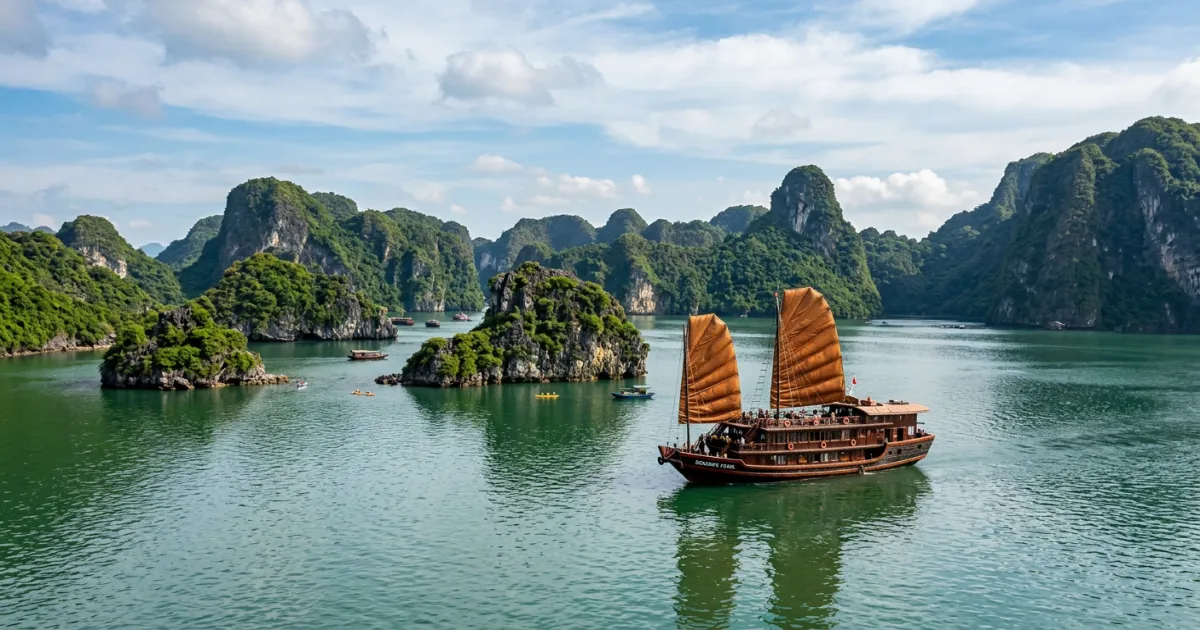
Vietnam stretches 1,000 miles along the South China Sea, from the misty mountains of the north to the rice paddies of the Mekong Delta in the south. The food alone is worth the trip, with street meals that rank among the best on earth for under $3. Add Ha Long Bay’s limestone karsts, the ancient lantern-lit streets of Hoi An, and cities with an energy unlike anywhere else, and Vietnam becomes one of the most rewarding destinations in Southeast Asia. This guide covers everything you need to plan your trip. For a broader approach, see our step-by-step trip planning guide.
Key Planning Facts
- Location: Southeast Asia, eastern Indochina Peninsula
- Currency: Vietnamese Dong (VND). Approximately 25,000 VND per 1 USD
- Language: Vietnamese (English spoken in tourist areas, limited elsewhere)
- Visa for U.S. citizens: E-visa required. Apply online at evisa.xuatnhapcanh.gov.vn. Valid for 90 days, single or multiple entry. Cost: $25 USD. Processing takes 3 business days
- Best months to visit: March to April (best overall). North: Oct to Apr. Central: Feb to Aug. South: Dec to Apr
- Average daily budget: $30 to $100 per person (Vietnam is one of the most affordable destinations in Asia)
- Time zone: Indochina Time (ICT, UTC+7)
- Flight time from U.S.: 15 to 20+ hours (typically with one connection through Seoul, Tokyo, Taipei, or a Gulf hub)
- Country size: About 1,000 miles north to south, narrow (30 to 300 miles wide)
Best Time to Visit Vietnam
Vietnam spans multiple climate zones, so the best time depends on where you are going.
Best Overall: March to April
The best time for a north-to-south trip. Pleasant weather across most of the country: warm but not too hot, minimal rain in most regions, and comfortable for both beaches and sightseeing.
Northern Vietnam (Hanoi, Ha Long Bay, Sapa)
Best: October to April. Cool and dry (15 to 25 degrees Celsius in Hanoi). Winter (December to February) can be cold and foggy in the mountains (Sapa). Spring (March to April) is the most pleasant. Summer (May to September) is hot and wet.
Central Vietnam (Hoi An, Da Nang, Hue)
Best: February to August. Rainy season runs September to January (heaviest October to November, with occasional typhoons). February through May is warm and dry. Beach season peaks June to August.
Southern Vietnam (Ho Chi Minh City, Mekong Delta)
Best: December to April (dry season). Hot year-round (28 to 35 degrees Celsius). Wet season (May to November) brings heavy afternoon downpours but temperatures remain warm.
How Long to Spend in Vietnam
8 to 10 days covers the highlights: Hanoi (2 days), Ha Long Bay (2 days), Hoi An (2 to 3 days), and Ho Chi Minh City (2 days). Two weeks lets you add Sapa (trekking), Hue (imperial citadel), the Mekong Delta, or Phu Quoc Island. Three weeks allows a thorough north-to-south journey at a relaxed pace.
Budget and Costs
Vietnam is one of the most affordable countries in Asia. Your money goes far here, especially on food, accommodation, and local transport.
Daily Budget Ranges
- Budget: $25 to $45 per person per day. Hostels ($5 to $12 per night), street food meals ($1.50 to $3), local buses and trains
- Mid-range: $50 to $100 per person per day. Hotels ($25 to $60 per night), restaurant meals, domestic flights, guided tours
- Luxury: $150 and up per person per day. Boutique hotels ($80 to $200 per night), fine dining, private guides, luxury Ha Long Bay cruises
Key Costs
- Street food meal: $1.50 to $3 (pho, banh mi, com tam). A full day of eating street food costs $6 to $10
- Restaurant meal: $5 to $15 at mid-range restaurants
- Domestic flights: $30 to $80 one way (Hanoi to Ho Chi Minh City takes about 2 hours). VietJet, Bamboo Airways, Vietnam Airlines
- Sleeper train: $20 to $50 (Hanoi to Hue or Da Nang, overnight). An experience in itself and saves a night of accommodation
- Ha Long Bay cruise: Budget day trip $30 to $60. Overnight cruise $80 to $200. Luxury cruise $250 to $500
- Motorbike rental: $5 to $10 per day. The most popular way to get around in smaller cities and the countryside. International Driving Permit required
- E-visa: $25 USD, apply online 3+ business days before travel
Use our free travel budget template to plan your Vietnam expenses.
Getting There and Getting Around
Flying In
Noi Bai International Airport (HAN) in Hanoi and Tan Son Nhat International Airport (SGN) in Ho Chi Minh City are the two main international gateways. Da Nang (DAD) also receives some international flights. No direct flights from the U.S.; connect through Seoul (ICN), Tokyo (NRT/HND), Taipei (TPE), Hong Kong, or Gulf hubs.
Getting Between Cities
Domestic flights: The fastest way to cover Vietnam’s length. Hanoi to Ho Chi Minh City: about 2 hours, $30 to $80. VietJet and Bamboo Airways are budget carriers.
Trains: The Reunification Express runs from Hanoi to Ho Chi Minh City (30+ hours for the full route, most people do segments). Sleeper trains are comfortable and save a night of accommodation. Hanoi to Hue: 13 to 15 hours overnight. Book at dsvn.vn or through 12go.asia.
Buses: Sleeper buses connect cities affordably ($10 to $30). Long distances but budget-friendly. Quality varies.
Getting Around Cities
Grab (Southeast Asia’s equivalent of Uber) is the best way to get around cities. Inexpensive, metered, and avoids haggling with taxi drivers. Motorbike taxis (xe om) through Grab are even cheaper. Walking is feasible in Hoi An and parts of Hanoi’s Old Quarter.
Where to Stay
Hanoi
Stay in or near the Old Quarter for the most immersive experience. Narrow streets, street food vendors, and constant energy. French Quarter is quieter and more upscale. West Lake (Ho Tay) area is residential with cafes and a more local feel.
Hoi An
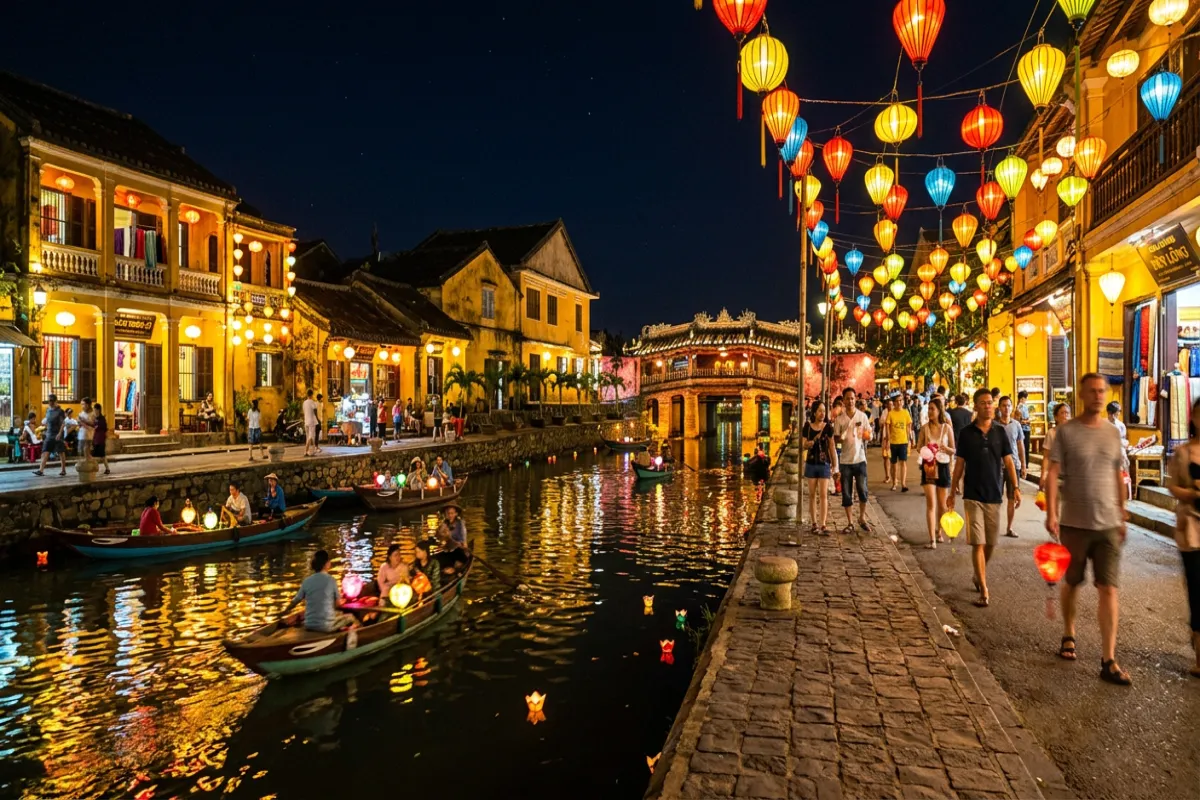
One of the most charming towns in Southeast Asia. Stay in the Old Town (UNESCO World Heritage) for lantern-lit streets, tailors, and riverside dining. An Bang Beach (3 km away) for a beach-and-town combination. Hoi An is small enough to bike everywhere.
Ho Chi Minh City
District 1 (Ben Thanh area) is the tourist center. Bui Vien Street is the backpacker strip. District 3 is increasingly popular for its local feel, cafes, and lower prices while still being central.
Ha Long Bay
Stay on a cruise boat (overnight cruises are the best way to experience the bay). For a less crowded alternative, choose a cruise to Lan Ha Bay or Bai Tu Long Bay, which offer the same scenery with fewer boats.
Must-See Attractions and Experiences
Ha Long Bay
Over 1,600 limestone islands and islets rising from emerald waters. A UNESCO World Heritage Site. An overnight cruise is the best way to experience it: kayak through caves, swim, and watch sunset from the deck. Budget cruises start at $80 per person. For fewer crowds, choose Lan Ha Bay or Bai Tu Long Bay routes.
Hoi An Old Town
A UNESCO World Heritage Site with well-preserved architecture from the 15th to 19th centuries. Japanese Bridge, assembly halls, lantern-lit streets, and the Thu Bon River. The town is famous for custom tailoring: have clothes made to measure in 24 to 48 hours. Best experienced on foot or by bicycle. The monthly Full Moon Lantern Festival is magical.
Hanoi Old Quarter
Narrow streets, each historically dedicated to a specific trade (Silk Street, Silver Street). Street food on every corner. Hoan Kiem Lake is the heart of the city. The Temple of Literature (Vietnam’s first university, founded 1070) and Ho Chi Minh Mausoleum are key historical sites.
Cu Chi Tunnels (near Ho Chi Minh City)
An extensive network of underground tunnels used during the Vietnam War. Guided tours let you crawl through sections of the tunnels and learn the history. About 1.5 hours from Ho Chi Minh City.
Sapa and the Northern Mountains
Rice terraces, ethnic minority villages, and mountain trekking in the far north. Fansipan, the highest peak in Indochina (3,143 meters), is accessible by cable car or multi-day trek. Stay in a homestay for an authentic experience. Best visited September to November or March to May.
Mekong Delta
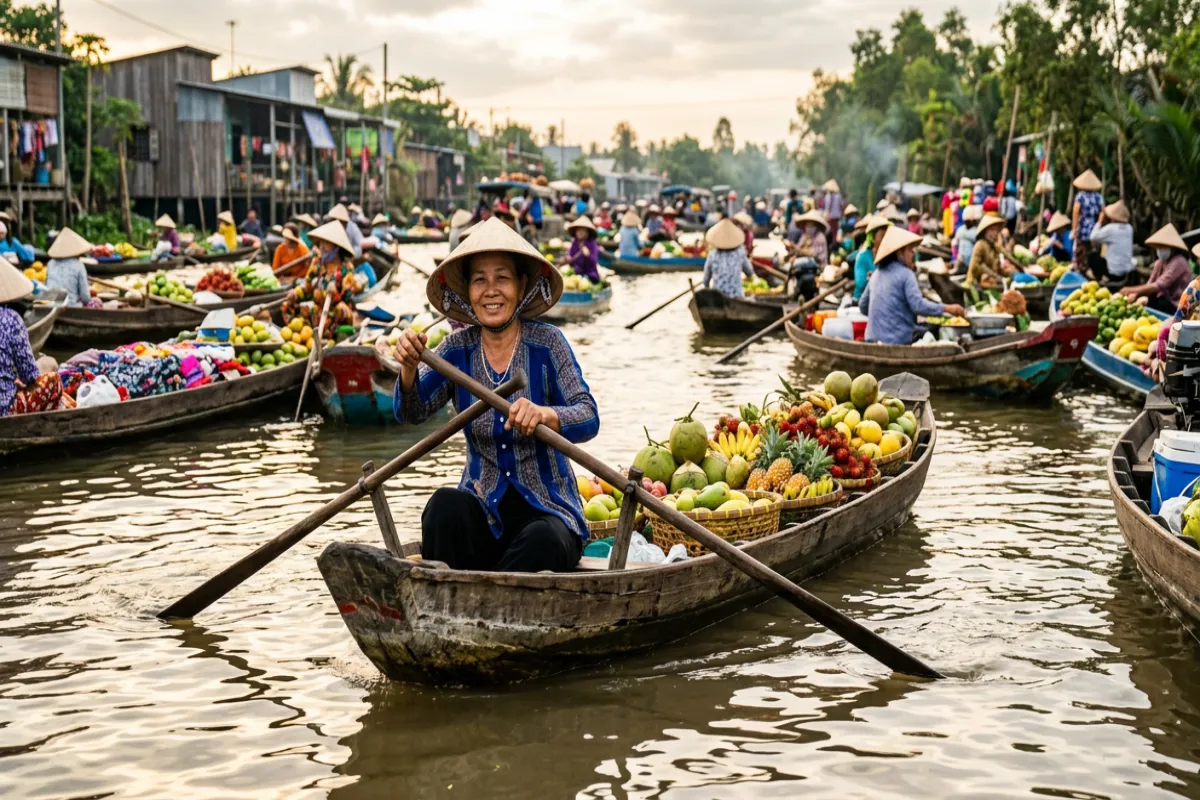
The “rice bowl of Vietnam.” Floating markets, river life, fruit orchards, and a pace of life that contrasts with the cities. Can Tho is the main base for floating market tours. Day trips from Ho Chi Minh City are possible but an overnight stay is more rewarding.
Phong Nha Caves
Home to the world’s largest cave (Son Doong, by volume) and several other spectacular cave systems. Phong Nha-Ke Bang National Park is a UNESCO site. The Paradise Cave and Dark Cave are accessible for day visitors. Multi-day expeditions to Son Doong require booking months ahead.
Food and Dining
Vietnamese food is among the best in the world, and the street food culture is unmatched.
- Pho: The iconic beef or chicken noodle soup. Eaten for breakfast, lunch, or dinner. A perfect bowl costs $1.50 to $3 at street stalls
- Banh mi: A Vietnamese baguette sandwich filled with pate, meats, pickled vegetables, cilantro, and chili. The world’s best sandwich for $1 to $2
- Bun cha: Hanoi’s signature dish: grilled pork patties with vermicelli noodles and dipping broth. Made famous by Obama and Bourdain’s meal in Hanoi
- Com tam: Broken rice with grilled pork, egg, and pickled vegetables. Southern Vietnam’s everyday lunch. $2 to $3
- Banh xeo: Crispy Vietnamese crepe filled with shrimp, pork, and bean sprouts. Wrap in rice paper with herbs and dip in nuoc cham sauce
- Egg coffee (ca phe trung): A Hanoi specialty. Whipped egg yolk and condensed milk over strong Vietnamese coffee. Rich, creamy, and unlike any coffee you have had
- Bia hoi: Fresh draft beer served at tiny plastic-chair street stalls, especially in Hanoi. About $0.25 to $0.50 per glass. The cheapest beer in the world
Tipping: Not expected in Vietnam. Service charge is sometimes included at upscale restaurants. Leaving small change or rounding up is appreciated but not required.
Safety and Practical Tips
- Safety: Vietnam is generally safe for tourists. Petty theft (bag snatching from motorbikes) is the main concern, especially in Ho Chi Minh City. Wear your bag across your body on the street side, not the road side. Scams targeting tourists exist; agree on prices before services
- Crossing the street: Traffic in Hanoi and Ho Chi Minh City looks chaotic (constant motorbike flow). The key: walk slowly and steadily across the road. Do not stop or run. Traffic will flow around you. It feels terrifying the first time but works
- Water: Do not drink tap water. Bottled water is cheap (VND 5,000 to 10,000) and available everywhere. Ice at restaurants and cafes is generally safe (made from purified water)
- Cash: Vietnam is primarily cash-based outside of hotels and upscale restaurants. ATMs are everywhere. Withdraw VND at ATMs for the best rates. Cards are increasingly accepted but carry cash for street food, markets, and smaller businesses
- Motorbike safety: If renting a motorbike, wear a helmet (required by law), drive defensively, and start in quieter areas to get comfortable. Traffic is fast and unpredictable in cities
- Haggling: Expected at markets and with street vendors. Start at 50 to 60 percent of the asking price and negotiate politely. Fixed prices at supermarkets, malls, and most restaurants
- Grab app: Download Grab before arriving. It is the most reliable way to get taxis and motorbike taxis at fair prices without haggling
- Electrical outlets: Type A, C, and G plugs. Voltage is 220V. Bring an adapter
- Emergency number: 113 (police), 115 (ambulance)
Sample 10-Day Vietnam Itinerary
Days 1 to 2: Hanoi
Fly into Noi Bai Airport (HAN). Day 1: explore the Old Quarter on foot, Hoan Kiem Lake, Temple of Literature, street food walking tour (try pho, bun cha, and egg coffee). Evening: Bia Hoi corner for $0.25 beers. Day 2: Ho Chi Minh Mausoleum and Complex, One Pillar Pagoda, Vietnamese Women’s Museum or Ethnology Museum. Evening: Water Puppet Theater.
Days 3 to 4: Ha Long Bay
Board an overnight cruise from Hanoi (3 to 4 hour drive to the bay). Day 3: cruise through limestone karsts, kayak through caves, swim, sunset from the deck. Overnight on the boat. Day 4: morning tai chi on deck, visit a floating village or cave, return to Hanoi by afternoon. Fly to Da Nang in the evening.
Days 5 to 7: Hoi An
Taxi or shuttle from Da Nang to Hoi An (30 minutes). Day 5: explore the Old Town: Japanese Bridge, assembly halls, lantern makers, tailor shops (get measured for custom clothes). Day 6: cooking class in the morning, An Bang Beach in the afternoon. Pick up your tailored clothes. Day 7: bike through rice paddies to Tra Que vegetable village. Visit the Marble Mountains near Da Nang. Evening: final walk through lantern-lit Old Town.
Days 8 to 10: Ho Chi Minh City
Fly from Da Nang to Ho Chi Minh City (1.5 hours). Day 8: War Remnants Museum, Notre-Dame Cathedral, Central Post Office, Ben Thanh Market. Evening: rooftop bar in District 1. Day 9: Cu Chi Tunnels day trip (half day). Afternoon: Chinatown (Cho Lon) and Binh Tay Market. Evening: street food in District 4. Day 10: morning at a cafe, last-minute shopping, fly home from Tan Son Nhat Airport (SGN).
Ready-Made Vietnam Itineraries
We have built day-by-day itineraries with activities, travel times, budgets, and local tips:
Or build a custom itinerary with our free AI trip planner.
More Planning Resources
Frequently Asked Questions
Do U.S. citizens need a visa for Vietnam?
Yes. Apply for an e-visa online at evisa.xuatnhapcanh.gov.vn. Cost: $25 USD, processing takes 3 business days. Valid for 90 days, single or multiple entry. Apply before your trip.
What is the best time to visit Vietnam?
March to April for the best weather across the whole country. Vietnam has multiple climate zones, so ideal timing depends on your specific destinations. The north is best October to April, central Vietnam February to August, and the south December to April.
How cheap is Vietnam?
Very affordable. Budget travelers can manage on $25 to $45 per day. Street food meals cost $1.50 to $3. A perfect banh mi is $1 to $2. Hotels start at $10 to $25 per night. Vietnam is one of the best-value destinations in the world.
Is Vietnam safe?
Generally safe. Petty theft (bag snatching from motorbikes) is the main risk, especially in Ho Chi Minh City. Keep bags across your body. Scams targeting tourists exist. Use Grab for reliable transport.
How do I cross the street in Vietnam?
Walk slowly and steadily. Do not stop, run, or make sudden movements. The constant flow of motorbikes will go around you. It feels terrifying the first time but is how everyone (including locals) crosses.
Should I take a train or fly between cities?
Fly for speed (Hanoi to Ho Chi Minh City: 2 hours, $30 to $80). Take the sleeper train for the experience (overnight, saves a night’s accommodation, scenic). Hanoi to Hue or Da Nang by sleeper train is a classic journey.
Is the street food safe to eat?
Yes, with basic precautions. Eat at stalls with high turnover (food is fresh). Choose places where locals eat. Avoid raw vegetables and unpeeled fruit at questionable stalls. Street food is a highlight of Vietnam and skipping it means missing the best meals.
Do I need a motorbike to get around?
Not in cities (use Grab). In Hoi An, a bicycle is ideal. A motorbike is useful for countryside exploration but traffic in Hanoi and Ho Chi Minh City is intense. If you rent, start in quieter towns like Hoi An to build confidence. International Driving Permit required.
Can I use credit cards in Vietnam?
At hotels, upscale restaurants, and shops, yes. For street food, markets, and smaller businesses, cash (VND) is essential. ATMs are everywhere and offer good exchange rates.
What should I pack for Vietnam?
Light, breathable clothing. Modest cover-ups for temple visits (shoulders and knees covered). Comfortable walking shoes. A rain jacket or compact umbrella. Sunscreen. Insect repellent. A cross-body bag for security. Outlet adapter (Types A, C, G).