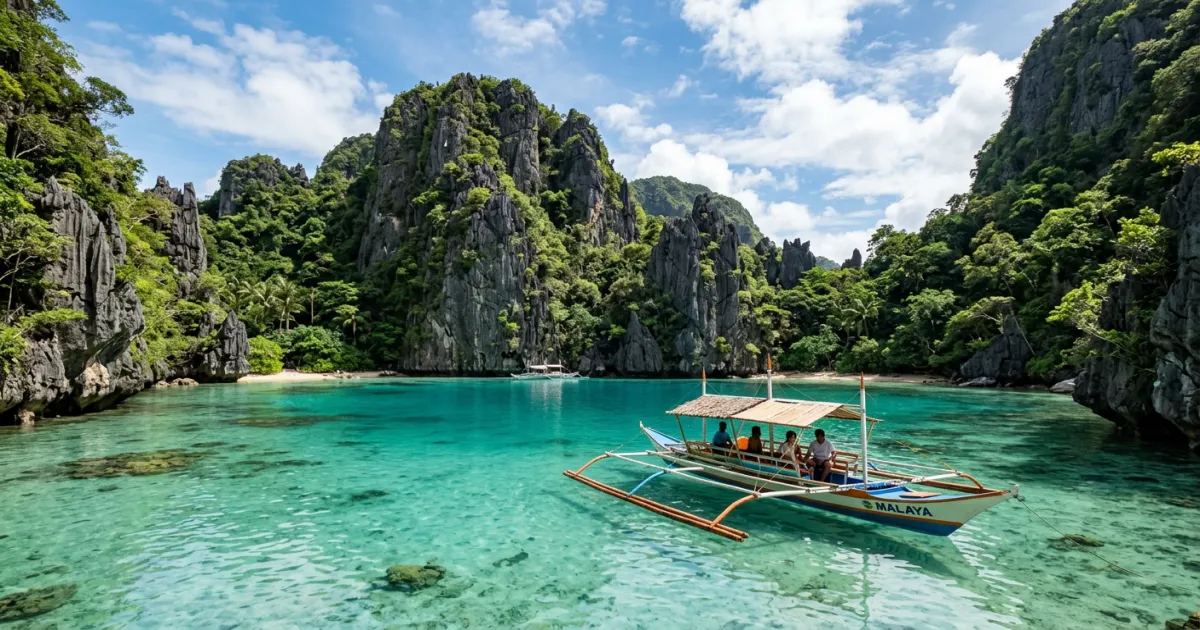
The Philippines is an archipelago of over 7,600 islands with some of the most beautiful beaches, lagoons, and underwater scenery in the world. The turquoise lagoons of Palawan, the white sand of Boracay, the whale sharks of Cebu, and the rice terraces of the Cordillera mountains create a country that rewards island-hopping adventures. Add one of the friendliest populations in Asia and one of the highest English-speaking rates outside the Western world, and the Philippines becomes one of the most welcoming tropical destinations. This guide covers everything you need to plan your trip. For a broader approach, see our step-by-step trip planning guide.
Key Planning Facts
- Location: Southeast Asia, western Pacific Ocean
- Currency: Philippine Peso (PHP). Approximately 56 to 58 PHP per 1 USD
- Language: Filipino (Tagalog) and English. English is widely spoken across the country, especially in tourist areas, making the Philippines one of the easiest Southeast Asian countries to navigate
- Visa for U.S. citizens: Not required for stays up to 30 days. Valid passport required. Complete the e-Travel registration before arrival (free, takes about 5 minutes). Extensions available up to 36 months
- Best months to visit: December to April (dry season)
- Average daily budget: $30 to $100 per person (the Philippines is very affordable)
- Time zone: Philippine Time (PHT, UTC+8)
- Flight time from U.S.: 13 to 18 hours (typically via Seoul, Tokyo, Taipei, or direct to Manila from some West Coast cities)
- Islands: 7,641 islands, about 2,000 inhabited
Best Time to Visit the Philippines
Dry Season (December to May)
The best overall time. Clear skies, calm seas, and warm temperatures (28 to 34 degrees Celsius, or 82 to 93 degrees Fahrenheit). December to February is peak season with higher prices but stable weather across most islands. March is the sweet spot for budget travelers: dry weather and cheaper flights from the U.S.
Shoulder Months (May to June, November)
May can be very hot (35+ degrees Celsius) but still mostly dry. June marks the start of the wet season. November is a good value month as the rainy season winds down. These months offer 40 to 60 percent lower accommodation prices than peak season.
Wet/Typhoon Season (July to October)
The Philippines is prone to typhoons, especially August to October. Rain is common but often falls in heavy afternoon bursts rather than all day. Some islands (Palawan) receive less rain than others. Travel is possible with flexibility and awareness of weather forecasts. Prices are lowest. Travel insurance is essential.
How Long to Spend in the Philippines
10 to 14 days is ideal for a multi-island trip covering 2 to 3 destinations. 3 to 5 days works for a single island (Palawan or Boracay). A week is enough for one island plus a city stop. Three weeks lets you explore more remote islands and take the pace slow.
Budget and Costs
The Philippines is one of the most affordable destinations in Southeast Asia.
Daily Budget Ranges
- Budget: $25 to $50 per person per day. Hostels or budget guesthouses ($8 to $20 per night), local restaurants and street food ($1 to $4 per meal), public transport, island-hopping tours
- Mid-range: $60 to $120 per person per day. Beach resorts ($40 to $80 per night), restaurant meals, private boat tours, domestic flights
- Luxury: $150 to $350 per person per day. Boutique resorts ($100 to $300 per night), fine dining, private island experiences, diving packages
Key Costs
- Domestic flights: $30 to $80 one way. Cebu Pacific and Philippine Airlines connect major islands. Manila to Cebu: 1.5 hours. Manila to Puerto Princesa (Palawan): 1.5 hours. Book early for best fares
- Island-hopping tour: $15 to $40 per person (full day, shared boat). Private boat charters: $80 to $200 per day
- Meals: Street food: $1 to $3. Local restaurant: $2 to $5. Mid-range restaurant: $8 to $15. Fresh seafood dinner: $10 to $25
- Diving: $25 to $40 per fun dive. PADI Open Water certification: $250 to $350
- Whale shark swimming (Oslob, Cebu): About $15 to $25 per person (30-minute experience)
- Tricycle/jeepney: PHP 10 to 50 ($0.20 to $1) per ride. The cheapest way to get around cities and towns
Use our free travel budget template to plan your Philippines expenses.
Getting There and Getting Around
Flying In
Ninoy Aquino International Airport (MNL) in Manila is the main gateway. Mactan-Cebu International Airport (CEB) also receives some international flights. Direct flights from Los Angeles, San Francisco, and Honolulu to Manila. Most other U.S. cities connect via Seoul (ICN), Tokyo (NRT), or Taipei (TPE).
Island Hopping
Domestic flights: The fastest way between islands. Cebu Pacific is the main budget carrier with extensive routes. Manila to almost any major island is 1 to 2 hours.
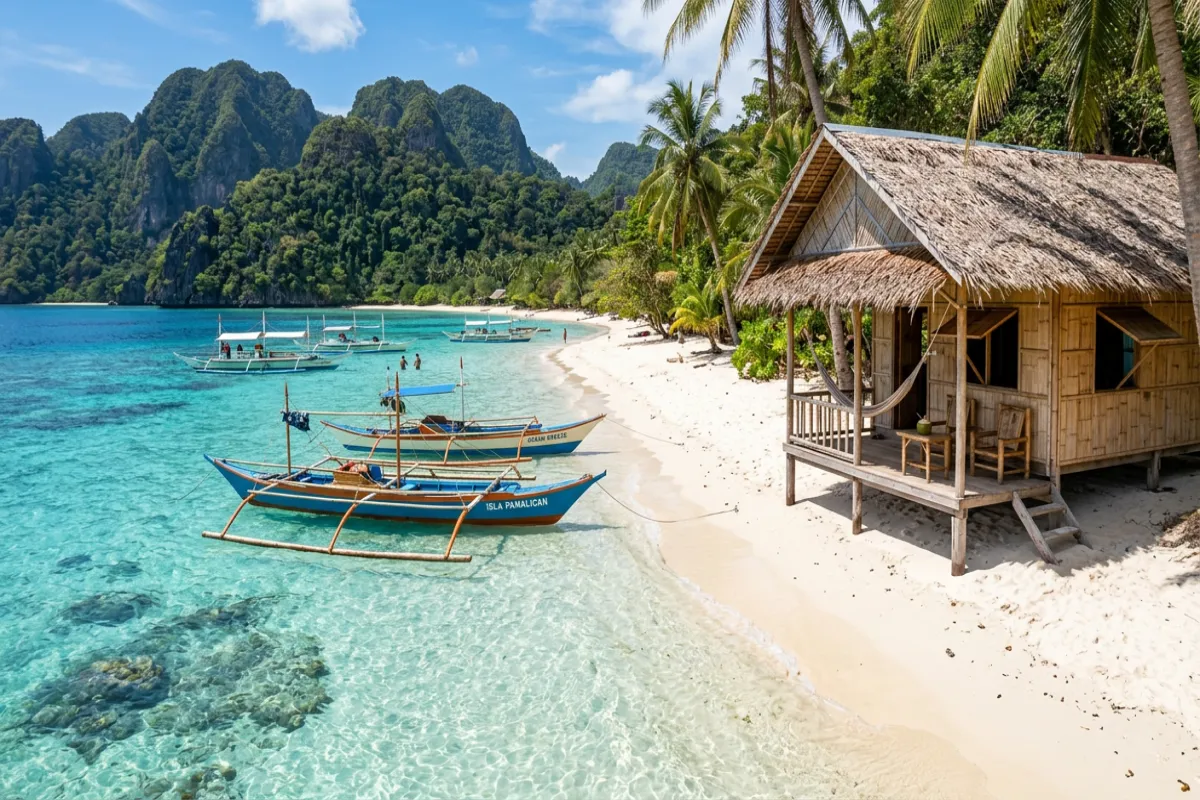
Ferries: Slower but scenic. 2GO Travel operates large inter-island ferries. Fast ferries (OceanJet, FastCat) connect closer islands like Cebu to Bohol (2 hours). Local bancas (outrigger boats) handle short island-to-island transfers.
Vans and buses: Within islands, shared vans and buses connect towns. Air-conditioned vans are the most common transport for tourists.
Where to Go
Palawan (El Nido and Coron)
Consistently voted among the world’s best islands. El Nido has dramatic limestone cliffs, hidden lagoons, and pristine beaches (Big Lagoon, Small Lagoon, Secret Beach). Coron has crystal-clear lakes (Kayangan Lake), WWII Japanese shipwreck diving, and hot springs. Island-hopping tours are the main activity. Fly to Puerto Princesa or directly to El Nido.
Boracay
The most accessible and well-developed beach island. White Beach (4 km of powder-white sand) is consistently ranked among the best beaches in Asia. Full range of accommodation from budget to luxury. Water sports, nightlife, and restaurants. A 1-hour flight from Manila plus a short boat transfer.
Cebu and Bohol
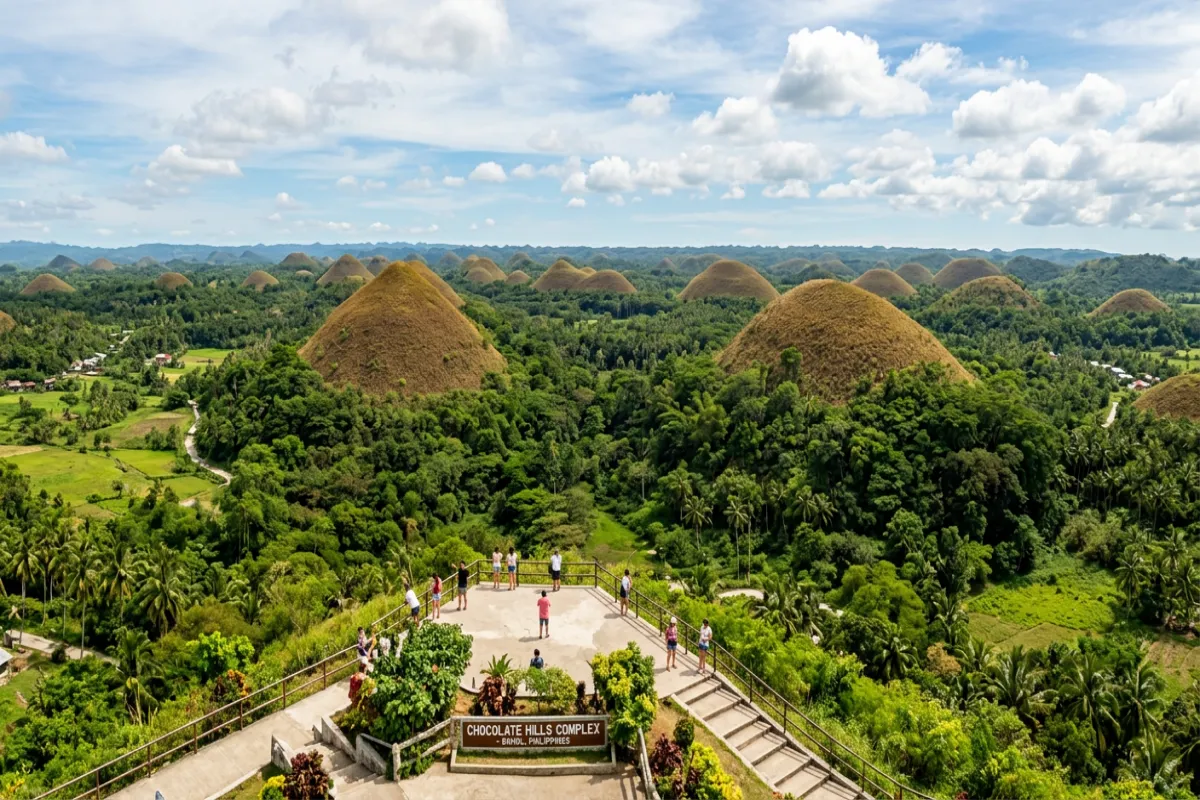
Cebu is a hub for diving, whale sharks (Oslob), and the Kawasan Falls canyoneering adventure. Bohol (2-hour ferry from Cebu) has the Chocolate Hills (over 1,200 cone-shaped geological formations), tarsier sanctuaries (one of the world’s smallest primates), and beautiful beaches on Panglao Island.
Siargao
The “surfing capital of the Philippines.” Cloud 9 is one of the best surf breaks in Asia. Beyond surfing: island-hopping (Naked Island, Daku Island, Guyam Island), lagoons, rock pools, and a laid-back island vibe. Growing in popularity but still less developed than Boracay.
Banaue Rice Terraces
The 2,000-year-old rice terraces carved into the mountains of the Cordillera region in northern Luzon. Often called the “Eighth Wonder of the World.” A UNESCO World Heritage Site. Accessible from Manila by overnight bus (9 hours) or domestic flight to Baguio plus a van.
Must-See Experiences
El Nido Island Hopping
Full-day boat tours (Tours A, B, C, and D) visit lagoons, beaches, snorkeling spots, and hidden coves. Tour A (Big Lagoon, Small Lagoon, Secret Lagoon, Shimizu Island) is the most popular. $15 to $25 per person on shared boats. Bring an underwater camera.
Whale Shark Swimming (Oslob, Cebu)
Swim alongside the world’s largest fish in shallow water. The experience is controversial (the whale sharks are fed to keep them in the area), but it is a once-in-a-lifetime encounter for many travelers. About $15 to $25 per person. Arrive early (before 8 AM) to avoid long waits.
Kawasan Falls Canyoneering (Cebu)
Jump off waterfalls, slide down natural rock slides, and swim through turquoise canyons. The canyoneering route ends at the multi-tiered Kawasan Falls. Full-day guided adventure, about $20 to $30 per person. One of the most exhilarating outdoor activities in the Philippines.
Underground River (Puerto Princesa, Palawan)
A UNESCO World Heritage Site. Boat through a 5-mile underground river system inside a limestone cave. One of the longest navigable underground rivers in the world. Permits are limited daily; book through your hotel or a tour operator in advance.
Chocolate Hills (Bohol)
Over 1,200 symmetrical cone-shaped hills that turn brown (like chocolate) in the dry season. One of the most unusual geological formations in the world. Viewpoint accessible by stairs or ATV tour. Combine with a tarsier sanctuary visit and Panglao Island beach time.
Food and Dining
- Adobo: The unofficial national dish. Chicken or pork braised in vinegar, soy sauce, garlic, and bay leaves. Every family has its own recipe. $2 to $4 at local restaurants
- Lechon: Whole roasted pig, crispy skin and tender meat. A centerpiece of Filipino celebrations. Cebu lechon is considered the best in the country. $5 to $10 per serving
- Sinigang: A sour soup made with tamarind, tomatoes, and pork, shrimp, or fish. Comfort food at its best
- Halo-halo: A shaved ice dessert with beans, jellies, fruit, leche flan, ube (purple yam) ice cream, and evaporated milk. The perfect tropical refreshment. $1 to $3
- Fresh seafood: Choose your fish at the market and have it cooked at a nearby restaurant. Grilled prawns, fish, and squid at beach restaurants. $5 to $15 for a seafood spread
- Balut: A developing duck embryo eaten from the shell. An adventurous street food. Not for everyone, but a cultural experience. About $0.50 per egg
- San Miguel beer: The national beer. Light, cheap, and available everywhere. About $0.50 to $1 per bottle at stores, $1 to $2 at restaurants
Tipping: Not required but appreciated. 10 percent at restaurants if service charge is not included. Small tips for tour guides and boat operators ($2 to $5 per person) are customary.
Safety and Practical Tips
- Safety: The Philippines is generally safe for tourists in major tourist areas (Palawan, Boracay, Cebu, Bohol, Siargao). The U.S. State Department advises caution in Mindanao (southern Philippines). Standard precautions apply: be aware of your surroundings, avoid displaying valuables, and use registered transport
- Typhoons: The Philippines is one of the most typhoon-prone countries in the world. Season: June to November, peak August to October. Monitor weather forecasts. Travel insurance with weather disruption coverage is essential
- Water: Do not drink tap water. Bottled water is cheap and available everywhere. Ice at tourist restaurants is usually safe (made from purified water)
- Sun: Tropical sun is intense. Wear sunscreen (reef-safe near marine areas), a hat, and sunglasses. Reapply constantly
- SIM card: Buy a local SIM at the airport (Globe or Smart). Data is cheap. Coverage is good in cities but spotty on remote islands
- Cash: Many smaller businesses, island boats, and street vendors are cash-only. ATMs are available in cities and major tourist towns but not on small islands. Carry PHP cash when island-hopping
- Haggling: Expected at markets and for tricycle/boat rides. Agree on the price before the service
- Electrical outlets: Type A and B plugs (same as U.S.). 220V. Some devices may need a voltage converter
- Emergency number: 911
Sample 12-Day Philippines Itinerary
Days 1 to 2: Manila (Optional)
Fly into Manila (MNL). If you have time: Intramuros (walled city, Fort Santiago, San Agustin Church), Rizal Park, and a food tour in Binondo (Chinatown, the oldest in the world). If short on time, connect directly to your first island.
Days 3 to 6: Palawan (El Nido)
Fly from Manila to El Nido (about 1 hour). Day 3: settle in, beach time at Las Cabanas. Day 4: Island-hopping Tour A (Big Lagoon, Small Lagoon, Secret Lagoon, Shimizu Island). Day 5: Island-hopping Tour C (Hidden Beach, Matinloc Shrine, Star Beach). Day 6: rent a kayak, explore Nacpan Beach (a long, quiet stretch of sand). Evening: sunset at Las Cabanas.
Days 7 to 9: Cebu and Bohol
Fly from El Nido to Cebu (via Manila or direct if available). Day 7: Kawasan Falls canyoneering adventure (full day). Day 8: ferry to Bohol (2 hours). Chocolate Hills, tarsier sanctuary, Loboc River cruise. Stay on Panglao Island (beach). Day 9: morning snorkeling on Panglao. Afternoon: return to Cebu. Optional: whale shark swimming at Oslob (controversial but popular, early morning).
Days 10 to 12: Boracay
Fly from Cebu to Caticlan/Boracay (1 hour plus boat transfer). Day 10: White Beach (4 km of sand), sunset sailing. Day 11: island-hopping, snorkeling at Crocodile Island, cliff jumping at Ariel’s Point. Day 12: morning beach time, shopping at D’Mall. Fly from Caticlan to Manila for departure.
Planning Your Philippines Trip
Start building your custom itinerary with our free AI trip planner.
For more trip planning resources:
Frequently Asked Questions
Do U.S. citizens need a visa for the Philippines?
No. Visa-free entry for up to 30 days. Valid passport required. Complete the free e-Travel registration before arrival. Extensions available up to 36 months through local immigration offices.
What is the best time to visit?
December to April (dry season). March is the best value month (dry weather + cheapest flights from the U.S.). July to October has the highest typhoon risk. The Philippines has diverse microclimates, so weather varies between islands.
How cheap is the Philippines?
Very affordable. Budget travelers can manage on $25 to $50 per day. Street food $1 to $3. Local restaurant $2 to $5. Hostels $8 to $20 per night. Island-hopping tours $15 to $40. One of the best-value tropical destinations.
Which island should I visit first?
Palawan (El Nido) for lagoons and dramatic scenery. Boracay for the easiest beach vacation. Cebu for diving and adventure activities. Siargao for surfing and a laid-back vibe. Most first-timers choose Palawan or Boracay.
Is the Philippines safe?
Major tourist areas (Palawan, Boracay, Cebu, Bohol, Siargao) are generally safe. Avoid Mindanao (southern Philippines) per U.S. State Department guidance. Standard precautions: be aware of surroundings, use registered transport.
Do I need to speak Filipino?
No. English is widely spoken throughout the Philippines, making it one of the easiest Southeast Asian countries to navigate for English speakers.
How do I get between islands?
Domestic flights (Cebu Pacific, Philippine Airlines, $30 to $80 one way), ferries and fast boats between nearby islands, and bancas (outrigger boats) for short transfers. Flights are fastest and often most reliable.
What about typhoons?
Typhoon season is June to November, peaking August to October. Monitor weather forecasts. Some islands (Palawan) receive less impact than others. Travel insurance with weather disruption coverage is essential during these months.
Can I swim with whale sharks?
Yes, at Oslob in southern Cebu. About $15 to $25 for a 30-minute experience. The practice is controversial (whale sharks are fed to keep them in the area). Arrive before 8 AM. Alternatively, encounter whale sharks in the wild at Donsol (Sorsogon) during December to May.
What should I pack?
Light clothing, swimsuit, reef-safe sunscreen, waterproof phone case, water shoes for island-hopping, insect repellent, a light rain jacket, and a dry bag for boat trips. Leave room for souvenirs.