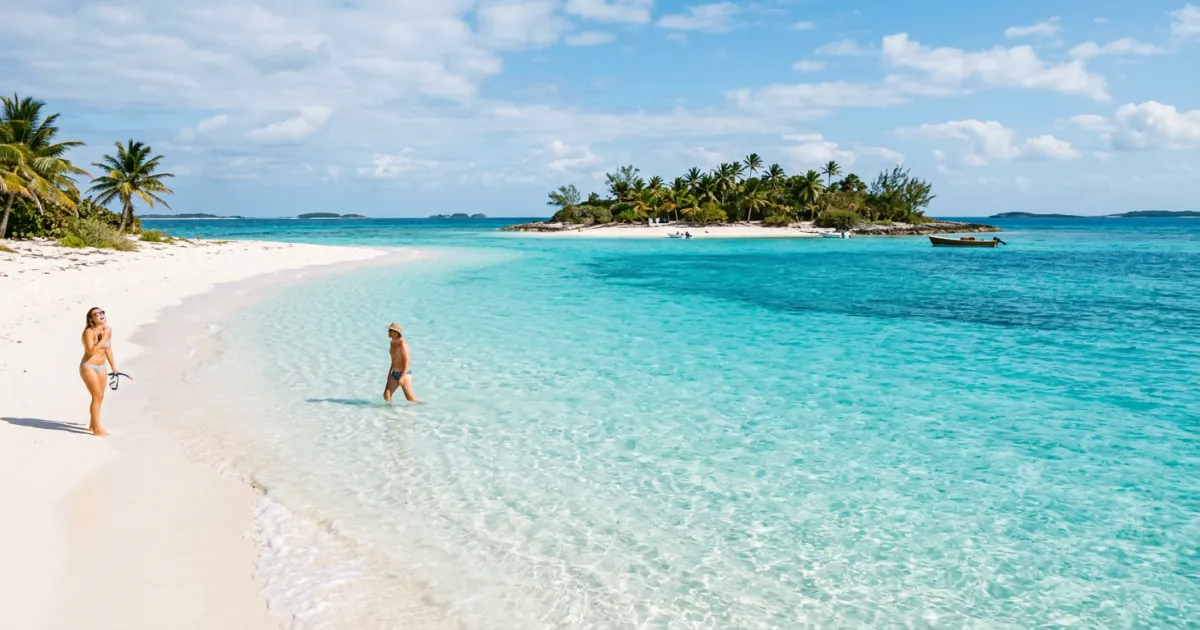
The Bahamas is an archipelago of 700 islands and 2,400 cays stretching across the Atlantic Ocean, just 50 miles off the coast of Florida. Most visitors know Nassau and Paradise Island, but the real magic of the Bahamas lies in the Out Islands: the swimming pigs of Exuma, the pink sand beaches of Harbour Island, and the untouched beauty of the Abacos and Andros. This guide covers everything from resort stays to island-hopping adventures. For a broader approach, see our step-by-step trip planning guide.
Key Planning Facts
- Location: Atlantic Ocean, 50 miles east of Florida
- Currency: Bahamian Dollar (BSD), pegged 1:1 with USD. U.S. dollars accepted everywhere
- Language: English
- Visa for U.S. citizens: Not required for stays up to 8 months. Valid passport required. Proof of onward/return travel needed
- Best months to visit: December to April (dry season, best weather)
- Average daily budget: $120 to $350 per person (the Bahamas is expensive by Caribbean standards)
- Time zone: Eastern Time (ET, same as New York and Miami)
- Flight time from U.S.: 2.5 to 3 hours from East Coast; 4 to 5 hours from Midwest
- Archipelago: 700 islands and 2,400 cays. Only about 30 islands are inhabited
Best Time to Visit the Bahamas
Dry Season (December to April)
The best overall time. Sunny skies, low humidity, comfortable temperatures (70 to 82 degrees Fahrenheit), and the calmest ocean conditions for snorkeling and boating. This is peak season with the highest prices and most tourists, especially December through March. Book well in advance.
Shoulder Months (May, November)
May offers warm weather and lower prices as peak season ends. November is excellent: hurricane season winds down, weather stabilizes, temperatures are comfortable, and prices have not yet risen to peak levels. The best value months.
Summer and Hurricane Season (June to October)
Hot and humid (85 to 90 degrees Fahrenheit). Hotel prices drop 30 to 50 percent. Hurricane risk is the main concern, especially August to October. Many smaller Out Island properties close for parts of the season. Travel insurance strongly recommended.
How Long to Spend in the Bahamas
3 to 4 days is enough for Nassau and Paradise Island. 5 to 7 days lets you add an excursion to the Exumas (swimming pigs, island-hopping) or explore a quieter Out Island. 10 to 14 days is ideal for serious island-hopping across multiple Out Islands.
Budget and Costs
The Bahamas is one of the more expensive Caribbean destinations. Nassau and Paradise Island are the priciest. Out Islands can be slightly cheaper for accommodation but have limited dining options.
Daily Budget Ranges
- Budget: $100 to $170 per person per day. Guesthouses or budget hotels ($60 to $120 per night), local restaurants (conch salad, cracked conch), jitney buses, free beaches
- Mid-range: $200 to $350 per person per day. Hotels or small resorts ($150 to $300 per night), restaurant meals, guided excursions, boat tours
- Luxury: $500 and up per person per day. Atlantis Resort ($350 to $800+ per night) or Out Island boutique resorts, fine dining, private boat charters
Key Costs
- Exuma swimming pigs day trip: About $200 per person from Nassau (full day boat tour). Includes pig beach, snorkeling, nurse shark encounter, and island stops
- Atlantis Resort day pass: $95 to $180 per adult for water park and beach access (non-guest)
- Jitney buses (Nassau): $1.50 per ride. The cheapest way to get around Nassau
- Meals: Conch salad from a shack: $10 to $15. Local restaurant meal: $15 to $25. Resort restaurant: $30 to $70. Groceries are expensive (most food is imported)
- Inter-island flights: $100 to $250 round trip via Bahamasair or charter. Nassau to Exuma: about 30 minutes
- Snorkeling trip: $60 to $100 per person (half day). Stuart Cove, Thunderball Grotto (James Bond film location), and reef snorkeling are popular
Use our free travel budget template to plan your Bahamas expenses.
Getting There and Getting Around
Flying In
Lynden Pindling International Airport (NAS) in Nassau is the main gateway with direct flights from Miami (45 minutes), Fort Lauderdale, Atlanta, New York, Charlotte, and other U.S. cities. Exuma (GGT) and Eleuthera (ELH) have smaller airports with limited service. Some travelers take a ferry from Fort Lauderdale to Freeport on Grand Bahama (2.5 hours).
Getting Between Islands
Bahamasair and local charters connect the islands by air. Fast ferries operate between Nassau, Eleuthera, and Harbour Island. Boat charters and excursions connect Nassau to the Exumas. For the Exumas, most visitors either fly into George Town or take a day trip from Nassau.
Getting Around Nassau
Jitney buses cover Nassau’s main routes for $1.50. Taxis are available but not metered (agree on a price before riding). Walking is feasible in downtown Nassau and along Cable Beach. Rideshare is limited. On Out Islands, golf carts are the primary mode of transport (rentable for $50 to $80 per day).
The Bahamas’ Islands
Nassau and Paradise Island
The most visited destination. Nassau has colonial architecture, the Queen’s Staircase, Fort Charlotte, and the colorful Junkanoo Beach. Paradise Island (connected by bridge) is home to Atlantis Resort. Cable Beach has the longest beach on New Providence Island. Most dining and nightlife options.
Exuma Cays
A chain of 365 cays south of Nassau. Famous for the swimming pigs at Big Major Cay (Pig Beach), the Exuma Cays Land and Sea Park (protected marine area), and Thunderball Grotto (snorkeling through an underwater cave featured in the James Bond film). Water color here is almost supernaturally turquoise. Day trips from Nassau or stay in George Town (Great Exuma).
Harbour Island (Eleuthera)
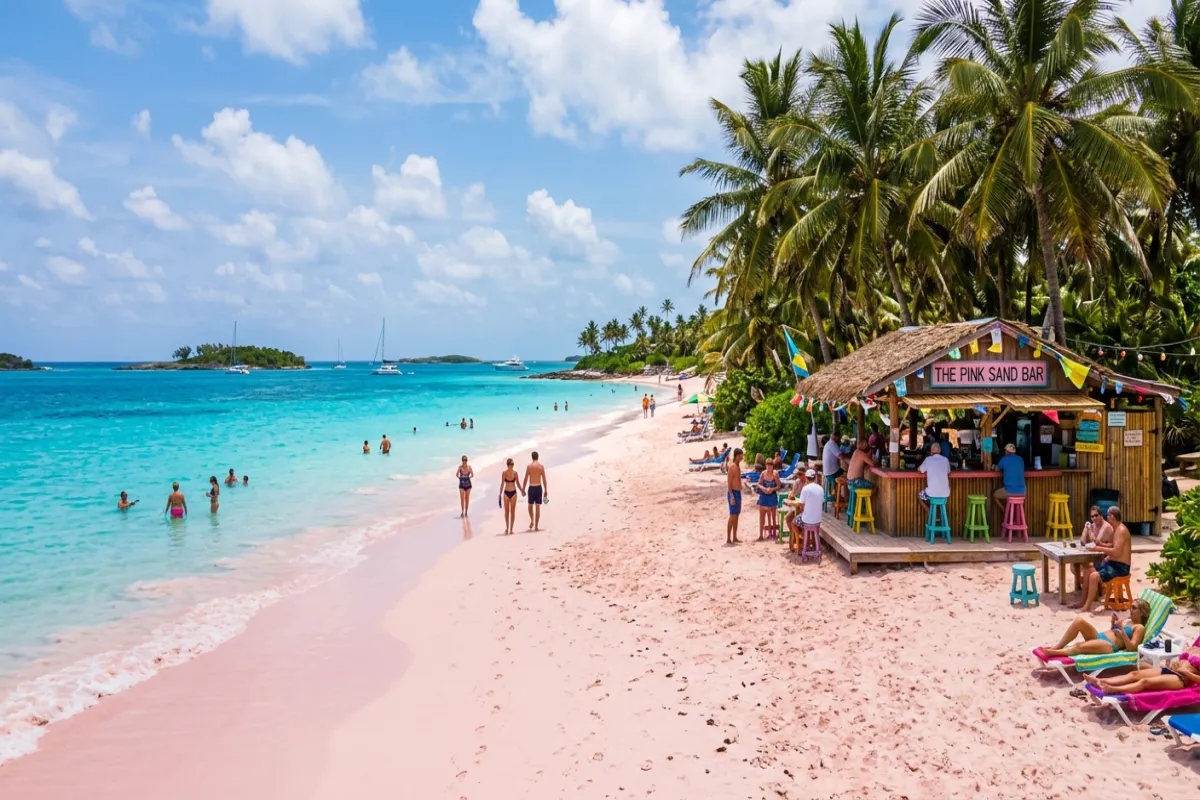
Known for its 3-mile pink sand beach, one of the most beautiful beaches in the world. The sand gets its pink tint from crushed coral and shells. A quieter, more upscale alternative to Nassau. Accessible by ferry from Eleuthera (which can be reached by a short flight from Nassau).
Andros
The largest Bahamian island but the least developed for tourism. The Andros Barrier Reef (the third-largest in the world) offers world-class diving. Blue holes (underwater sinkholes) are a unique diving attraction. Bonefishing is legendary here.
Grand Bahama (Freeport)
The closest Bahama island to Florida. Port Lucaya Marketplace is the main tourist area. Kayak through the Lucayan National Park (which has one of the longest underwater cave systems in the world). Accessible by ferry from Fort Lauderdale.
Must-See Attractions and Experiences
Swimming with the Pigs
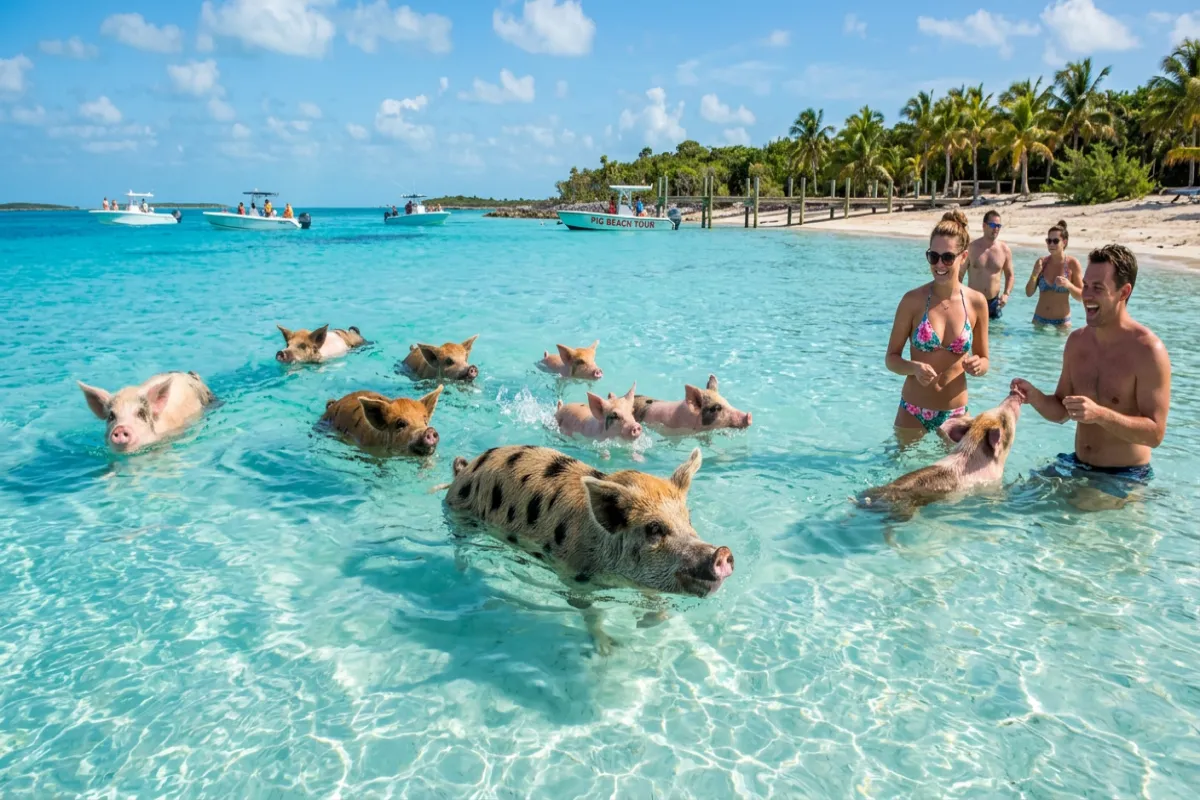
The famous swimming pigs live on Big Major Cay (Pig Beach) in the Exumas. Friendly pigs swim out to boats looking for food. Day trips from Nassau ($200 per person) typically combine pig beach with nurse shark encounters, iguana island, and snorkeling stops. If staying in the Exumas, local tours are cheaper ($80 to $120).
Thunderball Grotto
An underwater cave in the Exuma Cays, accessible by swimming through an opening at low tide. Inside, sunlight filters through holes in the rock, illuminating tropical fish. Featured in the James Bond film “Thunderball.” Best visited at low tide when the entrance is easier to access.
Pink Sand Beach (Harbour Island)
Three miles of pink-tinted sand on the eastern shore of Harbour Island. One of the most photographed beaches in the Caribbean. The pink color comes from crushed foraminifera shells mixed with white sand. Best viewed in the early morning when the pink hue is most visible.
Exuma Cays Land and Sea Park
A 176-square-mile protected marine area with pristine reefs, beaches, and wildlife. No fishing allowed, so marine life is abundant. Accessible by boat from George Town or on day trips. One of the best snorkeling areas in the Caribbean.
Junkanoo Festival
The Bahamas’ biggest cultural celebration. Parades with elaborate costumes, music (goatskin drums, cowbells, horns), and dancing through Nassau’s streets. Main celebrations on Boxing Day (December 26) and New Year’s Day (January 1). Smaller Junkanoo events throughout the year.
Food and Dining
- Conch: The national food. Conch salad (raw conch with onions, peppers, citrus), cracked conch (fried), conch fritters, and conch chowder. Fresh conch salad from a roadside shack is a must-try ($10 to $15)
- Rock lobster: In season August to March. Grilled, steamed, or in salad. Expensive at restaurants ($30 to $50) but available more affordably at local spots
- Peas and rice: The national side dish (pigeon peas with rice, cooked with tomato and spices). Accompanies nearly every main dish
- Johnnycake: Slightly sweet fried bread, often served for breakfast or as a side
- Guava duff: A traditional dessert: guava rolled in dough, boiled, and served with a butter and rum sauce
- Kalik beer: The national beer, brewed in Nassau. Light, crisp, and perfect for beach drinking
- Sky juice: A Bahamian cocktail of coconut water, gin, and condensed milk. Strong and sweet
Tipping: 15 to 20 percent at restaurants. Some restaurants add an automatic gratuity. Check before adding more.
Safety and Practical Tips
- Safety: Tourist areas in Nassau (downtown, Cable Beach, Paradise Island) and the Out Islands are generally safe. Exercise standard precautions in Nassau; avoid walking alone at night in unfamiliar areas south of downtown
- Sun: Equatorial-strength sun. Wear sunscreen, a hat, and sunglasses. Reapply after swimming. UV levels are very high year-round
- Currency: BSD and USD are interchangeable (1:1 peg). Both currencies accepted everywhere. ATMs dispense BSD but you can use U.S. dollars for everything
- Food costs: Most food is imported, making groceries and restaurant meals expensive compared to the mainland U.S. Eating at local restaurants (“fish fries”) is the best value
- Hurricane preparedness: If traveling June to November, have a plan. Monitor weather forecasts. Travel insurance with hurricane coverage is essential
- Reef protection: Use reef-safe sunscreen. Do not stand on or touch coral. Do not take shells, coral, or sand
- Booking Exuma tours: Book swimming pig tours in advance, especially during peak season. Tours fill up because boat capacity is limited
Sample 5-Day Bahamas Itinerary
Day 1: Nassau
Fly into Nassau (NAS). Explore downtown: Queen’s Staircase, Fort Charlotte, Parliament Square. Walk along Bay Street for shopping. Afternoon: Junkanoo Beach or Cable Beach. Evening: Fish Fry at Arawak Cay (a cluster of local food stalls serving conch salad, cracked conch, and Kalik beer).
Day 2: Exuma Swimming Pigs Day Trip
Full-day boat excursion to the Exuma Cays from Nassau ($200 per person). Swim with the pigs at Big Major Cay, snorkel at Thunderball Grotto, visit the nurse sharks at Compass Cay, and stop at a sandbar for swimming. Return to Nassau by late afternoon.
Day 3: Paradise Island and Atlantis
Walk or taxi across the bridge to Paradise Island. Spend the day at Atlantis Resort (day pass: $95 to $180) with water slides, marine habitats, and beaches. Alternatively: explore the less-crowded eastern end of Paradise Island (Cabbage Beach). Evening: dinner in Nassau.
Day 4: Harbour Island Day Trip or Beach Day
Option A: Fly to Eleuthera (30 minutes), ferry to Harbour Island. Walk the Pink Sand Beach. Explore the pastel-colored village of Dunmore Town. Return to Nassau. Option B: Full beach day at Cable Beach or a snorkeling trip (Stuart Cove or reef snorkeling, $60 to $100).
Day 5: Final Beach and Departure
Morning: last swim at Junkanoo Beach or Cabbage Beach. Pick up conch salad and souvenirs at the Straw Market. Head to airport. Fly home from NAS.
Planning Your Bahamas Trip
Start building your custom itinerary with our free AI trip planner.
For more trip planning resources:
- Plan a Trip to Jamaica
- Plan a Trip to Puerto Rico
- How to Plan a Honeymoon
- Free Travel Budget Template
Frequently Asked Questions
Do U.S. citizens need a visa for the Bahamas?
No. U.S. citizens can visit for up to 8 months without a visa. A valid passport and proof of onward/return travel are required.
What is the best time to visit the Bahamas?
December to April for the best weather (70 to 82 degrees Fahrenheit, dry). May and November are excellent value months. June to October is hurricane season with lower prices and higher risk.
How expensive are the Bahamas?
One of the more expensive Caribbean destinations. Budget travelers can manage on $100 to $170 per day. Mid-range: $200 to $350. Food is expensive because most is imported. Local restaurants and fish fries offer the best value.
How do I see the swimming pigs?
The pigs are on Big Major Cay in the Exumas. Day trips from Nassau cost about $200 per person (full day, includes multiple island stops). If staying in the Exumas, local tours are $80 to $120. Book in advance during peak season.
Can I use U.S. dollars in the Bahamas?
Yes. The Bahamian Dollar (BSD) is pegged 1:1 to USD. Both currencies are accepted everywhere. You can pay for everything in U.S. dollars.
Is Nassau safe?
Tourist areas (downtown, Cable Beach, Paradise Island) are generally safe. Exercise standard precautions. Avoid unfamiliar areas south of downtown at night. The Out Islands are very safe.
What is Junkanoo?
The Bahamas’ biggest cultural celebration. Colorful parades with elaborate costumes, drums, and dancing through Nassau’s streets. Main events: Boxing Day (December 26) and New Year’s Day (January 1).
Which island should I visit beyond Nassau?
Exuma Cays for swimming pigs and turquoise water. Harbour Island for pink sand beach. Andros for world-class diving and bonefishing. Grand Bahama for proximity to Florida and kayaking.
How do I get between islands?
Short flights via Bahamasair or charter (30 to 60 minutes between islands, $100 to $250 round trip). Fast ferries between Nassau and Eleuthera/Harbour Island. Boat charters to the Exumas.
What should I pack?
Light resort-casual clothing, swimsuit, reef-safe sunscreen SPF 50+, sunglasses, hat, water shoes for rocky beaches, snorkel gear (or rent on island), a light jacket for air-conditioned restaurants.