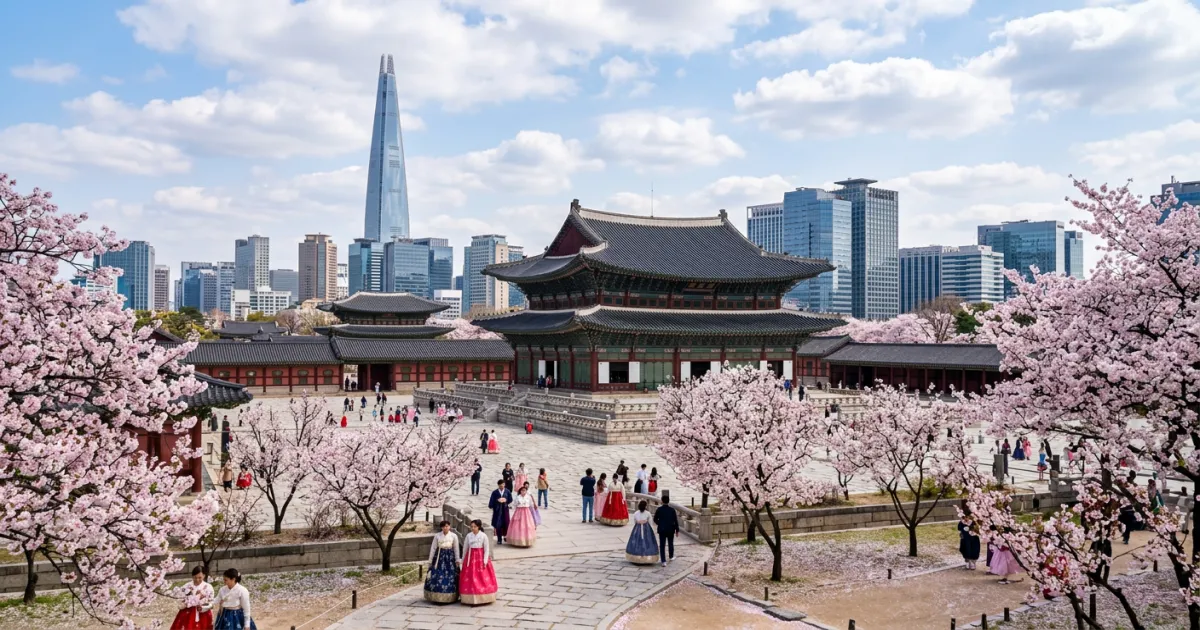
South Korea blends ancient temples and royal palaces with neon-lit cities, cutting-edge technology, and one of the world’s best food scenes. From the energy of Seoul to the coastal beauty of Busan and the volcanic landscapes of Jeju Island, it rewards travelers who look beyond the K-pop headlines. This guide covers everything you need to plan your trip. For a broader framework, see our step-by-step trip planning guide.
Key Planning Facts
- Location: East Asia, Korean Peninsula
- Currency: Korean Won (KRW). Approximately 1,350 KRW per 1 USD
- Language: Korean (English is spoken in tourist areas of Seoul and Busan, limited elsewhere)
- Visa for U.S. citizens: No visa or K-ETA required through December 31, 2026. Stay up to 90 days. Digital e-Arrival Card required (complete online within 72 hours before your flight). K-ETA becomes mandatory January 1, 2027
- Best months to visit: April to June and September to November
- Average daily budget: $70 to $200 per person depending on travel style
- Time zone: Korea Standard Time (KST, UTC+9, no daylight saving)
- Flight time from U.S.: 11 to 14 hours from West Coast; 14 to 17 hours from East Coast
- Important: Google Maps does not work in South Korea. Download KakaoMap or Naver Map before your trip
Best Time to Visit South Korea
Spring (April to June)
Spring is the most popular season to visit. Cherry blossoms bloom across the country from late March through mid-April, starting in the south (Jeju and Busan) and moving north to Seoul. Temperatures are mild (10 to 25 degrees Celsius, or 50 to 77 degrees Fahrenheit) and skies are generally clear. May and early June are warm and pleasant before the summer monsoon arrives.
Autumn (September to November)
Autumn rivals spring as the best season. Fall foliage peaks from mid-October to early November, turning mountains and temple grounds into dramatic landscapes of red, orange, and gold. Temperatures are comfortable (10 to 25 degrees Celsius) and humidity drops. Harvest festivals and food events are common.
Summer (July to August)
Summer brings hot, humid weather (30 to 35 degrees Celsius, or 86 to 95 degrees Fahrenheit) and a monsoon season (typically late June through July) with heavy rainfall. This is the busiest domestic travel season, with crowded beaches and higher prices. Festivals and nightlife are at their peak.
Winter (December to February)
Winter is cold and dry, with temperatures dropping to minus 5 to 5 degrees Celsius (23 to 41 degrees Fahrenheit) in Seoul. It is excellent for skiing and snowboarding at resorts like Pyeongchang and Yongpyong (host venues of the 2018 Winter Olympics). Street food markets and heated indoor attractions make winter travel comfortable, and prices are low.
How Long to Spend in South Korea
For a first visit, plan for 7 to 10 days. This gives you 3 to 4 days in Seoul, 2 to 3 days in Busan, and optionally 2 to 3 days on Jeju Island. A compact 5-day trip works if you focus on Seoul with a day trip. Two weeks lets you add cultural cities like Gyeongju and Jeonju, or explore the countryside and national parks.
Budget and Costs
South Korea offers outstanding value for travelers. Food in particular is remarkably affordable, with excellent meals available for under $10.
Daily Budget Ranges
- Budget: $50 to $80 per person per day. Hostels or guesthouses ($20 to $50 per night), street food and casual restaurants, public transit
- Mid-range: $120 to $200 per person per day. Hotels ($80 to $150 per night), restaurant meals, KTX trains, paid attractions
- Luxury: $250 and up per person per day. Premium hotels ($200 and up per night), fine dining, private tours, luxury ryokan-style stays
Key Costs
- T-Money card: A rechargeable transit card that works on all subways, buses, and some taxis nationwide. Get one at any convenience store for 2,500 KRW ($2). Subway rides are about 1,350 KRW ($1), buses about 1,200 KRW ($0.90), with 10% discount when using T-Money
- KTX high-speed train: Seoul to Busan in about 2.5 hours for 59,800 KRW ($45). Seoul to Gyeongju in about 2 hours. Book at letskorail.com or at station kiosks
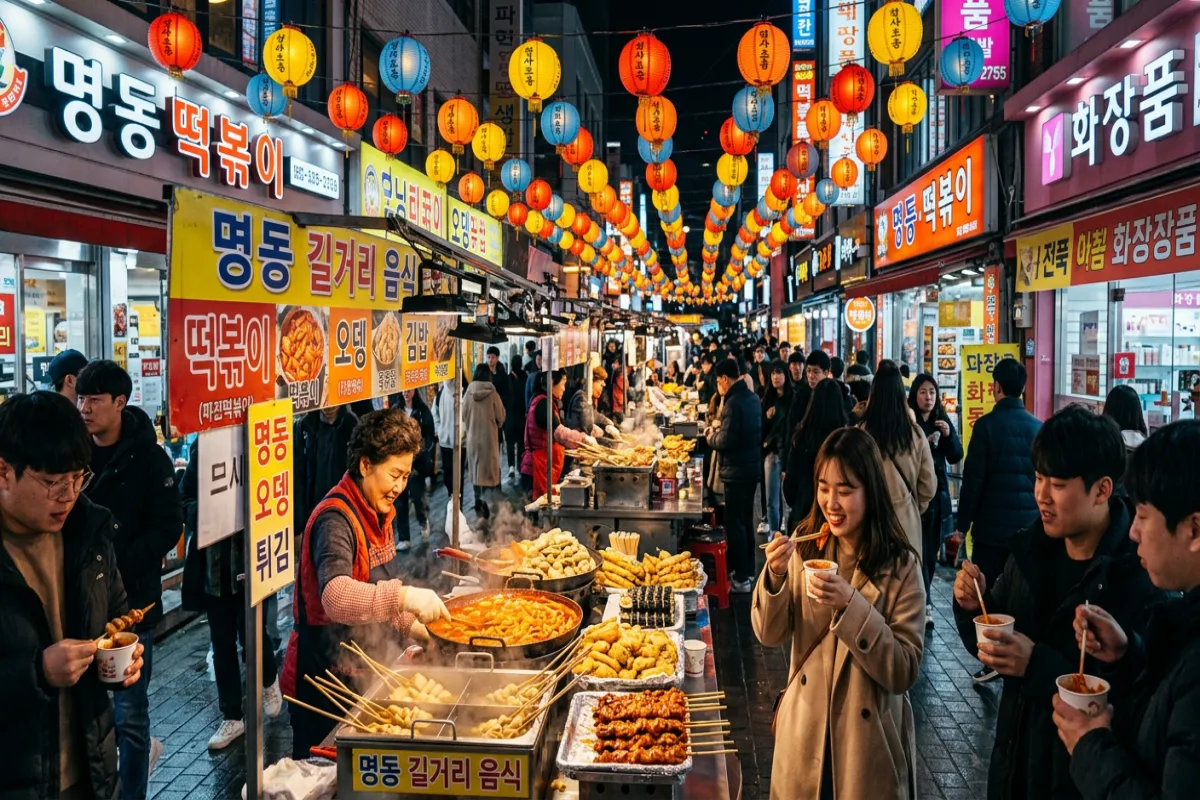
- Meals: Street food (tteokbokki, kimbap, hotteok): $2 to $5. Korean BBQ for two: $20 to $40. Bibimbap at a casual restaurant: $7 to $12. Convenience store meals (surprisingly good): $3 to $6
- Attractions: Most palaces: 3,000 KRW ($2.25). Many temples: free. DMZ tour: $50 to $100. Jjimjilbang (Korean spa/bathhouse): 10,000 to 15,000 KRW ($7 to $11)
Use our free travel budget template to plan your Korea expenses.
Getting There and Getting Around
Flying In
Incheon International Airport (ICN), about 60 kilometers west of Seoul, is the main international gateway. Direct flights operate from Los Angeles, San Francisco, New York, Seattle, Dallas, and other major U.S. cities. Gimpo Airport (GMP) handles some domestic and short-haul regional flights. Jeju Airport (CJU) has flights from across Asia.
Incheon Airport to Seoul
The Airport Railroad Express (AREX) runs to Seoul Station in 43 minutes (express, 9,500 KRW) or about 60 minutes (all-stop, 4,150 KRW). Airport buses serve major hotel districts for 10,000 to 17,000 KRW. Taxis cost about 65,000 to 85,000 KRW ($48 to $63).
KTX High-Speed Rail
The KTX network connects Seoul to Busan (2.5 hours), Gyeongju (2 hours), Gwangju, Jeonju, and other cities. Trains are punctual, comfortable, and affordable. Book online at letskorail.com for English-language reservations.
City Transit
Seoul, Busan, and other major cities have excellent subway and bus systems. The T-Money card works everywhere and makes transfers between subway and bus seamless. Seoul’s subway system is one of the most extensive in the world, with signage in Korean and English.
Jeju Island
Fly from Seoul Gimpo Airport (GMP) to Jeju (CJU) in about 1 hour. This is one of the busiest air routes in the world, with flights every 15 to 20 minutes. A rental car is strongly recommended on Jeju, as public bus routes are infrequent. International Driving Permits are accepted.
Where to Stay
Seoul
Myeongdong: Central location, great for shopping and food. Walking distance to palaces and Namsan Tower. Mid-range to upscale hotels.
Hongdae: The university district with the best nightlife, street food, and a younger vibe. Budget-friendly hostels and guesthouses.
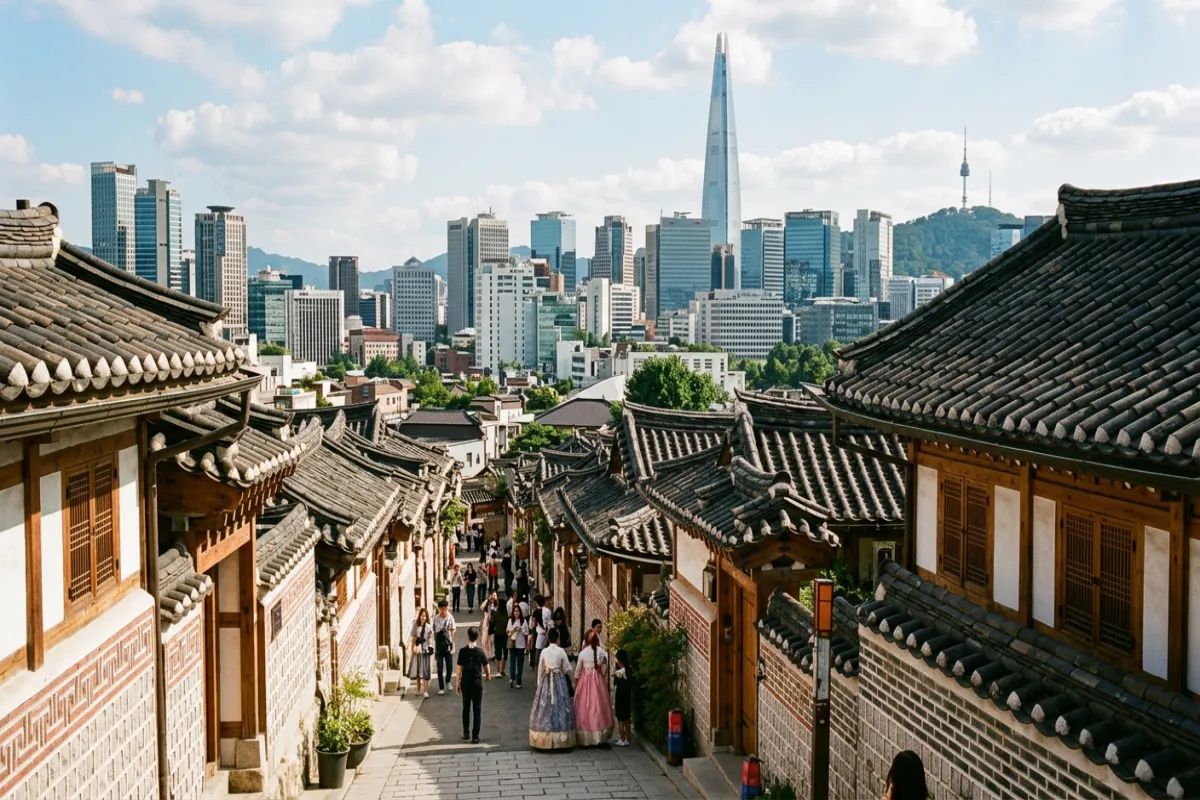
Insadong: Traditional arts and crafts neighborhood near Gyeongbokgung Palace. Good balance of culture and convenience. Many hanok (traditional Korean house) guesthouses available.
Gangnam: The modern, upscale south side of Seoul. Premium hotels, high-end shopping, and K-pop entertainment venues.
Busan
Haeundae: Korea’s most famous beach neighborhood. Hotels, seafood restaurants, and nightlife. The Haeundae Film District and rooftop bars offer ocean views.
Seomyeon: Busan’s central hub for shopping, dining, and transit connections. More affordable than Haeundae.
Jeju Island
Jeju City (north) has the most hotels and is near the airport. Seogwipo (south) is closer to natural attractions. Boutique hotels, pensions, and Airbnb-style stays are popular across the island.
Must-See Attractions and Experiences
Seoul
Gyeongbokgung Palace: The largest of Seoul’s Five Grand Palaces, dating to 1395. Watch the Royal Guard Changing Ceremony at the main gate. Rent a hanbok (traditional Korean clothing) for free entry to all palaces and stunning photos.
Bukchon Hanok Village: A preserved neighborhood of traditional Korean houses (hanok) between two palaces. Walk the narrow alleyways for architecture and views.
Myeongdong and Namdaemun Market: Seoul’s shopping and street food epicenter. Myeongdong for cosmetics and fashion; Namdaemun Market (Korea’s oldest and largest traditional market) for everything from food to souvenirs.
N Seoul Tower (Namsan Tower): Panoramic views of Seoul from Namsan Mountain. Take the cable car up and walk down through the park. Visit at sunset for the best photo opportunities.
DMZ Tour: The Demilitarized Zone between North and South Korea is one of the most unique experiences in the world. Tours from Seoul include the Joint Security Area (JSA), observation points, and infiltration tunnels. Book through an authorized tour operator; advance passport registration is required.
Busan
Gamcheon Culture Village: A hillside neighborhood of colorful houses, murals, and art installations. Often called the “Machu Picchu of Busan.”
Jagalchi Fish Market: Korea’s largest seafood market. Choose live fish and have it prepared at a restaurant upstairs. An authentic and memorable dining experience.
Haedong Yonggungsa Temple: A seaside Buddhist temple perched on cliffs above the ocean. One of the few temples in Korea built on the waterfront rather than in the mountains.
Haeundae Beach: Korea’s most famous beach. Walk the Haeparang coastal trail, visit the Marine City skyline at night, and eat fresh seafood at nearby restaurants.
Jeju Island
Hallasan National Park: Climb South Korea’s highest peak (1,947 meters). The Seongpanak and Gwaneumsa trails lead to the summit crater lake. Allow a full day (8 to 10 hours round trip).
Manjanggul Lava Tube: One of the longest lava tubes in the world. Walk through 1 kilometer of the illuminated underground cave.
Jeju Olle Trail: A network of 26 coastal walking routes totaling 425 kilometers around the island. Individual routes range from 10 to 20 kilometers and can be done as day hikes.
Cultural Experiences
Jjimjilbang: Korean bathhouses are a cultural institution. These 24-hour spa complexes include hot baths, saunas, sleeping rooms, snack bars, and entertainment areas. Dragon Hill Spa in Seoul is the most famous for tourists.
Templestay: Spend a night at a Buddhist temple, participating in meditation, tea ceremonies, and monks’ daily routines. Programs are available at temples throughout the country through templestay.com.
Food and Dining
Korean food is a highlight of any visit. The cuisine emphasizes fermented flavors, communal dining, and an extraordinary number of side dishes (banchan) served with every meal.
- Korean BBQ: Grill marinated beef (bulgogi), pork belly (samgyeopsal), or short ribs (galbi) at your table. Wrap in lettuce with garlic, chili paste, and banchan. A quintessential Korean experience
- Bibimbap: Mixed rice with vegetables, chili paste, and an egg. Jeonju is considered the hometown of bibimbap
- Tteokbokki: Spicy rice cakes in chili sauce. The most popular street food in Korea
- Kimchi: Fermented vegetables (usually cabbage) served with every meal. There are hundreds of regional varieties
- Fried chicken and beer (chimaek): Korean fried chicken is crispy, double-fried, and served with a variety of sauces. Paired with beer, it is a national late-night tradition
- Kimbap: Korean rice rolls filled with vegetables, egg, and meat. Sold at convenience stores and street stalls for $2 to $4. A perfect grab-and-go meal
- Pajeon: Savory Korean pancake with scallions, often served with makgeolli (rice wine). Best on a rainy day, which is a Korean tradition
Tipping: Not customary in South Korea. Do not tip at restaurants, taxis, or hotels. It can be considered rude in some settings.
Safety and Practical Tips
- Safety: South Korea is one of the safest countries in the world for travelers. Violent crime against tourists is extremely rare. You can walk safely in most neighborhoods at night
- Google Maps: Does not work in South Korea due to government mapping restrictions. Download KakaoMap or Naver Map before your trip. Both have English interfaces and are essential for navigation
- Cash vs. cards: Credit cards are accepted almost everywhere, including street vendors and convenience stores. Samsung Pay and Apple Pay work widely. Cash is useful for traditional markets
- Wi-Fi: Free public Wi-Fi is available in most subway stations, cafes, and public spaces. Pocket Wi-Fi rentals and tourist SIM cards are available at Incheon Airport
- Shoes off: Remove shoes when entering traditional restaurants (those with floor seating), temples, and Korean homes
- Convenience stores: GS25, CU, and 7-Eleven are everywhere and stock surprisingly good meals, including kimbap, ramen, sandwiches, and snacks for $2 to $5
- Drinking culture: Alcohol is deeply embedded in Korean social culture. Soju is the most popular spirit. When drinking with Koreans, pour for others (not yourself) and turn slightly away when drinking in front of elders
- Electrical outlets: Type C and F plugs (round two-pin, same as Europe). Voltage is 220V
- Emergency number: 112 (police), 119 (fire/ambulance)
Sample 10-Day South Korea Itinerary
Days 1 to 4: Seoul
Day 1: Arrive at Incheon Airport (ICN). Take AREX to Seoul Station. Explore Myeongdong for street food and shopping. Day 2: Gyeongbokgung Palace (rent hanbok for free entry), Bukchon Hanok Village, Insadong for traditional crafts, Cheonggyecheon Stream walk, evening at Gwangjang Market (the oldest market in Seoul, featured in Netflix’s Street Food). Day 3: DMZ tour (full day, book in advance). Evening: Korean BBQ dinner in Mapo-gu. Day 4: Namsan Tower (cable car up, walk down), War Memorial of Korea, shopping in Gangnam or Hongdae, jjimjilbang evening.
Day 5: KTX to Gyeongju
Take the KTX from Seoul to Singyeongju Station (about 2 hours). Explore the “museum without walls”: Bulguksa Temple (UNESCO), Seokguram Grotto, Tumuli Park (ancient royal burial mounds), and Anapji Pond (illuminated at night). Overnight in Gyeongju.
Days 6 to 7: Busan
Day 6: Train from Gyeongju to Busan (30 minutes). Gamcheon Culture Village, Jagalchi Fish Market for lunch, BIFF Square. Day 7: Haedong Yonggungsa Temple, Haeundae Beach, Dongbaek Island coastal walk. Evening: seafood dinner at Haeundae and rooftop bar views.
Days 8 to 10: Jeju Island
Fly from Busan to Jeju (1 hour). Day 8: Pick up rental car. Manjanggul Lava Tube, Seongsan Ilchulbong (Sunrise Peak). Day 9: Hallasan hike (full day) or Jeju Olle Trail coastal walk, Jungmun Beach area. Day 10: Tea plantations, Cheonjiyeon Waterfall, return car and fly to Seoul or Incheon for departure.
Ready-Made South Korea Itineraries
We have built day-by-day itineraries with activities, travel times, budgets, and local tips. Clone any into your trip planner to customize:
- South Korea 5-Day Itinerary
- South Korea 7-Day Itinerary
- South Korea 10-Day Itinerary
- Seoul 3-Day Itinerary
- Seoul 5-Day Itinerary
Or build a custom itinerary with our free AI trip planner.
More Planning Resources
Frequently Asked Questions
Do U.S. citizens need a visa for South Korea?
No. Through December 31, 2026, U.S. citizens do not need a visa or K-ETA for tourist stays up to 90 days. You must complete a digital e-Arrival Card online within 72 hours before your flight. Starting January 1, 2027, a K-ETA (Korean Electronic Travel Authorization) will be mandatory.
What is the best time to visit South Korea?
April to June (spring) and September to November (autumn) offer the best weather. Cherry blossoms peak in early to mid-April. Fall foliage peaks from mid-October to early November. Both seasons have comfortable temperatures and clear skies.
How expensive is South Korea?
South Korea is affordable by developed-country standards. Budget travelers can manage on $50 to $80 per day, mid-range travelers should plan $120 to $200 per day. Food is remarkably cheap, with excellent meals available for under $10.
How do I get from Seoul to Busan?
The KTX high-speed train takes about 2.5 hours and costs 59,800 KRW (about $45). Trains run frequently throughout the day. Book at letskorail.com or at station kiosks.
Why does Google Maps not work in South Korea?
South Korean government restrictions prevent Google from providing detailed map data for the country. Download KakaoMap or Naver Map instead. Both are available in English and are essential for navigation, transit directions, and restaurant discovery.
Is tipping expected in South Korea?
No. Tipping is not customary and is not expected at restaurants, hotels, or taxis. In some traditional settings, offering a tip can be considered inappropriate.
Do I need to rent a car?
Not for Seoul and Busan, which have excellent public transit. A rental car is strongly recommended for Jeju Island, where bus routes are infrequent and attractions are spread out. International Driving Permits are accepted.
What is a jjimjilbang?
A jjimjilbang is a Korean bathhouse and spa complex, open 24 hours. They include gender-separated bathing areas with hot and cold pools, saunas, communal sleeping rooms, snack bars, and entertainment. They cost about $7 to $11 to enter and are a unique cultural experience.
Is South Korea safe?
Extremely safe. South Korea has one of the lowest violent crime rates in the world. Streets are safe to walk at all hours. The only common concerns are minor theft in very crowded areas.
What should I pack for South Korea?
Layers for spring and fall (temperatures shift throughout the day). Light, breathable clothing for summer. A warm coat, gloves, and thermal layers for winter. Comfortable walking shoes are essential. Bring a universal adapter (Type C/F plug, 220V).