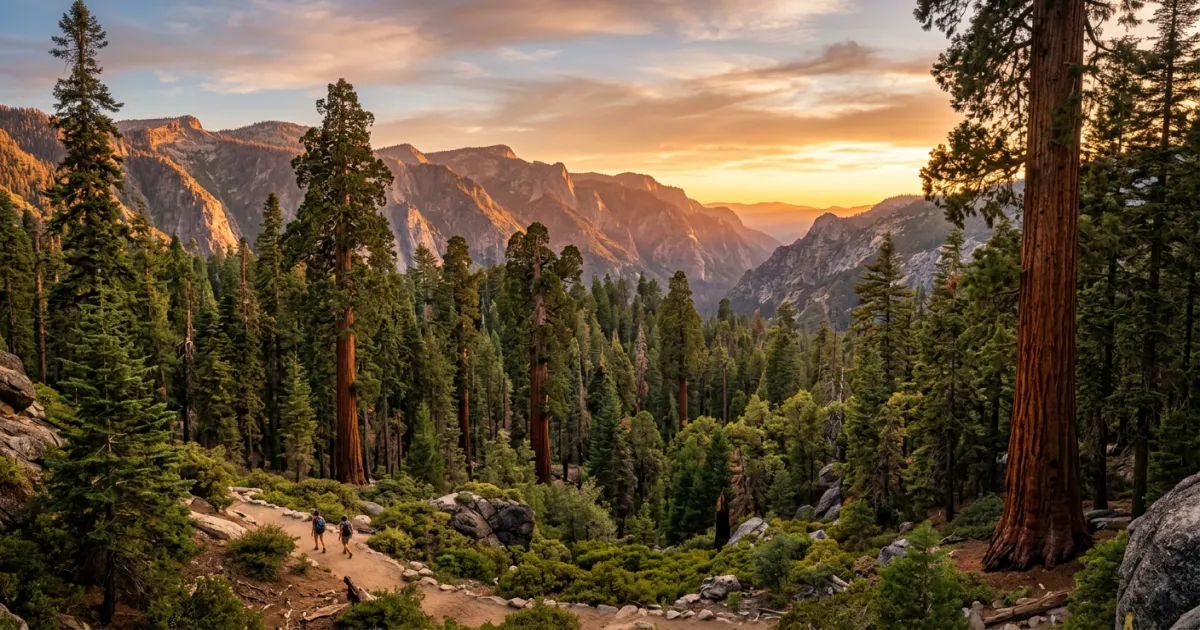
| Sequoia National Park Quick Facts | |
|---|---|
| State | California, USA (Sierra Nevada) |
| Currency | US Dollar (USD) |
| Language | English |
| Time Zone | Pacific Time (PT) |
| Daily Budget | $60 to $200+ per person |
| Best Time | May to October |
| Getting There | Fresno (FAT) or Visalia, about 1.5 hours west |
Sequoia National Park is home to the largest trees on Earth by volume. The General Sherman Tree, standing 275 feet tall with a circumference of over 100 feet at the base, is the single largest living organism on the planet. The park sits in the southern Sierra Nevada mountains, adjacent to Kings Canyon National Park (managed jointly and accessible on the same entry fee). Beyond the giant sequoias, the park offers deep canyons, alpine meadows, and over 800 miles of trails ranging from paved walks to multi-day backcountry routes. It is less crowded than Yosemite while offering equally spectacular scenery.
For a broader framework for organizing any trip, our how to plan a trip guide covers the fundamentals.
Best Time to Visit Sequoia National Park
May through October is the main visitor season. The Generals Highway connecting the two parks is fully open by late May (weather dependent). Summer (June through August) brings warm days in the 70s to 80s F at the Giant Forest elevation (6,400 feet) and the most reliable trail access. September and October are excellent with fewer crowds and golden fall light. Winter brings snow to the upper elevations, and chains may be required on roads. The sequoia groves are beautiful under snow but access is limited.
Getting to Sequoia National Park
The nearest airports are Fresno Yosemite International (FAT), about 80 miles and 1.5 hours west, and the smaller Visalia Municipal Airport. From Los Angeles, the drive is about 4 hours north via CA-99 and CA-198. From San Francisco, about 4.5 hours southeast. The park has two entrances: the Ash Mountain entrance from Three Rivers on CA-198 (south) and the Big Stump entrance from CA-180 (connecting to Kings Canyon). The road into the park is steep and winding with tight switchbacks. RVs over 22 feet face restrictions on some roads.
Top Things to Do in Sequoia National Park
- General Sherman Tree: The largest tree in the world by volume. A paved 0.5-mile trail leads downhill from the parking area to the tree. The Congress Trail loop (2 miles) passes several other named giant sequoias.
- Giant Forest: The park’s most popular area with the largest concentration of giant sequoias anywhere on Earth. Several trails weave through the groves. The Big Trees Trail is a 1.3-mile loop around a meadow surrounded by sequoias.
- Moro Rock: A granite dome with a steep staircase (350 steps) carved into the rock leading to a summit with panoramic views of the Great Western Divide. Not for those uncomfortable with heights, but the views are extraordinary.
- Crystal Cave: A marble cave with stalactites and stalagmites, accessible only by guided tour (book at recreation.gov in advance). Tours run about $16 per adult and last about 50 minutes. The cave maintains a constant 48 F.
- Kings Canyon Scenic Byway: The road descends into one of the deepest canyons in North America. Grizzly Falls, Roaring River Falls, and the Zumwalt Meadow trail are highlights. The canyon floor is 4,000 feet below the rim.
- Tokopah Falls Trail: A 3.4-mile round trip trail from Lodgepole Campground to a 1,200-foot granite cliff with a waterfall. Best in late spring and early summer when snowmelt feeds the falls.
Where to Stay
Inside the park, Wuksachi Lodge is the only lodge-style accommodation with rooms from $200 to $350 per night. Campgrounds are the most popular option: Lodgepole (most amenities, reservable), Dorst Creek, and Potwisha are the main ones ($22 per night). John Muir Lodge in Grant Grove (Kings Canyon) offers another in-park option. Outside the park, Three Rivers (at the southern entrance) has motels, cabins, and vacation rentals from $80 to $200. Visalia (45 minutes west) has the widest selection of chain hotels from $70 to $150.
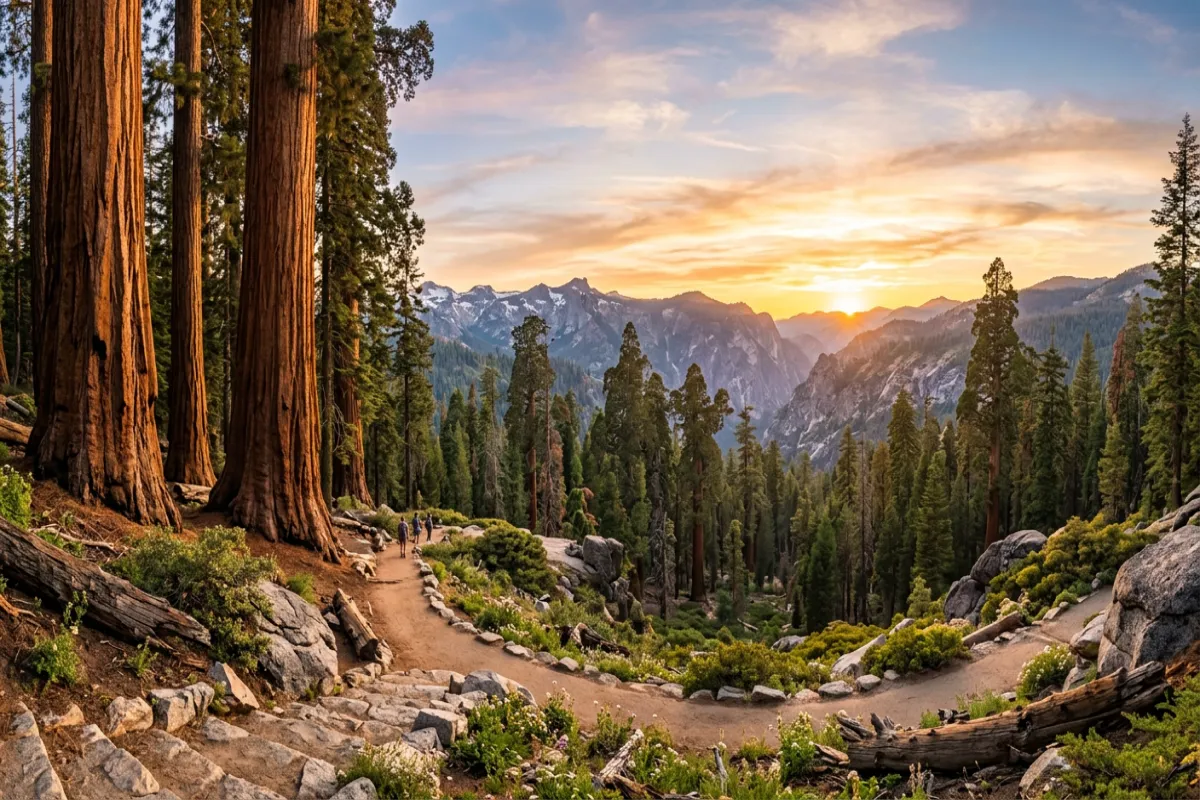
Sample 2-Day Sequoia National Park Itinerary
- Day 1 – Giant Sequoias: Enter from Ash Mountain and drive the Generals Highway to the Giant Forest. Walk the Congress Trail past General Sherman Tree (2 miles). After lunch at the Lodgepole Market, climb Moro Rock for panoramic views (350 steps). Afternoon on the Big Trees Trail. Sunset at one of the roadside viewpoints.
- Day 2 – Kings Canyon: Drive north to Kings Canyon via the Generals Highway. Take the Kings Canyon Scenic Byway down into the canyon. Hike the Zumwalt Meadow trail (1.5 miles) along the Kings River. Visit Grizzly Falls and Roaring River Falls. Afternoon tour of Crystal Cave (book ahead). Depart via Three Rivers or continue north toward Yosemite.
Budget Estimate
Budget travelers can manage on $60 to $100 per day by camping ($22 per night), cooking at the campsite, and sticking to the many free trails. Park entry is $35 per vehicle, valid for 7 days at both Sequoia and Kings Canyon. An America the Beautiful Pass ($80) covers entry to all national parks for a year. Mid-range travelers should plan for $150 to $200 covering Wuksachi Lodge or a Three Rivers rental, restaurant meals, and a Crystal Cave tour ($16). Groceries and dining options inside the park are limited, so bring supplies. Gas is available at limited locations in the park.
Planning Tools
Ready to start building your Sequoia National Park trip? Our free AI trip planner can generate a custom itinerary based on your dates, budget, and interests.
Frequently Asked Questions
What is the difference between Sequoia and Kings Canyon?
They are adjacent parks managed as one unit with a single entry fee. Sequoia is known for the giant sequoia groves (General Sherman Tree, Giant Forest) and Moro Rock. Kings Canyon is known for its deep canyon and the Kings Canyon Scenic Byway. Both are worth visiting, and you can easily combine them in 2 to 3 days.
Is Sequoia National Park less crowded than Yosemite?
Yes, significantly. Sequoia receives about 1.2 million visitors per year compared to Yosemite’s 3.8 million. You will still encounter crowds at General Sherman Tree and Moro Rock in summer, but overall the park feels less congested. No timed entry reservation is currently required.
Can you see giant sequoias and Yosemite in one trip?
Yes. Sequoia/Kings Canyon and Yosemite are about 4 to 5 hours apart by car (no direct road through the mountains; you must go around via CA-99 or CA-41). A common plan is 2 days at Sequoia/Kings Canyon and 2 to 3 days at Yosemite.