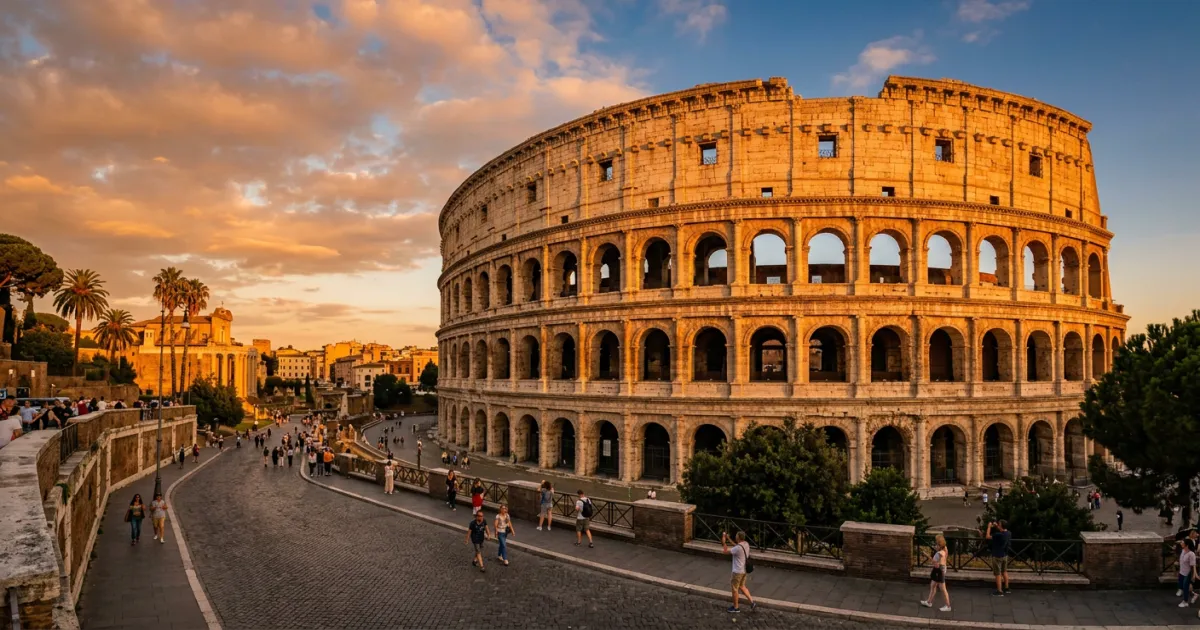
Rome is a city where you walk past 2,000-year-old ruins on the way to get a morning espresso. The Colosseum, Vatican, Pantheon, and Roman Forum are the obvious draws, but Rome’s real magic is in the neighborhoods: the cobblestone alleys of Trastevere, the artisan workshops of Monti, and the piazzas where daily life unfolds over aperitivo. This guide covers everything you need to plan your trip. For a broader approach, see our step-by-step trip planning guide.
Key Planning Facts
- Location: Central Italy, Lazio region
- Currency: Euro (EUR)
- Language: Italian (English spoken at tourist sites and most restaurants)
- Visa for U.S. citizens: Not required for stays up to 90 days (Schengen Area). ETIAS expected late 2026, EUR 7
- Best months to visit: April to May and September to October
- Average daily budget: EUR 100 to 250 per person depending on travel style
- Time zone: Central European Time (CET, UTC+1)
- Airport: Leonardo da Vinci-Fiumicino (FCO), about 30 km southwest of the city center. Ciampino (CIA) for budget airlines
Best Time to Visit Rome
Spring (April to May)
The best time for most visitors. Temperatures of 15 to 25 degrees Celsius (59 to 77 degrees Fahrenheit), blooming gardens, and comfortable walking weather. Easter brings crowds to the Vatican. May is particularly pleasant with warm days and manageable tourism levels.
Early Fall (September to October)
Warm temperatures (20 to 28 degrees Celsius), lighter crowds than summer, and golden light that makes the city glow. September is warm enough for outdoor dining. October brings occasional rain but excellent conditions for sightseeing.
Summer (June to August)
Hot. July and August regularly exceed 35 degrees Celsius (95 degrees Fahrenheit). August is particularly challenging because many locals leave the city, closing some authentic restaurants and shops. Crowds are at their peak at major sites. If you visit in summer, start early, take a long afternoon break, and explore in the evening.
Winter (November to March)
Cool and occasionally rainy (5 to 15 degrees Celsius). Fewest tourists and lowest prices. Indoor attractions like the Vatican Museums and galleries are comfortable year-round. Christmas and New Year’s bring festive energy. The Vatican Museums are free on the last Sunday of each month.
How Long to Spend in Rome
3 to 4 days covers the major sites: the Colosseum and Roman Forum, Vatican City, the Pantheon, Trastevere, and a few piazzas. 5 to 7 days lets you explore neighborhoods like Monti, Testaccio, and the Jewish Ghetto, take day trips to Tivoli or Ostia Antica, and eat your way through the city at a relaxed pace. Rome rewards slow exploration.
Budget and Costs
Rome is moderately priced compared to northern European capitals. Street food and trattorias offer excellent value.
Daily Budget Ranges
- Budget: EUR 80 to 130 per person per day. Hostels or budget hotels (EUR 50 to 90 per night), pizza al taglio and street food, free attractions, walking
- Mid-range: EUR 160 to 250 per person per day. Boutique hotels (EUR 120 to 180 per night), trattoria meals, skip-the-line tickets, some taxis
- Luxury: EUR 300 and up per person per day. Four or five-star hotels (EUR 250 and up per night), fine dining, private guides
Key Costs
- Colosseum + Roman Forum + Palatine Hill: EUR 16 to 22 (combo ticket). Book online at coopculture.it to skip lines. Guided tours with skip-the-line access cost EUR 40 to 60
- Vatican Museums + Sistine Chapel: EUR 17 online (book at museivaticani.va). Free on the last Sunday of each month (expect long lines). Dress code: shoulders and knees must be covered
- Pantheon: EUR 5 (entry fee introduced in 2023)
- Metro: EUR 1.70 single ride. 7-day pass: EUR 24. Roma Pass (48 or 72 hours): EUR 32 to 52, includes transit and museum entry
- Meals: Espresso at a bar (standing): EUR 1 to 1.50. Pizza al taglio (by the slice): EUR 2 to 5. Trattoria lunch: EUR 12 to 18. Restaurant dinner: EUR 20 to 40. Aperitivo (drink + buffet snacks): EUR 8 to 15
- Fiumicino Airport to center: Leonardo Express train to Termini: EUR 14 (32 minutes). Taxi flat rate to city center: EUR 50
Use our free travel budget template to plan your Rome expenses.
Getting There and Getting Around
Flying In
Fiumicino Airport (FCO) is Rome’s main international airport with direct flights from many U.S. cities (New York, Chicago, Los Angeles, Atlanta, Miami, Philadelphia). Ciampino Airport (CIA) serves budget European carriers like Ryanair. The Leonardo Express train connects Fiumicino to Roma Termini station in 32 minutes (EUR 14).
Getting Around Rome
Rome is a walking city. Most major attractions are within a 30 to 45 minute walk of each other. The Metro has two main lines (A and B) that intersect at Termini station. Buses and trams fill in the gaps. Taxis are metered and have fixed rates from airports. Rideshare apps (Uber, Bolt) operate but are less common than taxis. Renting a car in Rome is not recommended; traffic is chaotic and parking is nearly impossible.
Rome’s Neighborhoods
Centro Storico (Historic Center)
The heart of ancient and Renaissance Rome. The Pantheon, Piazza Navona, Trevi Fountain, and Spanish Steps are all here. The most tourist-heavy area but also the most architecturally stunning. Restaurants range from tourist traps to hidden gems.
Trastevere
Across the Tiber River, Trastevere has cobblestone streets, ivy-covered buildings, and some of Rome’s best restaurants. It feels like a village within the city. Lively at night with bars and live music. One of the best neighborhoods for dinner.
Monti
Rome’s oldest neighborhood, now trendy with vintage shops, artisan workshops, wine bars, and independent restaurants. Walking distance to the Colosseum. Less touristy than the Centro Storico. A great base for travelers who want a local feel.
Testaccio
The working-class neighborhood that birthed many of Rome’s iconic dishes (cacio e pepe, carbonara, amatriciana). The Testaccio Market is excellent for food. Less polished, more authentic. The non-Catholic cemetery where Keats and Shelley are buried is here.
Vatican Area (Prati)
The neighborhood surrounding Vatican City. Useful as a base if the Vatican is your priority. More residential feel with good restaurants on Via Cola di Rienzo.
Must-See Attractions
Colosseum, Roman Forum, and Palatine Hill
The Colosseum (built 70 to 80 AD, held 50,000 spectators) is Rome’s most iconic monument. A combo ticket includes the Roman Forum (the political and social center of ancient Rome) and Palatine Hill (panoramic views over the Forum). Book online to skip ticket lines. An early morning or late afternoon visit avoids the worst crowds.
Vatican City
The world’s smallest independent state. St. Peter’s Basilica (free entry, the largest church in the world), the Sistine Chapel (Michelangelo’s ceiling), and the Vatican Museums (one of the world’s greatest art collections). Book Vatican Museums tickets online weeks in advance. The Basilica is free but has a security line. Climb the dome (551 steps) for a view over Rome.
Pantheon
The best-preserved building from ancient Rome (built 125 AD). The unreinforced concrete dome has an open oculus (hole) at the top that lets in light and rain. The engineering is still impressive 1,900 years later. Entry is EUR 5.
Trevi Fountain
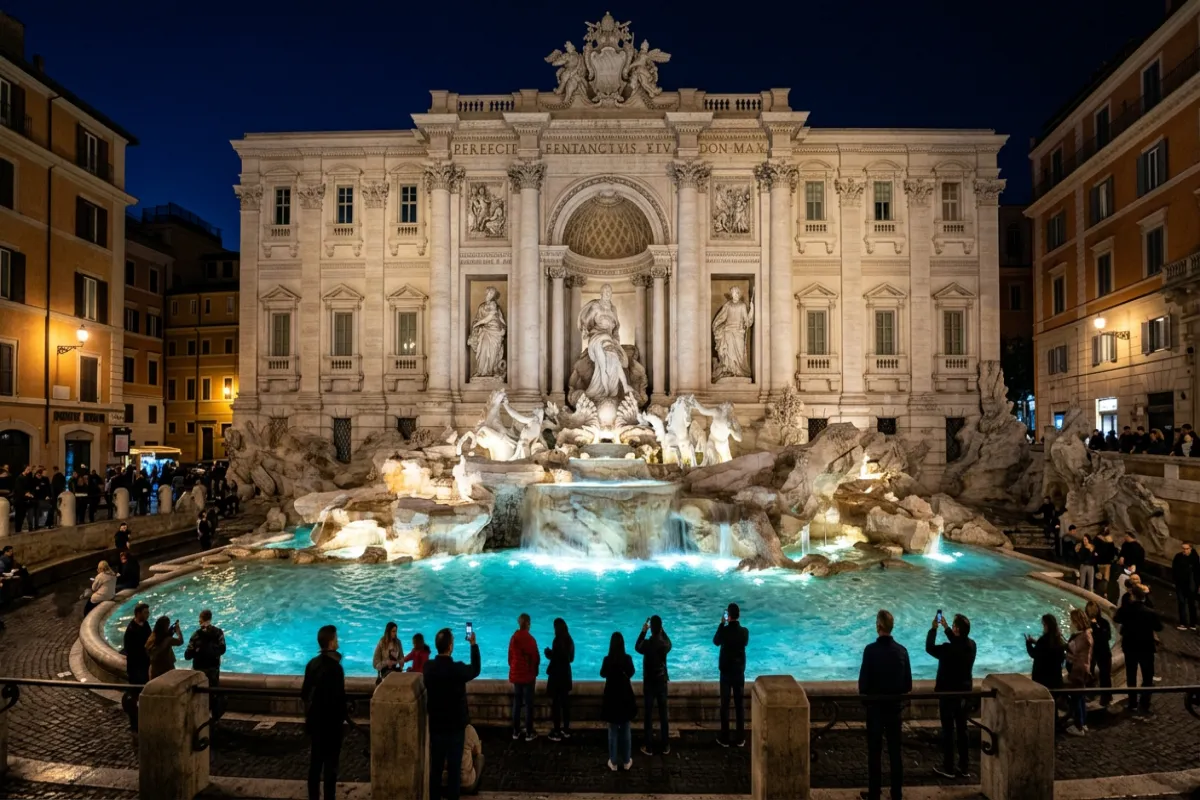
The largest Baroque fountain in Rome. Tradition says toss a coin over your left shoulder to ensure a return to Rome. Visit early morning or late evening to see it without crowds. The fountain is illuminated at night.
Borghese Gallery
A world-class art collection including Bernini sculptures and Caravaggio paintings in a beautiful villa surrounded by gardens. Reservations are mandatory (timed entry, 2-hour slots). Book at galleriaborghese.beniculturali.it.
Appian Way
The ancient Roman road (built 312 BC) lined with ruins, catacombs, and countryside just outside the city center. Rent a bike on Sundays when the road is closed to cars. The catacombs of San Callisto and San Sebastiano are open for guided tours.
Food and Dining
Roman cuisine is built on simplicity, quality ingredients, and centuries of tradition.
- Cacio e pepe: Pasta with pecorino cheese and black pepper. The simplest and most perfect Roman pasta. Every trattoria has its version
- Carbonara: Pasta with guanciale (cured pork cheek), egg, pecorino, and black pepper. Never made with cream in Rome
- Amatriciana: Pasta with guanciale, tomato sauce, and pecorino. A staple at trattorias
- Supplì: Deep-fried rice balls filled with mozzarella and tomato sauce. The Roman version of arancini. Street food perfection
- Pizza al taglio: Roman-style pizza sold by weight (cut with scissors, priced per slice). Found at bakeries and pizza shops across the city. A cheap, excellent meal
- Gelato: Look for shops that make their own (artigianale). Avoid places with mountains of brightly colored gelato (artificial colors). Natural pistachio gelato should be gray-green, not bright green
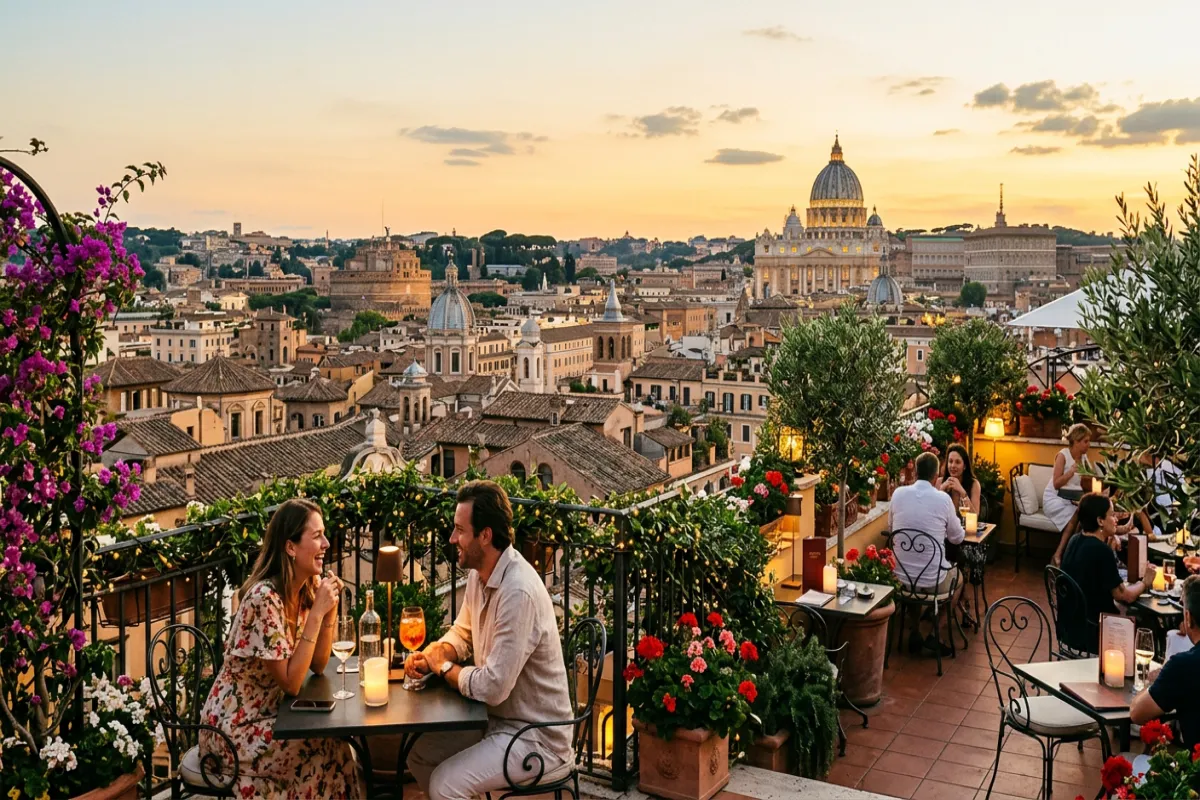
- Aperitivo: The Italian happy hour. Order a drink (Aperol Spritz, Negroni) and receive free snacks or a small buffet, typically from 6 to 9 PM
Dining tips: Lunch is the better value meal (set menus, lighter crowds). Many restaurants add a “coperto” (cover charge) of EUR 2 to 4 per person. Service charge (servizio) may or may not be included; check the bill. Tipping 5 to 10 percent is appreciated but not required. Eating near major tourist sites (Trevi, Piazza Navona) is more expensive and often lower quality. Walk two blocks away for better food at lower prices.
Safety and Practical Tips
- Pickpockets: Rome’s biggest safety concern. Crowded areas (Metro, Colosseum, Trevi Fountain, Termini station) are hotspots. Use a crossbody bag, keep valuables in front pockets, and be wary of distraction techniques (people approaching with clipboards, bracelets, or petitions)
- Water fountains: Rome has over 2,500 free drinking water fountains (nasoni) throughout the city. The water comes from ancient aqueducts and is perfectly safe. Carry a reusable bottle
- Dress code for churches: Shoulders and knees must be covered to enter the Vatican, St. Peter’s, and many other churches. Carry a scarf or light cover-up
- Cobblestones: Wear comfortable, sturdy shoes. Rome’s cobblestone streets (sampietrini) are beautiful but hard on feet and ankles, especially in heels
- Siesta hours: Some smaller shops and restaurants close between 1 PM and 3:30 PM. Major attractions stay open
- Booking ahead: Book the Colosseum, Vatican Museums, and Borghese Gallery online well in advance. Walk-up tickets are available but lines can be 1 to 3 hours long
- Electrical outlets: Type C, F, and L plugs. Bring a European adapter
- Emergency number: 112
Sample 4-Day Rome Itinerary
Day 1: Ancient Rome
Morning: Colosseum (book early time slot). Walk through the Roman Forum and up Palatine Hill. Lunch in Monti neighborhood. Afternoon: Capitoline Museums or walk to Piazza Venezia and the Vittoriano. Evening: aperitivo and dinner in Monti.
Day 2: Vatican City
Early morning: Vatican Museums and Sistine Chapel (first time slot to beat crowds). Walk through St. Peter’s Basilica. Climb the dome for city views. Lunch in Prati neighborhood. Afternoon: Castel Sant’Angelo and walk along the Tiber. Evening: dinner in Trastevere, walk the cobblestone streets.
Day 3: Historic Center
Morning: Pantheon (arrive early). Walk to Piazza Navona. Stop at the Trevi Fountain (quieter in the morning). Lunch near Campo de’ Fiori market. Afternoon: Spanish Steps, Villa Borghese park, or Borghese Gallery (if pre-booked). Evening: aperitivo overlooking a piazza, then dinner.
Day 4: Neighborhoods and Departure
Morning: Testaccio neighborhood and Testaccio Market. Walk the Appian Way or visit the catacombs. Alternatively: day trip to Tivoli (Hadrian’s Villa and Villa d’Este, 45 minutes by train). Afternoon: final gelato, last-minute shopping, head to airport.
Ready-Made Rome Itineraries
We have built day-by-day itineraries with activities, travel times, budgets, and local tips:
Or build a custom itinerary with our free AI trip planner.
More Planning Resources
Frequently Asked Questions
What is the best time to visit Rome?
April to May and September to October. Comfortable temperatures, manageable crowds, and golden light. Avoid August (extreme heat, locals on vacation, many restaurants closed). Winter is cold but offers the lowest prices and fewest tourists.
How many days do I need in Rome?
3 to 4 days for major sites (Colosseum, Vatican, Pantheon, Trastevere). 5 to 7 days for a deeper exploration of neighborhoods, day trips, and a relaxed pace. Rome is a city that rewards slow travel.
Do I need to book attraction tickets in advance?
Yes for the Colosseum, Vatican Museums, and Borghese Gallery. Online booking avoids lines of 1 to 3 hours. The Pantheon accepts walk-up tickets but has occasional queues. Book as far ahead as possible for summer visits.
How expensive is Rome?
Moderate for a European capital. Budget travelers can manage on EUR 80 to 130 per day. Mid-range: EUR 160 to 250. Street food (pizza al taglio, suppli) and trattorias offer excellent value. Eat away from major tourist sites for better prices.
Is Rome safe?
Generally safe. The biggest risk is pickpocketing in crowded tourist areas and on the Metro. Use a crossbody bag, be aware of distraction techniques, and avoid flashing valuables.
Do I need a car in Rome?
No. Do not drive in Rome. Traffic is chaotic, parking is nearly impossible, and much of the historic center is restricted (ZTL zones that fine unauthorized vehicles). Walk, use the Metro, or take taxis.
What is the dress code for the Vatican?
Shoulders and knees must be covered. This applies to both men and women for the Vatican Museums, Sistine Chapel, and St. Peter’s Basilica. Carry a light scarf or cover-up.
Can I drink the tap water in Rome?
Yes. Rome has over 2,500 free public drinking fountains (nasoni) fed by ancient aqueducts. The water is clean and cold. Carry a reusable bottle.
What is coperto?
A cover charge of EUR 2 to 4 per person added to restaurant bills. It covers bread and table settings. It is standard and not a scam. Service charge (servizio) may be separate.
What should I pack for Rome?
Comfortable walking shoes (cobblestones are hard on feet), a light cover-up for churches, sunscreen, a reusable water bottle, a crossbody bag for security, and layers for spring and fall (evenings cool down).