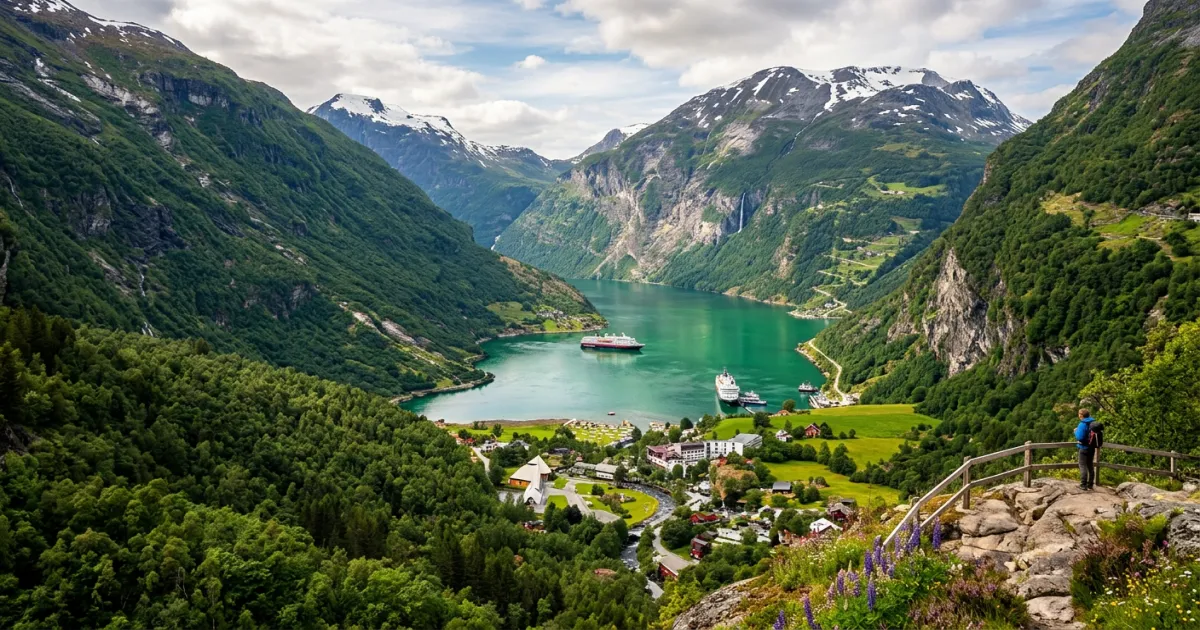
Norway is one of the most dramatic natural landscapes on earth. The fjords, northern lights, midnight sun, and Arctic wilderness offer experiences you will not find anywhere else in Europe. It is expensive, but the quality of the scenery, safety, and infrastructure makes every krone worth it. This guide covers everything you need to plan your trip. For a broader approach, see our step-by-step trip planning guide.
Key Planning Facts
- Location: Northern Europe, Scandinavian Peninsula
- Currency: Norwegian Krone (NOK). Approximately 10 NOK per 1 USD
- Language: Norwegian (English spoken fluently by nearly everyone)
- Visa for U.S. citizens: Not required for stays up to 90 days (Schengen Area). ETIAS authorization expected late 2026, EUR 7
- Best months to visit: June to August for fjords and hiking; January to March for northern lights
- Average daily budget: $130 to $300 per person (Norway is one of the most expensive countries in Europe)
- Time zone: Central European Time (CET, UTC+1; CEST UTC+2 in summer)
- Flight time from U.S.: 7 to 10 hours from East Coast; 10 to 13 hours from West Coast
- Daylight: Midnight sun above the Arctic Circle (late May to mid-July). Polar night in winter (late Nov to mid-Jan in far north)
Best Time to Visit Norway
Summer (June to August)
The most popular season for fjord cruises, hiking, and outdoor activities. Temperatures range from 15 to 25 degrees Celsius (59 to 77 degrees Fahrenheit) in southern and central Norway. Above the Arctic Circle, the midnight sun means 24 hours of daylight from late May through mid-July. This is peak season with the highest prices and most tourists. Book accommodation and popular experiences (Trolltunga hike, Norway in a Nutshell) well in advance.
Winter (November to March)
The prime season for northern lights (aurora borealis). The current solar cycle peaks from 2024 to 2026, making this an exceptional period for aurora activity. Tromso, the Lofoten Islands, and Alta in northern Norway are the best viewing locations. Temperatures range from minus 5 to 5 degrees Celsius (23 to 41 degrees Fahrenheit) in the north. Polar night brings minimal daylight in the far north but dramatic blue-light hours. Skiing, dog sledding, and snowmobiling are popular winter activities.
Shoulder Seasons (May and September)
May brings spring flowers and warming temperatures without summer crowds. Fjord cruises operate, though some high-altitude hiking trails may still have snow. September offers fall colors, fewer tourists, and the early start of northern lights season combined with a few hours of remaining daylight balance.
How Long to Spend in Norway
Plan for 7 to 10 days for a first visit. This gives you 2 days in Oslo, a fjord excursion from Bergen (2 to 3 days), and optionally 2 to 3 days in the Lofoten Islands or Tromso for the northern experience. A focused 5-day trip works for Oslo plus the fjords. Two weeks lets you combine southern fjords, Lofoten, and the Arctic at a relaxed pace.
Budget and Costs
Norway is one of the most expensive countries in Europe. Alcohol and restaurant dining are particularly costly. Self-catering (buying groceries and cooking) significantly reduces food costs.
Daily Budget Ranges
- Budget: $100 to $150 per person per day. Hostels or budget cabins (NOK 300 to 700 per night), supermarket meals, public transit, free hiking
- Mid-range: $200 to $300 per person per day. Hotels (NOK 1,200 to 1,800 per night), restaurant meals, guided tours, trains
- Luxury: $400 and up per person per day. Premium hotels (NOK 2,500 and up per night), fine dining, private fjord tours, aurora lodges
Key Costs
- Norway in a Nutshell: NOK 2,000 to 3,000 ($200 to $300) per person for the classic fjord tour from Bergen or Oslo (train, bus, and fjord cruise combining the Flam Railway and Sognefjord). Book at fjordtours.com
- Meals: Supermarket sandwich: NOK 50 to 80 ($5 to $8). Casual restaurant: NOK 200 to 350 ($20 to $35). Fine dining: NOK 500 and up ($50 and up). A beer at a bar: NOK 90 to 120 ($9 to $12)
- Trains: Oslo to Bergen: NOK 300 to 800 ($30 to $80) depending on advance booking. The Bergen Railway is one of Europe’s most scenic train rides (7 hours)
- Domestic flights: NOK 400 to 1,200 ($40 to $120) one way. Norwegian, SAS, and Wideroe connect cities. Book early for best fares
- Northern lights tour: NOK 1,000 to 2,000 ($100 to $200) per person from Tromso. Guided chase tours (6 to 8 hours) have the best success rates
- Hiking: Free. Norway’s “allemannsretten” (right to roam) allows public access to all uncultivated land for hiking, camping, and foraging
Use our free travel budget template to plan your Norway expenses.
Getting There and Getting Around
Flying In
Oslo Airport Gardermoen (OSL) is the main international gateway, with direct flights from New York (JFK), Newark, and some seasonal U.S. routes. Bergen Airport Flesland (BGO) and Tromso Airport (TOS) handle domestic and some European flights. Norwegian, SAS, and Wideroe operate the domestic network.
Trains
Norway’s rail network is scenic and efficient. Key routes: Oslo to Bergen (7 hours, one of Europe’s most beautiful train journeys), Oslo to Stavanger (8 hours), Oslo to Trondheim (7 hours). The Flam Railway (Flamsbana) is a 20-kilometer mountain railway descending to the Aurlandsfjord and one of the steepest standard-gauge railways in the world. Book at vy.no.
Driving
Renting a car is the best way to explore the fjords, Lofoten Islands, and countryside at your own pace. Roads are well maintained but often narrow and winding. Tunnels are frequent (Norway has over 900 road tunnels). Some ferries are part of the road system and run frequently. Toll roads are common. An International Driving Permit is recommended.
Ferries and Boats
Coastal ferries (Hurtigruten and Havila Voyages) run from Bergen to Kirkenes along the entire Norwegian coast. The full voyage takes 6 days one way and is a destination in itself. Shorter fjord cruises operate in Geirangerfjord, Sognefjord, and Hardangerfjord from May to September.
Where to Stay
Oslo
Norway’s capital has excellent museums, a waterfront dining scene, and modern architecture. Stay near Karl Johans Gate (main street) or Aker Brygge (waterfront) for central access. Grunerløkka is the trendy neighborhood with coffee shops and vintage stores.
Bergen
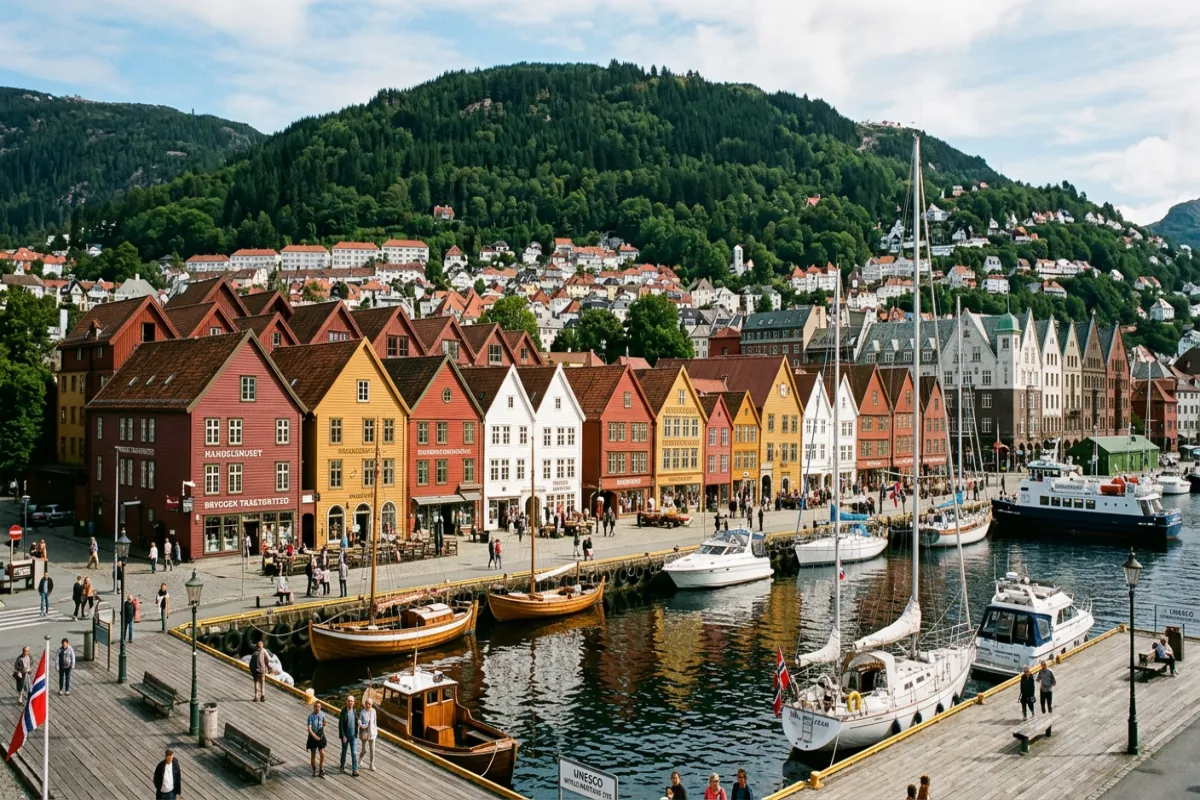
The gateway to the fjords. The Bryggen Wharf (UNESCO site with colorful wooden buildings) is the heart of the city. Bergen gets significant rainfall (over 200 days per year), so pack rain gear. Most fjord tours depart from Bergen.
Tromso
The “Gateway to the Arctic” and the best base for northern lights. The Arctic Cathedral, Polaria aquarium, and lively pub scene make it worth 2 to 3 days. Northern lights tours depart nightly from October to March.
Lofoten Islands
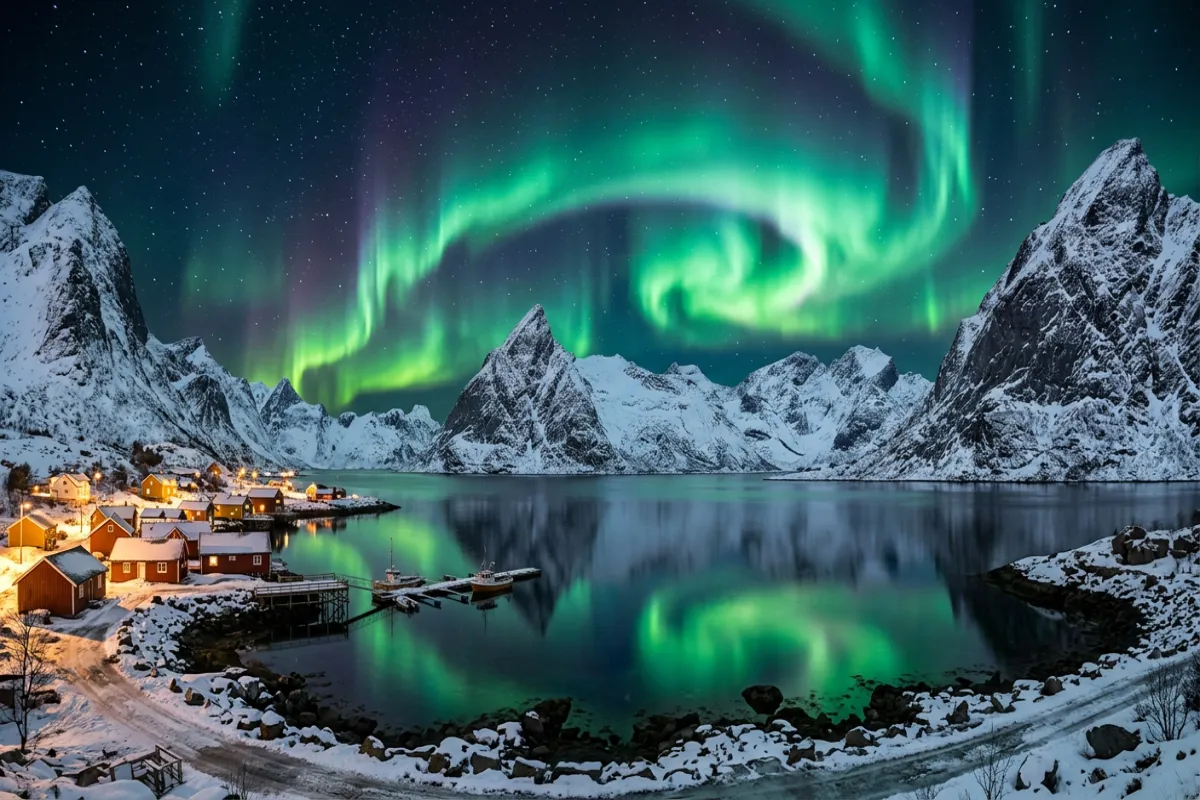
Dramatic mountains rising from the sea, traditional fishing villages with red rorbuer (fishermen’s cabins), and some of the best scenery in Norway. Rorbuer cabins are the classic accommodation, ranging from budget to luxury. Reine and Hamnoy are the most photographed villages. A rental car is essential.
Cabins and Hytte
Norway has a strong cabin culture. Mountain cabins (hytte) are available for rent throughout the country, from basic DNT (Norwegian Trekking Association) huts along hiking trails to fully equipped lakeside cabins. A great budget option for self-catering travelers.
Must-See Attractions and Experiences
The Fjords
Norway’s fjords are the country’s defining feature. The most famous are:
- Sognefjord: Norway’s longest fjord (205 km). The Naeroyfjord branch is a UNESCO World Heritage Site. Accessible via the Norway in a Nutshell tour from Bergen
- Geirangerfjord: A UNESCO site known for the Seven Sisters waterfall and dramatic cliff scenery. Best visited by cruise or car (seasonal road)
- Hardangerfjord: Norway’s “orchard fjord,” lined with fruit farms that bloom spectacularly in May
- Lysefjord: Home to Preikestolen (Pulpit Rock), a flat cliff platform 604 meters above the fjord. The hike is 4 to 5 hours round trip from the trailhead near Stavanger
Northern Lights
The aurora borealis is visible across northern Norway from late September through March. The current solar cycle (peaking 2024 to 2026) means exceptional aurora activity. Tromso is the most popular base, with guided chase tours running nightly. Clear skies, no light pollution, and distance from the coast increase your chances. Patience and multiple nights improve odds.
Trolltunga
A dramatic rock formation jutting horizontally 700 meters above Lake Ringedalsvatnet. The hike is 28 km round trip and takes 10 to 12 hours. It is a challenging but rewarding full-day hike, accessible from June to September. A guide is required in the shoulder season.
Preikestolen (Pulpit Rock)
A flat cliff platform overlooking Lysefjord, 604 meters above the water. The hike from the trailhead is about 4 to 5 hours round trip and is suitable for reasonably fit hikers. Near Stavanger.
Lofoten Islands
A chain of islands in the Arctic with dramatic peaks, white sand beaches, fishing villages, and some of the best scenery in Scandinavia. Highlights include Reine, Hamnoy, Kvalvika Beach, and the Reinebringen hike. Midnight sun from late May to mid-July. Surfing (yes, in the Arctic) is popular at Unstad Beach.
Flam Railway
A 20-kilometer railway from Myrdal to Flam, descending 866 meters through mountain tunnels, past waterfalls, and into the Aurlandsfjord valley. One of the steepest standard-gauge railways in the world. A must-ride experience, typically combined with the Norway in a Nutshell tour.
Food and Dining
Norwegian cuisine emphasizes fresh, simple, and locally sourced ingredients. Seafood dominates along the coast.
- Seafood: Fresh salmon, cod, king crab (in the far north), shrimp, and the Bergen fish market. Stockfish (dried cod) is a traditional staple
- Brunost: Brown cheese, a sweet, caramelized whey cheese sliced thin and eaten on bread. Found at every breakfast table in Norway
- Rakfisk: Fermented trout, an acquired taste and a traditional Norwegian delicacy
- Waffles: Norwegian waffles are heart-shaped, thin, and served with sour cream and jam. A common afternoon treat at cabins and cafes
- Reindeer: Reindeer meat (often as stew or steak) is common in northern Norway. A traditional Sami food
- Coffee culture: Norwegians are among the top coffee consumers in the world. Cafes are everywhere and the quality is consistently high
Money-saving tip: Self-catering from supermarkets (Rema 1000, Kiwi, Coop) cuts food costs dramatically. A supermarket lunch costs NOK 50 to 80 versus NOK 200 to 350 at a restaurant.
Tipping: Not required in Norway. Service charge is included. Rounding up or adding 10 percent for excellent service is appreciated but not expected.
Safety and Practical Tips
- Safety: Norway is one of the safest countries in the world. Crime rates are extremely low. Natural hazards (weather, mountains, fjord edges) are the main risks
- Weather: Highly unpredictable. “Four seasons in one day” is real, especially on the coast and in the mountains. Always pack layers, waterproofs, and warm clothing even in summer
- Right to roam: Norway’s allemannsretten allows anyone to hike, camp, and forage on uncultivated land. Leave no trace principles apply. You can wild camp at least 150 meters from houses
- Alcohol: Beer, wine, and spirits above 4.7% ABV are only sold at Vinmonopolet (state-run liquor stores). Beer is available at grocery stores but only until 8 PM on weekdays. Alcohol is expensive
- Cashless: Norway is one of the most cashless countries in the world. Cards (Visa and Mastercard) are accepted virtually everywhere, including buses and small shops. Many places do not accept cash at all
- Daylight: In summer above the Arctic Circle, the sun does not set (midnight sun). In winter, it does not rise (polar night). This affects sleep patterns and activity planning
- Hiking safety: Mountain weather changes rapidly. Always check yr.no (Norway’s weather service) before hiking. Inform someone of your route. Carry warm layers, rain gear, food, and water even for short hikes
- Electrical outlets: Type C and F plugs (round two-pin, same as mainland Europe). 230V
- Emergency number: 112 (police), 113 (ambulance), 110 (fire)
Sample 10-Day Norway Itinerary
Days 1 to 2: Oslo
Fly into Oslo (OSL). Day 1: Vigeland Sculpture Park (212 granite and bronze sculptures), Akershus Fortress, walk Karl Johans Gate. Evening: dinner at Aker Brygge waterfront. Day 2: Munch Museum, Oslo Opera House (walk on the roof), Viking Ship Museum, or the Fram Museum (polar exploration). Evening: Grunerløkka neighborhood for coffee and dinner.
Days 3 to 4: Bergen and the Fjords
Take the Bergen Railway from Oslo (7 hours, one of Europe’s most scenic train rides). Day 3: arrive in Bergen. Walk Bryggen Wharf (UNESCO), ride the Floibanen funicular to Mount Floyen for city views, explore the Fish Market. Day 4: Norway in a Nutshell tour: Flam Railway, Aurlandsfjord cruise, bus over the mountains. Return to Bergen.
Day 5: Stavanger and Pulpit Rock
Fly or take a bus from Bergen to Stavanger (5 hours by bus, 25 minutes by flight). Afternoon: explore Stavanger’s old town (Gamle Stavanger) with its white wooden houses. Evening: seafood dinner on the waterfront.
Day 6: Preikestolen Hike
Full morning hike to Preikestolen (Pulpit Rock). The trailhead is about 40 minutes from Stavanger by car and ferry. The hike is 8 km round trip, 4 to 5 hours. Stand on the cliff 604 meters above Lysefjord. Return to Stavanger. Fly to Tromso in the evening.
Days 7 to 8: Tromso (Northern Lights or Midnight Sun)
Day 7: Arctic Cathedral, Polaria aquarium, Tromso Cable Car for panoramic views. Walk the waterfront. Day 8: Winter: northern lights chase tour (evening, 6 to 8 hours). Summer: midnight sun hike or whale watching safari (seasonal). Visit the Polar Museum.
Days 9 to 10: Lofoten Islands
Fly from Tromso to Leknes or Svolvaer in Lofoten (short flight). Rent a car. Day 9: Drive the E10 through Lofoten. Stop at Hamnoy and Reine for photos. Hike Reinebringen for the iconic village-and-fjord view (steep, 2 to 3 hours). Evening in a traditional rorbuer cabin. Day 10: Visit Nusfjord fishing village, Kvalvika Beach, and the Viking Museum at Borg. Fly from Lofoten to Oslo for departure.
Planning Your Norway Trip
Start building your custom Norway itinerary with our free AI trip planner. Add destinations, set dates, and organize your days in minutes.
For more trip planning resources:
- Plan a Trip to Iceland
- Plan a Trip to See the Northern Lights
- Plan a Trip to Europe
- Free Travel Itinerary Template (Excel)
Frequently Asked Questions
What is the best time to visit Norway?
June to August for fjords, hiking, and midnight sun. January to March for northern lights (2024 to 2026 solar maximum means exceptional aurora activity). May and September are quieter shoulder months with good weather and lower prices.
How expensive is Norway?
One of the most expensive countries in Europe. Budget travelers can manage on $100 to $150 per day with hostels, self-catering, and free hiking. Mid-range: $200 to $300 per day. Self-catering from supermarkets cuts food costs in half compared to restaurants.
Do U.S. citizens need a visa for Norway?
No. Norway is part of the Schengen Area. U.S. citizens can visit visa-free for up to 90 days. An ETIAS authorization (EUR 7, valid 3 years) is expected to launch in late 2026.
When can I see the northern lights?
Late September through March in northern Norway. Tromso, Lofoten, and Alta are the best locations. Guided chase tours from Tromso run nightly and have the highest success rates. The solar maximum in 2024 to 2026 means unusually strong aurora activity.
How do I get to the fjords?
Bergen is the best starting point. The Norway in a Nutshell tour combines the Flam Railway and a Sognefjord cruise. You can also drive, take ferries, or join organized tours from Bergen or Oslo.
Is the Trolltunga hike difficult?
Yes. It is 28 km round trip with significant elevation gain, taking 10 to 12 hours. Suitable for experienced and fit hikers. Accessible June to September. A guide is required in the shoulder season. Start very early in the morning.
Do I need a car in Norway?
Not for Oslo, Bergen, or Tromso, which have good public transit. A car is highly recommended for the Lofoten Islands, road trips along the fjords, and reaching remote trailheads. Roads are good but often narrow and winding.
Is Norway cashless?
Nearly. Cards are accepted virtually everywhere, including buses, markets, and small shops. Some places do not accept cash at all. Visa and Mastercard are the most widely accepted.
What is the midnight sun?
Above the Arctic Circle (Tromso, Lofoten, Nordkapp), the sun does not set from late May to mid-July. This means 24 hours of daylight. Bring an eye mask for sleeping. In winter, the opposite occurs: polar night with no sunrise.
What should I pack for Norway?
Layers regardless of season. A waterproof jacket is essential year-round. Warm hat, gloves, and thermal base layers for winter and northern Norway. Sturdy hiking boots. Sunglasses (snow and midnight sun glare). An eye mask for sleeping during midnight sun.