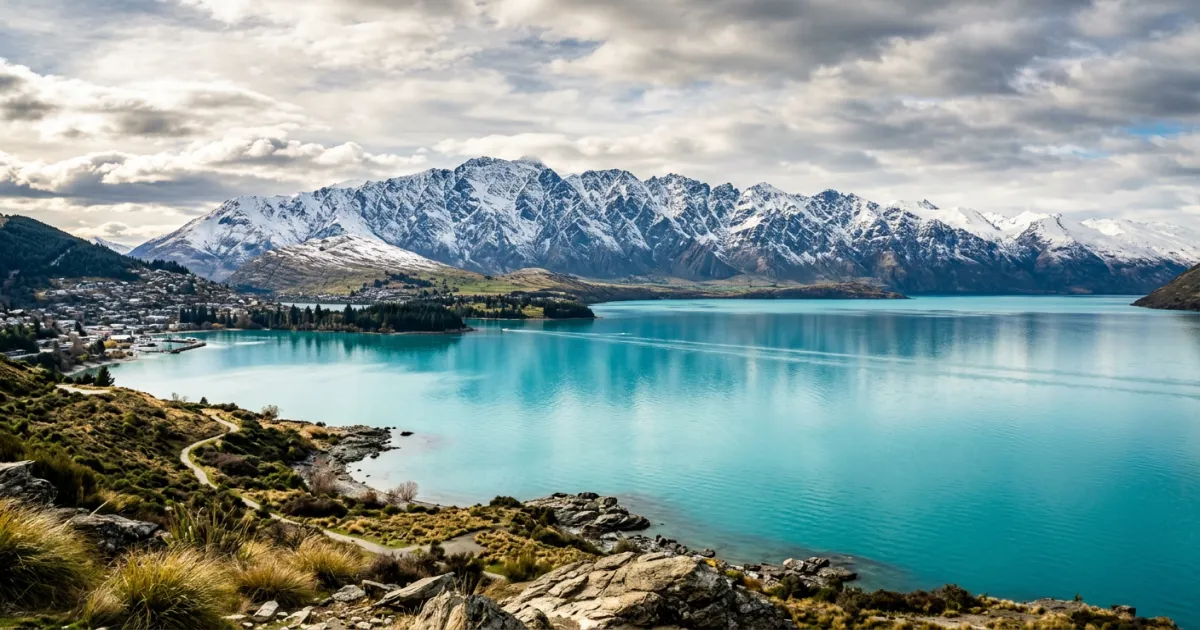
New Zealand packs an extraordinary amount of scenery into a small country. From volcanic landscapes and geothermal pools on the North Island to glaciers, fjords, and alpine lakes on the South Island, it is one of the most naturally diverse destinations on earth. This guide covers everything you need to plan your trip, whether you have one week or three. For a broader approach, start with our step-by-step guide to planning a trip.
Key Planning Facts
- Location: South Pacific, about 1,200 miles southeast of Australia
- Currency: New Zealand Dollar (NZD). As of 2026, 1 USD is approximately 1.70 NZD
- Language: English, Te Reo Maori
- Visa for U.S. citizens: NZeTA (Electronic Travel Authority) required. NZ$17 via app or NZ$23 online, valid 2 years. Plus NZ$100 International Visitor Conservation and Tourism Levy
- Best months to visit: December to March (summer), with February and March offering fewer crowds
- Average daily budget: NZ$150 to NZ$400 per person depending on travel style
- Time zone: New Zealand Standard Time (NZST, UTC+12; NZDT UTC+13 in summer)
- Flight time from U.S.: 12 to 16 hours from West Coast (direct or one stop); 17 to 22 hours from East Coast
- Country size: About the size of Colorado, split into North Island and South Island
- Driving: Left-hand side of the road
Best Time to Visit New Zealand
Summer (December to February)
Summer is peak season with warm temperatures (20 to 30 degrees Celsius, or 68 to 86 degrees Fahrenheit), the longest daylight hours, and the best beach weather. January is the busiest month due to local school holidays. February and March are ideal for warm weather with smaller crowds. Book accommodation and rental cars well in advance for December and January.
Fall (March to May)
Fall brings cooler temperatures, spectacular foliage (especially in Queenstown and Central Otago), and lower prices. Weather is still pleasant for hiking and sightseeing through April. This is one of the best value periods to visit.
Winter (June to August)
Winter means ski season in Queenstown, Wanaka, and the Ruapehu region on the North Island. Temperatures range from 5 to 15 degrees Celsius (41 to 59 degrees Fahrenheit) at lower elevations. Some hiking trails and mountain passes close. Accommodation prices drop significantly outside ski towns.
Spring (September to November)
Spring brings wildflowers, lambing season, and warming temperatures. Weather can be unpredictable with rain, especially on the South Island’s West Coast. Shoulder season pricing makes it a good value option. Great for hiking as trails reopen.
How Long to Spend in New Zealand
New Zealand rewards longer trips. For a first visit, plan for at least 10 to 14 days. A week is enough if you focus on either the North or South Island, but not both. Two to three weeks lets you see highlights of both islands at a comfortable pace.
A typical split: 5 to 7 days on the North Island (Auckland, Rotorua, Taupo, Wellington) and 7 to 14 days on the South Island (Christchurch, Queenstown, Milford Sound, West Coast glaciers). The South Island generally gets more time because distances are longer and the scenery warrants stopping frequently.
Budget and Costs
New Zealand is moderately expensive, comparable to Australia but less than Iceland or Switzerland. A self-drive road trip with a rental car or campervan is the most popular (and often most economical) way to travel.
Daily Budget Ranges
- Budget: NZ$80 to NZ$150 per person per day. Hostels or campsites (NZ$25 to $60 per night), supermarket meals and self-catering, free hiking
- Mid-range: NZ$250 to NZ$400 per person per day. Motels or hotels (NZ$120 to $200 per night), mix of restaurant meals and self-catering, rental car, paid activities
- Luxury: NZ$600 and up per person per day. Boutique lodges (NZ$300 and up per night), fine dining, guided tours, scenic flights
Key Costs
- Rental car: NZ$65 to $150 per day. Book early for summer. An International Driving Permit is recommended
- Campervan: NZ$100 to $250 per day in off-season, NZ$200 to $400 in peak season. A popular option that combines accommodation and transport
- Fuel: About NZ$2.50 to $3.00 per liter
- Meals: Cafe lunch NZ$15 to $25. Restaurant dinner NZ$25 to $50. Fish and chips NZ$10 to $15
- Activities: Milford Sound cruise NZ$60 to $100. Bungy jumping NZ$200 to $300. Glacier hike NZ$400 to $600. Most hiking is free
- NZeTA + IVL: NZ$117 to $123 total (one-time entry cost)
Use our free travel budget template to plan your New Zealand expenses.
Getting There and Getting Around
Flying In
Auckland Airport (AKL) is the main international gateway, with direct flights from Los Angeles, San Francisco, Houston, and Honolulu. Christchurch Airport (CHC) and Queenstown Airport (ZQN) also receive some international flights from Australia. Flight time from Los Angeles to Auckland is about 12 to 13 hours.
Domestic Flights
Air New Zealand and Jetstar connect major cities. Auckland to Queenstown takes about 2 hours. Auckland to Christchurch takes about 1 hour 20 minutes. Wellington to Christchurch takes about 45 minutes. Book early for the best fares.
Driving
A rental car or campervan is the best way to explore New Zealand. Roads are generally well-maintained but often narrow and winding, especially on the South Island. Drive on the left side of the road. Allow more time than GPS suggests because many roads are single-lane with frequent stops for scenery. An International Driving Permit is recommended.
Interislander Ferry
The ferry between Wellington (North Island) and Picton (South Island) takes about 3.5 hours and crosses the Cook Strait. Book in advance, especially in summer. You can bring your rental car on the ferry. The crossing through the Marlborough Sounds is scenic.
Where to Stay
Auckland
New Zealand’s largest city is the arrival point for most international flights. Stay in the city center, Ponsonby, or near the waterfront. Auckland has the widest range of accommodation options from hostels to luxury hotels.
Queenstown
The adventure capital of New Zealand sits on the shore of Lake Wakatipu surrounded by mountains. Accommodation fills up fast in summer and ski season. Book well in advance. Budget options exist but prices are higher than elsewhere in the country.
Holiday Parks and Campsites
New Zealand has an excellent network of holiday parks with powered and unpowered campsites, cabin accommodation, and shared kitchen facilities. The Department of Conservation (DOC) manages over 200 campsites in national parks and reserves, many in stunning locations for NZ$8 to $20 per person per night.
Great Walks Huts
If you plan to hike one of the Great Walks (Milford Track, Routeburn Track, etc.), you must book huts well in advance. Bookings open in June or July for the following summer season and popular tracks sell out within hours.
Must-See Attractions and Experiences
North Island
Rotorua and Geothermal Region: Bubbling mud pools, erupting geysers, and natural hot springs. Te Puia and Wai-O-Tapu are the top geothermal parks. Rotorua is also a center for Maori cultural experiences, including traditional hangi feasts and cultural performances.
Tongariro Alpine Crossing: One of the world’s best day hikes, crossing volcanic terrain, emerald lakes, and active craters. The 19.4-kilometer trail takes 6 to 8 hours. Check weather conditions before starting, as conditions change rapidly at altitude.
Bay of Islands: A subtropical paradise of 144 islands north of Auckland. Dolphin and whale watching, sailing, kayaking, and the historic Waitangi Treaty Grounds. Cape Reinga at the northern tip of New Zealand is a significant Maori spiritual site.
Wellington: The capital city is compact, walkable, and cultural. Te Papa Tongarewa (the national museum) is world-class and free. The food and craft beer scene rivals much larger cities.
South Island
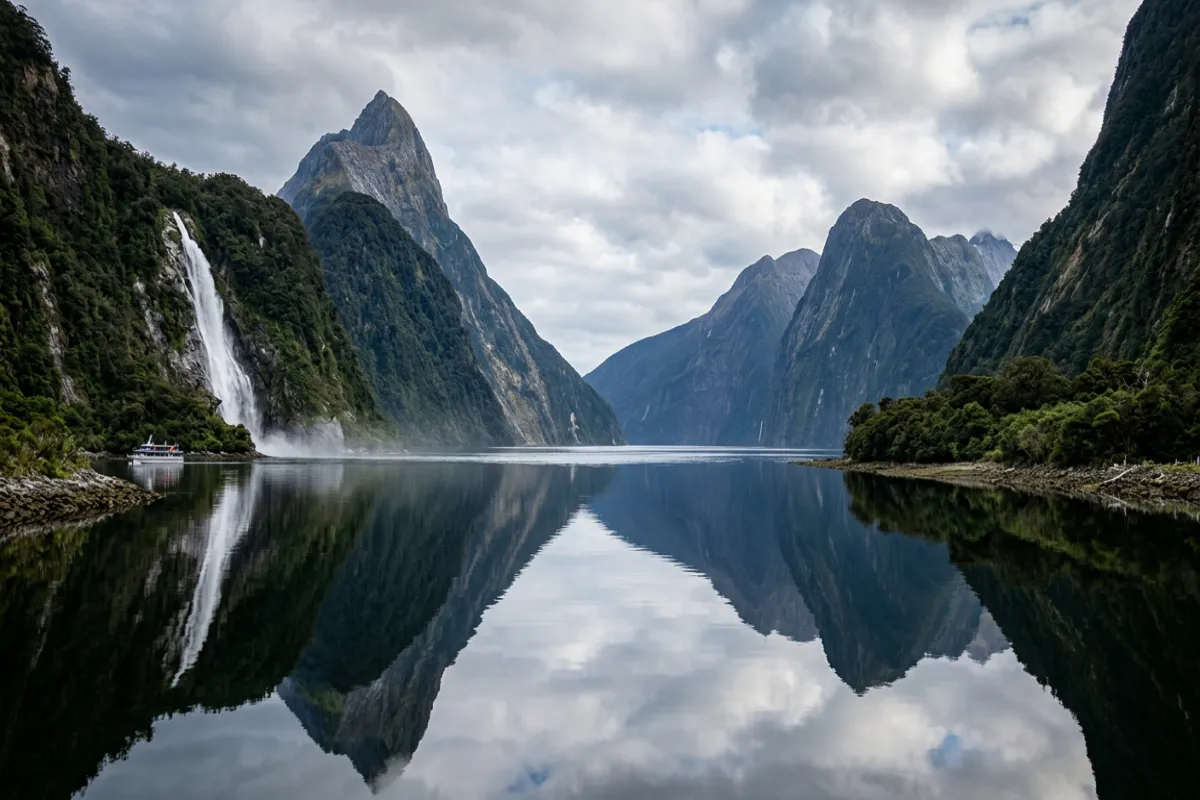
Milford Sound (Piopiotahi): Often called the “eighth wonder of the world.” Sheer cliffs, waterfalls, and rainforest plunge into dark fjord waters. A cruise is the most popular way to experience it (2 hours). The drive from Te Anau to Milford (2 hours each way) passes through dramatic mountain scenery.
Queenstown and Wanaka: Queenstown is the base for bungy jumping, jet boating, skydiving, and skiing. Wanaka (an hour’s drive) is a quieter alternative with its own stunning lake and mountain scenery. Both offer excellent hiking.
Franz Josef and Fox Glaciers: Two of the world’s most accessible glaciers. Guided glacier hikes and scenic helicopter flights are available. The glaciers have retreated significantly in recent years, making some access points different from older guidebooks.
Abel Tasman National Park: Golden sand beaches, turquoise water, and coastal hiking at the top of the South Island. The Abel Tasman Coast Track is one of the Great Walks and can be done as a multi-day hike or as day trips by water taxi.
Aoraki/Mount Cook: New Zealand’s tallest peak (3,724 meters). The Hooker Valley Track (10 km return, 3 to 4 hours) is one of the most accessible and scenic hikes in the country, ending at a glacial lake beneath Mount Cook.
Food and Dining
New Zealand’s food scene is fresh, seasonal, and influenced by Pacific Rim, British, and Maori traditions.
- Seafood: Green-lipped mussels, Bluff oysters (in season May to August), crayfish (lobster), paua (abalone), and fish and chips (a national staple)
- Lamb: New Zealand lamb is world-renowned. Expect it on menus everywhere from casual pubs to fine dining
- Hangi: Traditional Maori cooking method where food is slow-cooked underground on hot stones. Best experienced in Rotorua
- Flat white: New Zealand (and Australia) claims to have invented the flat white coffee. Cafe culture is strong, and coffee quality is consistently high
- Wine: Marlborough produces world-class Sauvignon Blanc. Hawke’s Bay and Central Otago are known for Pinot Noir. Wine tours are available in all major regions
- Pavlova: A meringue-based dessert with cream and fresh fruit, claimed by both New Zealand and Australia as a national dish
Tipping: Not expected or required in New Zealand. Service charges are not added to bills. Tipping for exceptional service is appreciated but not common.
Safety and Practical Tips
- Safety: New Zealand is one of the safest countries in the world. Violent crime against tourists is extremely rare. Take standard precautions against vehicle break-ins at trailheads and tourist parking areas
- Weather: New Zealand’s weather is famously unpredictable. Pack layers and rain gear regardless of season. The saying “four seasons in one day” is real, especially on the South Island
- Sandflies: Sandflies are common on the South Island’s West Coast and in Fiordland. Bring strong insect repellent (DEET-based works best)
- Biosecurity: New Zealand takes biosecurity extremely seriously. Declare all food, plant material, and outdoor equipment at customs. Fines for non-declaration start at NZ$400
- Sun protection: UV levels in New Zealand are significantly higher than at similar latitudes in the Northern Hemisphere due to thinner ozone. Wear sunscreen (SPF 50+), a hat, and sunglasses even on cloudy days
- Cell service: Coverage is good in cities and towns but drops off in rural and mountain areas. Download offline maps before road trips
- Emergency number: 111
- Electrical outlets: Type I plugs (angled two-pin or three-pin). Bring an adapter from the U.S.
Sample 14-Day New Zealand Itinerary
Days 1 to 2: Auckland
Arrive at Auckland Airport (AKL). Day 1: recover from jet lag, explore the waterfront and Viaduct Harbour. Take the ferry to Waiheke Island for vineyards and beaches. Day 2: visit the Auckland Museum, walk through the Domain, and explore Ponsonby for food and shopping.
Days 3 to 4: Rotorua and Taupo
Drive to Rotorua (3 hours). Day 3: visit geothermal parks (Wai-O-Tapu or Te Puia), experience a Maori cultural evening with hangi feast. Day 4: drive to Taupo (1 hour), visit Huka Falls, optional spa at natural hot pools.
Day 5: Tongariro Alpine Crossing
Drive to Tongariro National Park (1.5 hours from Taupo). Complete the Tongariro Alpine Crossing (19.4 km, 6 to 8 hours). Arrange shuttle transport in advance. Overnight near the park.
Day 6: Drive to Wellington
Drive south to Wellington (4 hours). Explore the capital: Te Papa museum (free), cable car to Kelburn, Cuba Street for cafes and nightlife.
Day 7: Ferry to South Island
Take the Interislander ferry from Wellington to Picton (3.5 hours). Drive to Nelson or Kaikoura depending on your route.
Days 8 to 9: West Coast
Drive to the West Coast. Visit Punakaiki Pancake Rocks, then continue to Franz Josef or Fox Glacier. Day 9: glacier hike or scenic helicopter flight. Drive through Haast Pass to Wanaka.
Days 10 to 11: Queenstown and Wanaka
Day 10: explore Wanaka, visit the famous lone tree on the lakeshore, hike Roys Peak (challenging, 5 to 6 hours return) or the shorter Diamond Lake track. Day 11: Queenstown. Adventure activities (bungy, jet boat, skyline luge) or a cruise on Lake Wakatipu aboard the TSS Earnslaw steamship.
Days 12 to 13: Milford Sound
Day 12: drive from Queenstown to Te Anau (2 hours). Day 13: early start for the drive to Milford Sound (2 hours from Te Anau). Take a cruise through the fjord. Return to Queenstown.
Day 14: Departure
Fly from Queenstown to Auckland (2 hours) for your international connection, or drive to Christchurch (5 to 6 hours) for departure.
Ready-Made New Zealand Itineraries
We have built day-by-day itineraries with activities, travel times, budgets, and local tips. Clone any into your trip planner to customize:
Or build a custom itinerary with our free AI trip planner.
More Planning Resources
Frequently Asked Questions
Do U.S. citizens need a visa for New Zealand?
U.S. citizens do not need a traditional visa but must obtain an NZeTA (New Zealand Electronic Travel Authority) before traveling. The NZeTA costs NZ$17 via the app or NZ$23 online, is valid for 2 years, and allows stays of up to 3 months at a time (6 months within any 12-month period). You must also pay the NZ$100 International Visitor Conservation and Tourism Levy (IVL). Apply at least 72 hours before your flight.
What is the best time to visit New Zealand?
February and March offer the best combination of warm weather and manageable crowds. December and January are warmest but busiest. Fall (March to May) brings beautiful foliage and lower prices. Winter (June to August) is ideal for skiing.
How long should I spend in New Zealand?
At least 10 to 14 days for a first visit covering both islands. One week works if you focus on just the North or South Island. Two to three weeks is ideal for a thorough trip at a relaxed pace.
Should I rent a car or take a campervan?
Both are excellent options. A rental car offers flexibility and is cheaper if you are staying in hotels and motels. A campervan combines transport and accommodation, potentially saving money and offering the freedom to stay at scenic DOC campsites. Book either well in advance for summer travel.
Is New Zealand expensive?
Moderately. It is comparable to Australia and more expensive than Southeast Asia or parts of South America. Budget travelers can manage on NZ$80 to NZ$150 per day. Mid-range travelers should plan NZ$250 to NZ$400 per day. Many of the best experiences (hiking, beaches, scenic drives) are free.
North Island or South Island?
If you only have time for one, most travelers choose the South Island for its dramatic landscapes (Milford Sound, glaciers, Queenstown, Mount Cook). The North Island offers geothermal wonders, Maori culture, and warmer beaches. Ideally, visit both.
Do I need to book the Great Walks in advance?
Yes. Hut and campsite bookings for the Great Walks (Milford Track, Routeburn Track, Kepler Track, Abel Tasman Coast Track, and others) open in June or July for the following season and sell out quickly, sometimes within hours. Book as soon as registrations open.
Is tipping expected in New Zealand?
No. Tipping is not expected or customary in New Zealand. Service charges are not added to bills. You can leave a small tip for exceptional service, but it is not required.
How is the cell phone coverage?
Good in cities and towns. Coverage drops off significantly in rural areas, mountain passes, and on many hiking trails. Download offline maps and plan ahead when driving remote routes on the South Island.
What should I pack for New Zealand?
Layers for all seasons. A waterproof rain jacket is essential year-round. Sturdy hiking shoes if you plan to walk the trails. Sunscreen (SPF 50+), sunglasses, and a hat are important because UV levels are very high. Insect repellent for the West Coast and Fiordland. A universal power adapter (Type I plug).