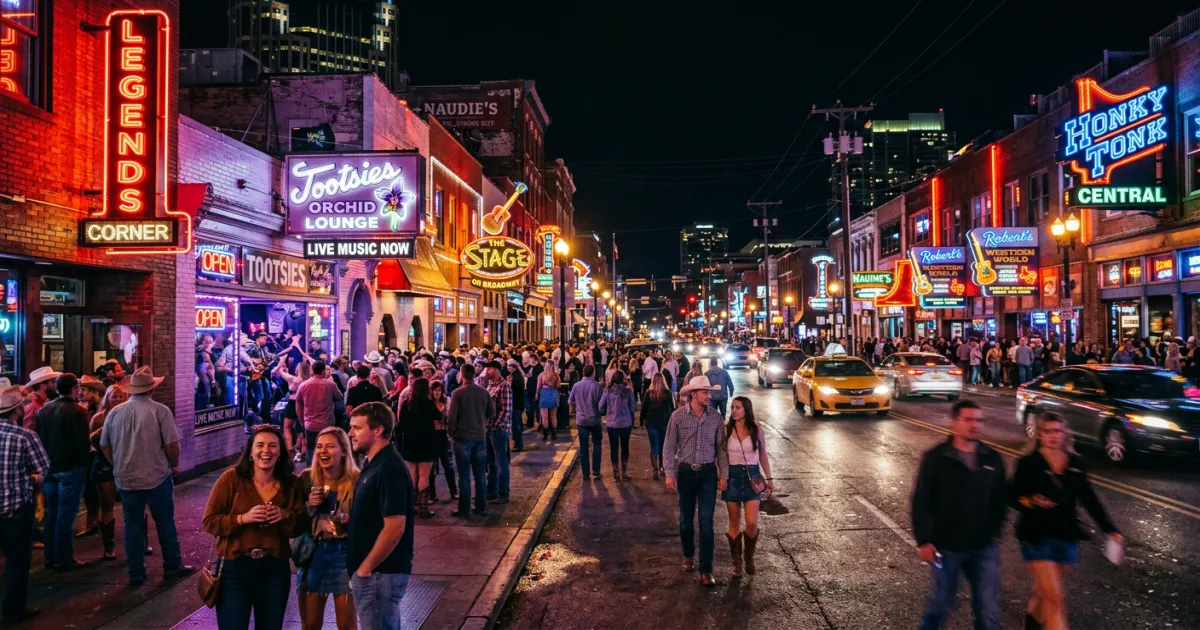
Nashville is the live music capital of the world, and the city has evolved far beyond its country music roots. Today, Music City blends honky-tonk traditions with a booming food scene, creative neighborhoods, and a nightlife energy that rivals cities twice its size. Whether you come for the Grand Ole Opry or the hot chicken, this guide covers everything you need to plan your trip. For a broader approach, see our step-by-step trip planning guide.
Key Planning Facts
- Location: Central Tennessee
- Currency: US Dollar (USD)
- Language: English
- Best months to visit: April to June and September to November
- Average daily budget: $100 to $250 per person depending on travel style
- Time zone: Central Time (CT)
- Airport: Nashville International Airport (BNA), about 15 minutes from downtown
- Nickname: Music City
Best Time to Visit Nashville
Spring (April to June)
The best overall time to visit. Temperatures range from the upper 50s to the upper 70s Fahrenheit. Dogwoods and cherry blossoms bloom across the city. Outdoor patios and rooftop bars are open and pleasant. CMA Fest (the world’s largest country music festival) typically falls in June.
Fall (September to November)
Fall brings comfortable temperatures (50s to 70s Fahrenheit), lower humidity, and beautiful foliage in the surrounding hills. Crowds are lighter than summer, hotel prices dip, and the concert schedule stays full. October and early November are particularly pleasant.
Summer (July to August)
Hot and humid (regularly above 90 degrees Fahrenheit). This is Nashville’s busiest tourism period, with packed honky-tonks and higher hotel prices. Air conditioning is essential. The upside: longer days and a buzzing energy on Broadway.
Winter (December to February)
Cool to cold (30s to 50s Fahrenheit). The slowest tourism season, which means the best hotel deals and shortest lines at attractions. Nashville’s music venues are open year-round, so you will not miss live music. Holiday events and the Gaylord Opryland Christmas displays draw winter visitors.
How Long to Spend in Nashville
A 2 to 3 day trip covers the highlights: Broadway honky-tonks, a music venue or two, hot chicken, and a neighborhood walk. 4 to 5 days lets you explore beyond downtown into East Nashville, Germantown, 12South, visit the distilleries, and take a day trip to nearby attractions like the Jack Daniel’s Distillery in Lynchburg (90 minutes south) or the Natchez Trace Parkway.
Budget and Costs
Nashville is moderately priced for a major U.S. tourist city. Live music at honky-tonks is free (no cover charge), which is one of the best deals in American tourism.
Daily Budget Ranges
- Budget: $85 to $140 per person per day. Budget hotels or hostels ($70 to $100 per night), hot chicken and casual meals, free honky-tonk music, walking downtown
- Mid-range: $180 to $280 per person per day. Boutique or mid-range hotels ($140 to $230 per night), restaurant dining, paid attractions, rideshare
- Luxury: $300 and up per person per day. Premium downtown hotels ($250 to $400 per night), fine dining, VIP experiences, rooftop bars
Key Costs
- Honky-tonks: Free entry, no cover charge. Bars on Lower Broadway operate 10 AM to 3 AM daily with continuous live music. Tip the musicians (cash in the tip jar)
- Grand Ole Opry: $45 to $90 per ticket depending on seating and date. Shows typically Tuesday, Friday, and Saturday nights
- Country Music Hall of Fame: $30 per adult
- Ryman Auditorium: Self-guided tour $33 per adult. Concert tickets vary by artist
- Meals: Hot chicken meal: $12 to $18. Meat-and-three lunch: $10 to $15. BBQ plate: $15 to $22. Upscale dinner: $40 to $80
- Airport to downtown: Rideshare $15 to $25. Taxi about $25 to $30. WeGo bus Route 18 runs to downtown for $2
Use our free travel budget template to plan your Nashville expenses.
Getting There and Getting Around
Flying In
Nashville International Airport (BNA) is about 10 miles east of downtown, roughly a 15-minute drive. It has grown significantly with direct flights from most major U.S. cities and some international routes.
Getting Around
Downtown Nashville and Lower Broadway are compact and walkable. The Gulch, Germantown, and SoBro are all within walking distance of Broadway. For East Nashville, 12South, and Music Row, rideshare is the easiest option ($5 to $15 per trip). The WeGo public bus system covers the city but is infrequent. Scooter rentals are available downtown.
A rental car is not necessary unless you plan day trips outside the city. Parking downtown costs $20 to $40 per day.
Nashville’s Neighborhoods
Downtown and Lower Broadway
The neon-lit heart of Nashville. Lower Broadway is a 4-block stretch of honky-tonks, bars, and live music venues operating from morning to late night. The Ryman Auditorium, Bridgestone Arena, and the Country Music Hall of Fame are all within walking distance.
The Gulch
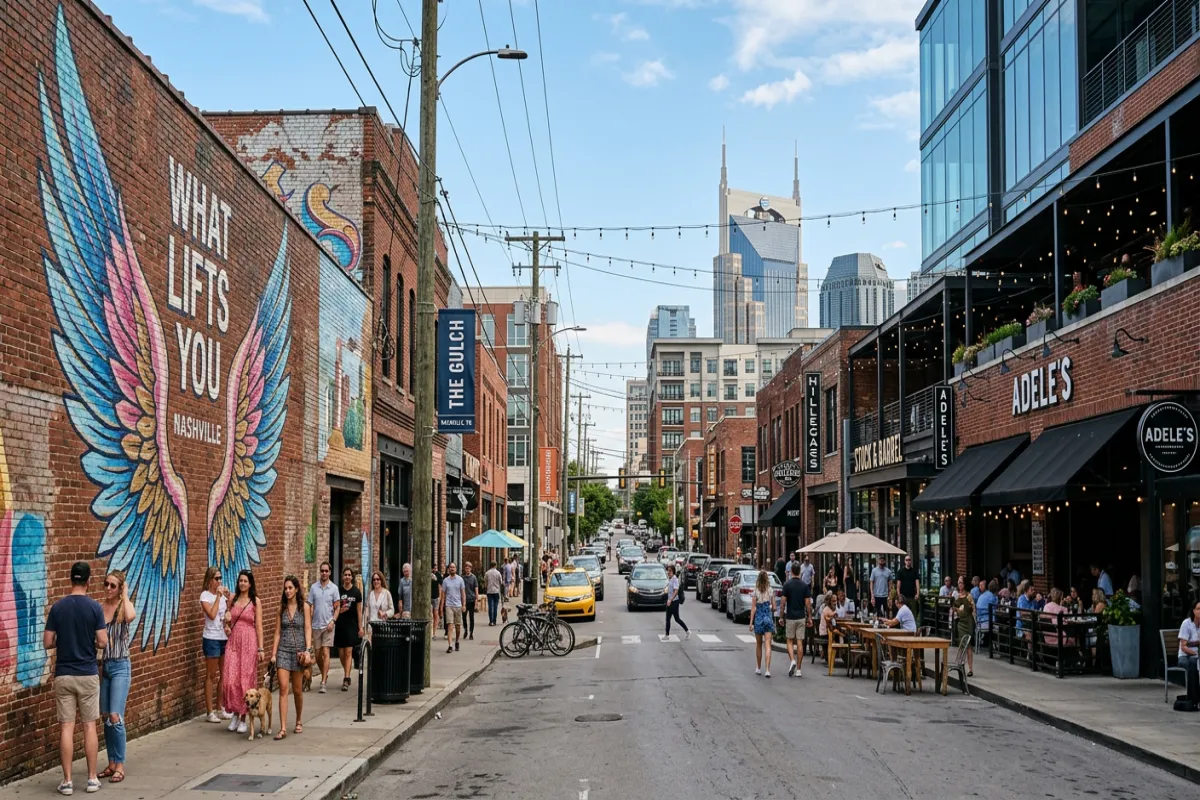
A former rail yard turned trendy neighborhood just south of Broadway. Upscale restaurants, boutique shops, street art, and the famous “What Lifts You” wings mural. Walkable to downtown in about 10 minutes.
East Nashville
The artsy, indie side of the city across the Cumberland River. Local coffee shops, vinyl record stores, independent restaurants, and a more laid-back vibe. This is where many musicians and creatives live. The Five Points area is the neighborhood hub.
12South
A walkable strip of boutique shops, brunch spots, and the “I Believe in Nashville” mural. Popular with visitors who want a break from the Broadway energy. Good coffee and food scene.
Germantown
Nashville’s oldest neighborhood, now a foodie destination. Award-winning restaurants, craft breweries, a farmers market (open year-round), and beautiful 19th-century architecture. Walking distance to downtown.
Music Row
The historic center of Nashville’s music industry. Recording studios, record labels, and the Musicians Hall of Fame. Less touristy than Broadway, but important for understanding Nashville’s cultural significance.
Must-See Attractions and Experiences
Lower Broadway Honky-Tonks
The defining Nashville experience. Walk the strip and duck into any bar with live music pouring out the door. No cover charge at the classics. Music plays all day and night, 7 days a week. Tip the bands generously, as that is how they earn their living.
Grand Ole Opry
The longest-running radio show in the U.S., broadcasting since 1925. Live country, bluegrass, and Americana performances multiple nights per week. Backstage tours are available during the day. The Opry moved to its current home at the Grand Ole Opry House in 1974 but returns to the Ryman Auditorium for special winter shows.
Ryman Auditorium
The “Mother Church of Country Music.” Originally built as a tabernacle in 1892, it served as the Grand Ole Opry’s home from 1943 to 1974. Today it hosts concerts across all genres. Self-guided tours run during the day. The acoustics are legendary.
Country Music Hall of Fame and Museum
The world’s largest museum dedicated to country music. Interactive exhibits, costumes, instruments, and the stories behind the songs. The Taylor Swift Education Center and Historic RCA Studio B tour (separate ticket) are popular additions. Plan 2 to 3 hours.
The Parthenon
A full-scale replica of the Athens Parthenon in Centennial Park, built for Tennessee’s 1897 Centennial Exposition. Inside is a 42-foot statue of Athena, the tallest indoor sculpture in the Western Hemisphere. The surrounding park is a great spot for a morning walk or afternoon relaxation.
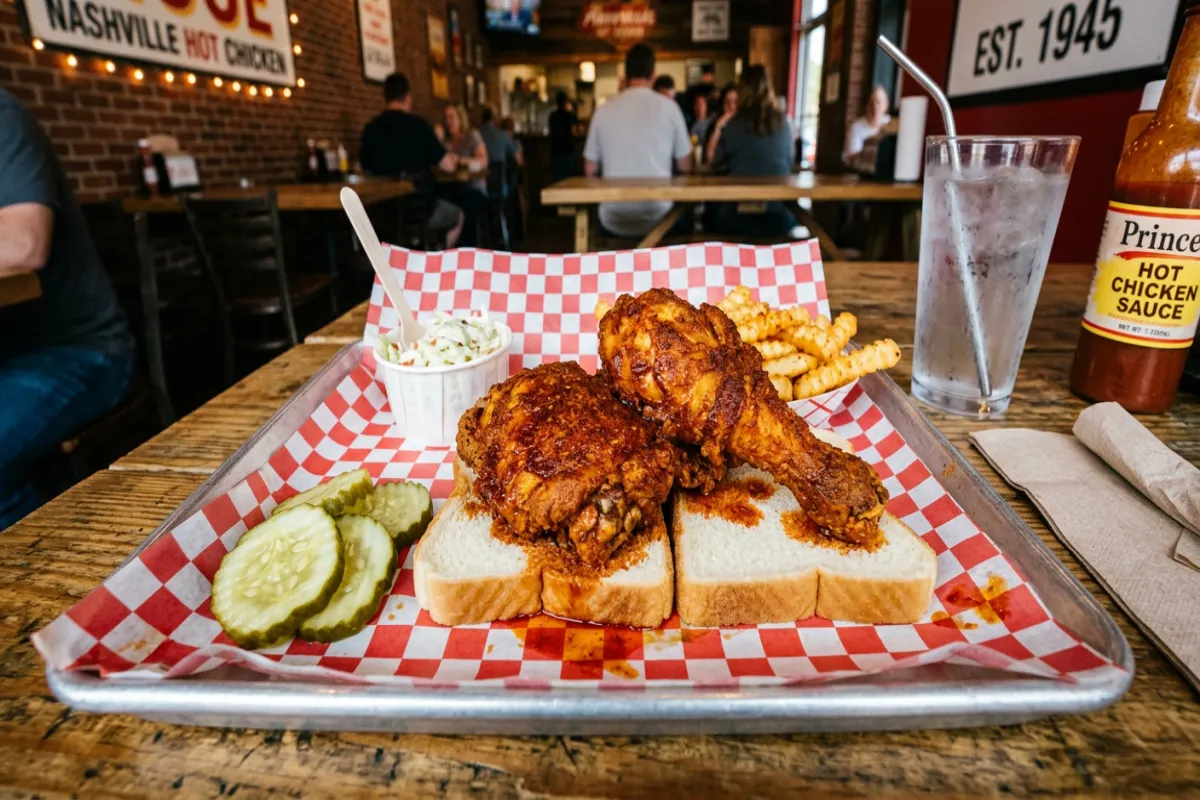
Hot Chicken
Nashville’s signature dish: fried chicken coated in a spicy paste of cayenne and spices, served on white bread with pickles. Heat levels range from mild to extreme. Multiple locations throughout the city serve this local invention, which dates back to the 1930s.
Food and Dining
Nashville’s food scene has exploded in the last decade, expanding well beyond hot chicken and BBQ (though both remain essential).
- Hot chicken: Nashville’s culinary icon. Available at multiple locations across the city. Order “medium” if you are new to it (anything above is genuinely painful)
- Meat and three: A Southern tradition. Choose one meat (fried chicken, meatloaf, pork chop) and three sides (mac and cheese, collard greens, mashed potatoes) for about $10 to $15
- BBQ: Nashville-style BBQ leans toward dry rubs and smoked meats. Brisket, pulled pork, and ribs are the standards
- Biscuits: Nashville takes biscuits seriously. Buttermilk biscuits with gravy, honey, or fried chicken are a breakfast staple
- Southern brunch: Nashville does brunch like few other cities. Expect lines on weekends at popular spots. Chicken and waffles, shrimp and grits, and Bloody Marys are brunch staples
- Craft beer and spirits: Nashville has a growing craft brewery and distillery scene. Tennessee whiskey (including Jack Daniel’s, which is distilled 90 minutes south in Lynchburg) is the state’s signature spirit
Tipping: 18 to 20 percent at sit-down restaurants. Tip musicians at honky-tonks and live music venues ($5 to $20 per set is appreciated).
Safety and Practical Tips
- Safety: Downtown Nashville and the tourist areas are generally safe, with a visible police presence on Broadway. Standard precautions apply: stay aware of your surroundings, especially late at night on Broadway where crowds can be rowdy
- Noise: If you stay near Broadway, expect noise well past midnight. Book a hotel a few blocks away if you want quiet evenings
- Pedal taverns and party buses: Nashville is famous for pedal taverns (group bikes that stop at bars) and party buses. They are loud and everywhere downtown. Book in advance if you want to ride one; avoid Broadway by car when they are most active (afternoons and evenings)
- Weather variability: Nashville weather can change quickly. Pack layers for spring and fall. Summer requires light clothing, sunscreen, and hydration. Afternoon thunderstorms are common in summer
- Sunday brunch: Plan ahead. Popular brunch spots have 45 to 90 minute waits on weekends. Many restaurants do not take reservations for brunch
- Rideshare surge pricing: Expect higher prices on Broadway late at night, especially on weekends. Walk a few blocks from Broadway to reduce surge pricing
Sample 3-Day Nashville Itinerary
Day 1: Downtown and Broadway
Morning: Country Music Hall of Fame (2 to 3 hours). Lunch: hot chicken at a local spot. Afternoon: walk Lower Broadway, duck into honky-tonks, browse the shops. Late afternoon: Ryman Auditorium tour. Evening: dinner in the Gulch, then a full night of honky-tonk hopping on Broadway.
Day 2: Beyond Broadway
Morning: The Parthenon in Centennial Park. Walk through Germantown for coffee and the farmers market. Lunch: meat-and-three at a Southern restaurant. Afternoon: Music Row area, Musicians Hall of Fame, or the Johnny Cash Museum. Evening: Grand Ole Opry show (book tickets in advance) or live music at a venue in East Nashville or the Basement East.
Day 3: Neighborhoods and Departure
Morning: Brunch in 12South (arrive early to beat the line). Walk the neighborhood and find the “I Believe in Nashville” mural. Afternoon: explore East Nashville for coffee shops, vinyl stores, and local food. Optional: distillery tour on the east side. Head to BNA for departure.
Ready-Made Nashville Itineraries
We have built day-by-day itineraries with activities, travel times, budgets, and local tips. Clone any into your trip planner to customize:
Or build a custom itinerary with our free AI trip planner.
More Planning Resources
- Plan a Trip to New Orleans
- Plan a Trip to Tennessee
- How to Plan a Weekend Trip
- Weekend Itinerary Template
Frequently Asked Questions
What is the best time to visit Nashville?
April to June and September to November. Spring brings blooming dogwoods and pleasant temperatures. Fall has comfortable weather, fewer crowds, and lower prices. Summer is hot and busy. CMA Fest in June is the biggest music event.
How many days do I need in Nashville?
2 to 3 days covers the highlights (Broadway, a music venue, hot chicken, one neighborhood). 4 to 5 days lets you explore more neighborhoods and take day trips. Nashville reveals more the longer you stay.
Do honky-tonks on Broadway have a cover charge?
No. The honky-tonks on Lower Broadway do not charge a cover. Music plays all day (10 AM to 3 AM), 7 days a week. Tip the musicians generously, as tips are their primary income.
How expensive is Nashville?
Moderately priced for a major U.S. city. Budget travelers can manage on $85 to $140 per day. Mid-range: $180 to $280. The best deal in Nashville is free live music at honky-tonks. Hotels near Broadway are the biggest expense.
Do I need a car in Nashville?
Not for downtown and the nearby neighborhoods (Gulch, Germantown, SoBro), which are walkable. Rideshare works well for East Nashville, 12South, and Music Row. Rent a car only if you plan day trips (Jack Daniel’s, Natchez Trace).
What is Nashville hot chicken?
Fried chicken coated in a spicy cayenne paste, served on white bread with pickles. It originated in Nashville in the 1930s. Heat levels range from mild to extreme. If you are new to it, start with “medium” because “hot” and above is genuinely fiery.
How do I get Grand Ole Opry tickets?
Book online at opry.com. Shows run most Tuesdays, Fridays, and Saturdays. Tickets range from $45 to $90 depending on seating. Buy in advance because popular shows sell out. Backstage tours are available separately during the day.
Is Nashville safe?
Downtown Nashville and tourist areas are generally safe with visible police presence. Broadway can get rowdy late at night, especially on weekends. Standard big-city precautions apply.
What neighborhoods should I explore beyond Broadway?
East Nashville for indie coffee shops and live music. The Gulch for upscale dining and street art. 12South for boutique shopping and brunch. Germantown for farm-to-table restaurants and craft breweries.
Should I book restaurants in advance?
For dinner at popular spots, yes. For brunch on weekends, many places do not take reservations and have long waits (45 to 90 minutes). Arrive early or go on a weekday. For casual meals, walk-ins are usually fine.