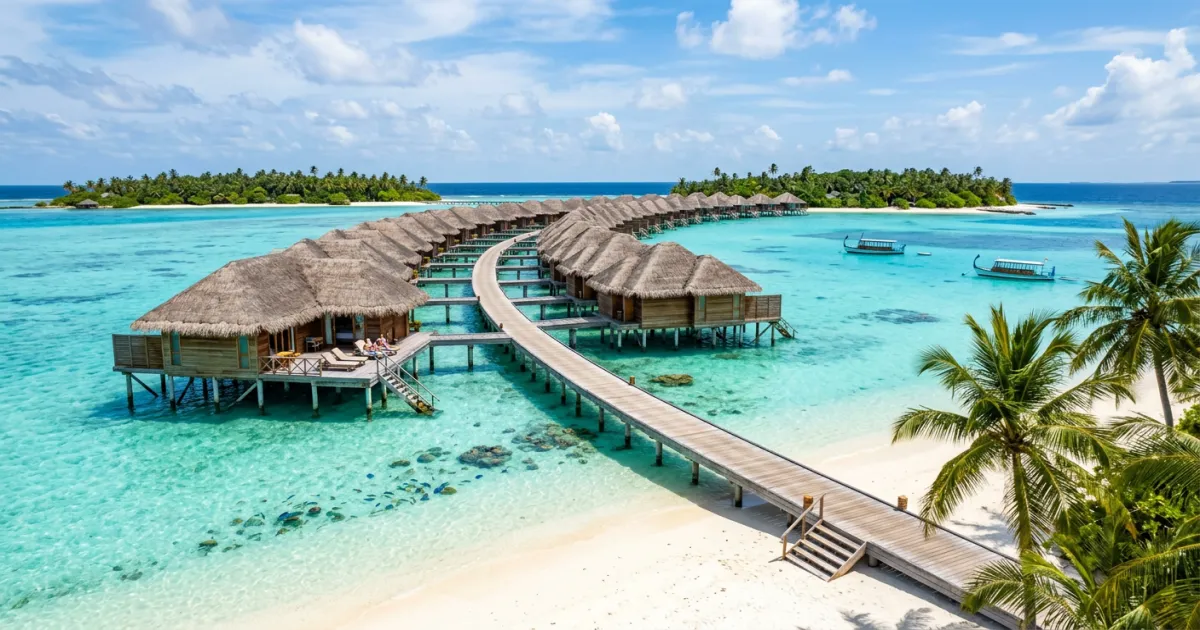
The Maldives is a chain of 1,192 coral islands in the Indian Ocean, famous for overwater villas, turquoise lagoons, and some of the best snorkeling and diving on earth. What most people do not realize is that you can also visit the Maldives on a budget by staying on local islands in guesthouses rather than in luxury resorts. This guide covers both options. For a broader approach, see our step-by-step trip planning guide.
Key Planning Facts
- Location: Indian Ocean, southwest of India and Sri Lanka
- Currency: Maldivian Rufiyaa (MVR). Approximately 15.5 MVR per 1 USD. U.S. dollars are widely accepted at resorts and tourist businesses
- Language: Dhivehi (English widely spoken in tourist areas and resorts)
- Visa for U.S. citizens: Free 30-day visa on arrival for all nationalities. Must complete the electronic IMUGA Traveller Declaration within 72 hours before arrival
- Best months to visit: November to April (dry season), with January to March having the best weather
- Average daily budget: $75 to $500+ per person depending on local island vs. resort
- Time zone: Maldives Time (MVT, UTC+5)
- Flight time from U.S.: 18 to 24 hours (typically via Dubai, Doha, Singapore, or Colombo)
- Important: The Maldives is the lowest-lying country in the world, averaging just 1.5 meters above sea level
Best Time to Visit the Maldives
Dry Season (November to April)
The best time to visit. Clear skies, calm seas, excellent visibility for snorkeling and diving, and warm temperatures (28 to 32 degrees Celsius, or 82 to 90 degrees Fahrenheit). This is peak season with the highest prices. January through March has the driest and calmest conditions.
Wet Season (May to October)
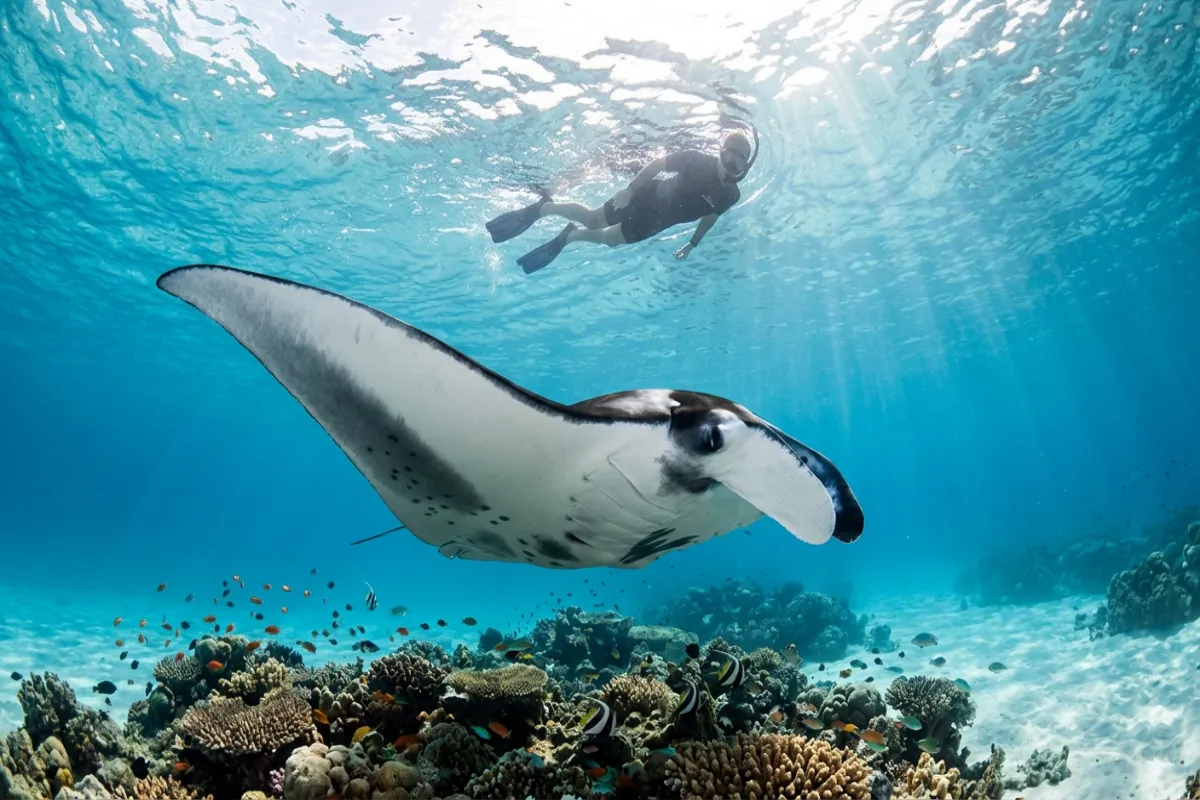
Occasional rain showers (usually short), rougher seas, and slightly higher humidity. The upside: resort prices drop 30 to 50 percent, fewer tourists, and good surfing conditions. Manta ray season peaks from May to November in Baa Atoll (Hanifaru Bay, a UNESCO Biosphere Reserve, hosts the world’s largest seasonal manta ray gathering). Many resorts offer excellent wet season deals.
How Long to Spend in the Maldives
Most visitors stay 5 to 7 days. A resort stay of 4 to 5 nights is typical. If you are island-hopping on local islands, 7 to 10 days lets you experience multiple atolls with different snorkeling, beaches, and local culture. Combine the Maldives with a stopover in Dubai, Doha, Singapore, or Sri Lanka to break up the long journey from the U.S.
Budget and Costs
The Maldives has two completely different price tiers: luxury resorts (where prices are extreme) and local island guesthouses (surprisingly affordable).
Daily Budget Ranges
- Budget (local islands): $75 to $150 per person per day. Guesthouses ($40 to $80 per night), local restaurants ($5 to $15 per meal), public ferries, beach snorkeling
- Mid-range (mid-tier resort or mix): $250 to $500 per person per day. Three to four-star resorts ($200 to $500 per night), included meals, resort excursions
- Luxury (overwater villa resort): $500 to $2,000+ per person per day. Five-star resorts ($500 to $5,000+ per night), all-inclusive packages, private dining, spa, water sports
Key Costs
- Flights from the U.S.: $800 to $1,400 round trip via Gulf carriers (Emirates, Qatar Airways, Etihad) or Asian carriers (Singapore Airlines, Cathay Pacific). Book early for the best fares
- Resort transfers: Speedboat transfer $100 to $300 round trip. Seaplane transfer $300 to $700 round trip. Domestic flight $100 to $250 round trip. Transfer costs add significantly to the total
- Local island ferries: $1 to $5 per trip. Slow but extremely cheap. Schedules can be irregular
- Snorkeling excursion: $30 to $80 from local islands. $50 to $150 from resorts. Many resorts have house reefs you can snorkel for free
- Diving: $60 to $100 per dive from local islands. $80 to $150 per dive at resorts
- Taxes: 17% TGST (Tourism Goods and Services Tax) plus 10% service charge on most bills. Green Tax: $6.35 per night at guesthouses, $13 per night at resorts. These are often not included in advertised prices
Use our free travel budget template to plan your Maldives expenses.
Getting There and Getting Around
Flying In
Velana International Airport (MLE) in Male is the main gateway. No direct flights from the U.S.; most connect through Dubai (Emirates), Doha (Qatar Airways), Singapore, or Colombo (Sri Lanka). Flight time is about 18 to 24 hours total including connections.
Getting to Your Island
From Male airport, your next transport depends on where you are going:
- Speedboat: For resorts and islands within 1 to 2 hours of Male. $100 to $300 round trip
- Seaplane: For remote atolls. Operated by Trans Maldivian Airways. $300 to $700 round trip. Scenic and unforgettable. Only operates during daylight hours, so late arrivals may require an overnight in Male
- Domestic flight: For distant atolls with airports. $100 to $250 one way. Maldivian Airlines operates most routes
- Public ferry: Cheapest option ($1 to $5). Connects Male to nearby atolls. Limited schedules (usually 1 to 2 departures per day). Some routes only run certain days of the week
Between Islands
Within an atoll, speedboats connect islands. Resorts arrange transfers. On local islands, guesthouse owners can arrange boat trips to sandbanks, snorkeling spots, and neighboring islands.
Resort Islands vs. Local Islands
Resort Islands
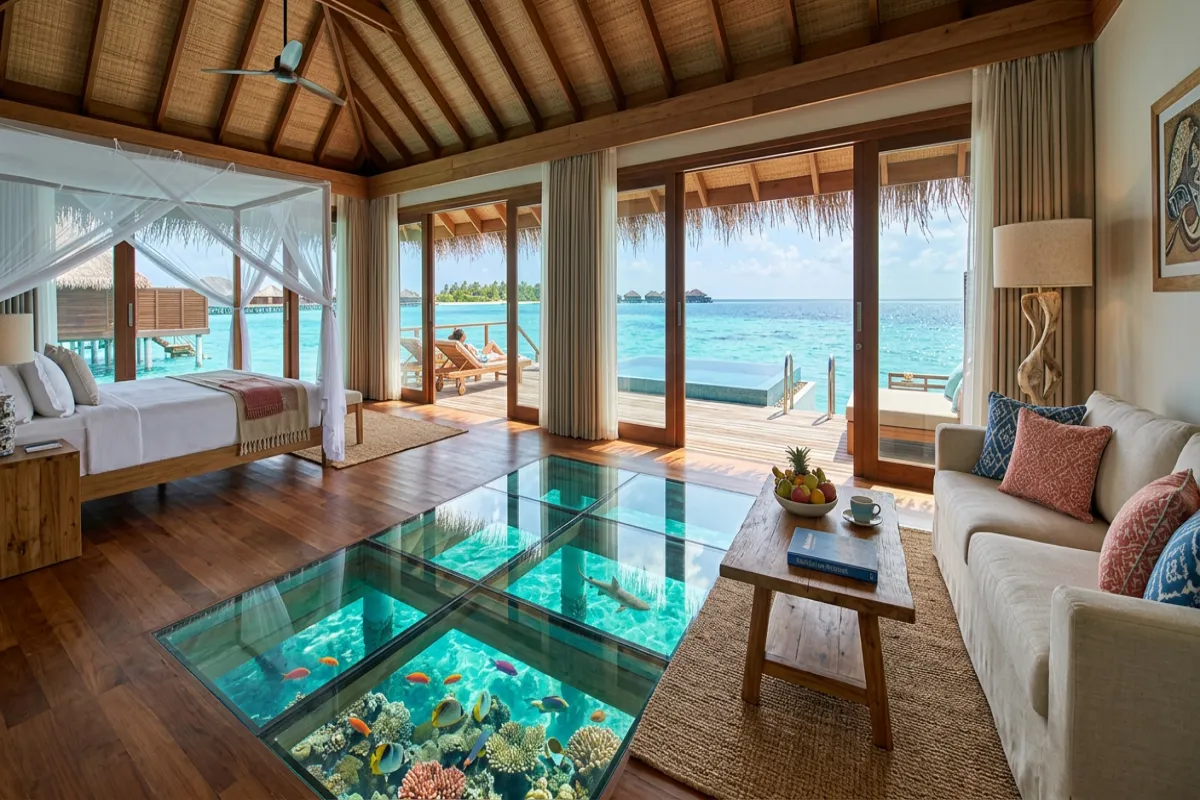
Each resort occupies its own private island. Complete privacy, overwater villas, house reefs for snorkeling, all-inclusive packages, spas, and water sports. This is the iconic Maldives experience. Prices range from $200 per night (budget resorts) to $5,000+ per night (ultra-luxury). Alcohol is available at resorts. Many resorts offer all-inclusive packages that cover meals, drinks, and some excursions.
Local Islands
Since 2009, Maldivians have been allowed to operate guesthouses on inhabited islands. This opened the Maldives to budget travelers. Guesthouses cost $40 to $100 per night, meals are $5 to $15 at local restaurants, and snorkeling trips are $30 to $80.
Popular local islands for tourists:
- Maafushi: The most popular budget island. 30 minutes from Male by speedboat. Guesthouses, water sports, and a bikini beach
- Fulidhoo: A quieter, more authentic island with excellent reef snorkeling
- Thulusdhoo: Known for surfing. More local atmosphere
- Dhigurah: Long sandy beach, whale shark encounters, quieter than Maafushi
Important: The Maldives is a Muslim country. On local islands, modest dress is expected in public areas (cover shoulders and knees). Bikinis are only permitted on designated “bikini beaches.” Alcohol is not available on local islands. Resorts have different rules and serve alcohol freely.
Must-See Attractions and Experiences
Snorkeling and House Reefs
The Maldives has some of the richest coral reefs in the world. Many resort and local islands have house reefs accessible directly from the beach. Expect to see reef sharks, sea turtles, manta rays, eagle rays, moray eels, and hundreds of species of tropical fish without needing a boat.
Manta Ray Snorkeling at Hanifaru Bay
Hanifaru Bay in Baa Atoll is a UNESCO Biosphere Reserve and hosts the world’s largest seasonal gathering of manta rays. From May to November, hundreds of manta rays feed in the bay. Snorkeling tours cost about $60 to $100 from nearby islands. An unforgettable experience.
Whale Shark Encounters
South Ari Atoll is one of the best places in the world to swim with whale sharks year-round. Dhigurah and Maamigili islands are the main bases. Guided snorkeling trips cost $60 to $100.
Sandbank Picnics
Guesthouse and resort operators arrange trips to uninhabited sandbanks, which are tiny strips of white sand in the middle of the ocean. Bring snorkeling gear. These are some of the most photogenic experiences in the Maldives.
Night Snorkeling with Bioluminescence
Some beaches in the Maldives glow blue at night from bioluminescent plankton. Vaadhoo Island is the most famous, but the phenomenon occurs on various beaches depending on conditions. Night snorkeling and reef excursions are available from some resorts and guesthouses.
Diving
The Maldives is a world-class diving destination. Channels between atolls create strong currents that attract pelagic species (sharks, mantas, dolphins). Popular dive sites include Maaya Thila, Fish Head, and Manta Point. PADI certification courses are available at resorts and dive shops on local islands.
Food and Dining
- Local food: Maldivian cuisine is centered on fish, coconut, and rice. Garudhiya (tuna broth) is the national dish. Mas huni (shredded tuna with coconut, onion, and chili) with roshi (flatbread) is the traditional breakfast
- Resort dining: Resorts offer international cuisine, often as buffets or multi-course menus. All-inclusive packages are common and can be good value given the remote location
- Local island restaurants: Simple but good. Fish curry and rice for $5 to $10. Fresh grilled tuna is a staple. Limited variety compared to resorts
- Hedhikaa: Maldivian short eats (snacks), including gulha (fish-filled pastries), bajiya (fish or vegetable fritters), and keemia (fish rolls). Found at local teashops
Tipping: A 10% service charge is added to most bills. Additional tipping is appreciated but not required. Resort staff typically receive tips of $5 to $10 per day.
Safety and Practical Tips
- Safety: The Maldives is very safe for tourists. Crime against visitors is extremely rare. Resort islands are private and secure. Local islands are also safe
- Modest dress on local islands: Cover shoulders and knees in public areas on inhabited islands. Bikinis and swimwear are only allowed on designated bikini beaches. Resorts have no dress code restrictions
- Alcohol: Not available on local islands (the Maldives is a Muslim country). Resorts serve alcohol freely. If alcohol is important to your trip, choose a resort or accept that local island stays are dry
- Sun protection: Equatorial sun is intense. Wear reef-safe sunscreen (SPF 50+), rash guards for snorkeling, and a hat
- Coral protection: Do not touch, stand on, or take coral. The Maldives takes reef protection seriously. Wear reef-safe sunscreen
- Currents: Ocean currents can be strong, especially in channels between atolls. Snorkel and swim with caution. Follow your guide’s instructions on excursions
- IMUGA Declaration: Complete the electronic Traveller Declaration form via imuga.immigration.gov.mv within 72 hours before both arriving and departing
- Wi-Fi: Available at all resorts (quality varies) and most guesthouses. Some remote islands have limited connectivity
Sample 7-Day Maldives Itinerary
Option A: Resort Experience
Day 1: Fly into Male (MLE). Transfer by speedboat or seaplane to your resort island. Day 2 to 6: snorkel the house reef, take a sunset dolphin cruise, enjoy spa treatments, try night fishing, visit a sandbank, take a diving lesson or guided reef snorkeling excursion. Day 7: transfer back to Male, depart.
Option B: Local Island Hopping (Budget)
Day 1: Arrive Male. Speedboat to Maafushi (30 minutes, $30). Day 2: Maafushi snorkeling trip to sandbank and reef ($30 to $50). Day 3: ferry to Fulidhoo (smaller, quieter island). Snorkel the house reef. Day 4: Fulidhoo, relax and explore the village. Day 5: speedboat to Dhigurah. Whale shark snorkeling excursion in South Ari Atoll. Day 6: Dhigurah beach day, sunset walk. Day 7: return to Male for departure.
Option C: Mix of Both
Days 1 to 3: local island guesthouse (Maafushi or Fulidhoo). Days 4 to 7: mid-range resort for the overwater villa and house reef experience. This gives you both the budget adventure and the iconic Maldives luxury.
Planning Your Maldives Trip
Start building your custom itinerary with our free AI trip planner.
For more trip planning resources:
Frequently Asked Questions
Do U.S. citizens need a visa for the Maldives?
No visa application needed. A free 30-day tourist visa is granted on arrival for all nationalities. You must complete the electronic IMUGA Traveller Declaration within 72 hours before arrival. Passport must be valid for at least 6 months.
Can I visit the Maldives on a budget?
Yes. Since 2009, guesthouses on local islands have made budget travel possible. Budget travelers can spend $75 to $150 per day staying in guesthouses ($40 to $80 per night), eating at local restaurants ($5 to $15 per meal), and taking affordable snorkeling trips.
What is the best time to visit the Maldives?
November to April (dry season) for the best weather. January to March has the calmest seas and clearest visibility. May to October (wet season) has lower prices, fewer crowds, and manta ray season in Baa Atoll.
Do I need to book a resort, or can I stay on local islands?
Both options exist. Resorts offer private islands, overwater villas, and all-inclusive packages ($200 to $5,000+ per night). Local island guesthouses offer affordable accommodation ($40 to $100 per night) with access to beaches, snorkeling, and local culture.
Can I drink alcohol in the Maldives?
Only at resorts. The Maldives is a Muslim country, and alcohol is prohibited on local inhabited islands. Resorts operate under different rules and serve alcohol freely.
How do I get from the airport to my island?
Speedboat (1 to 2 hours, $100 to $300), seaplane (for remote atolls, $300 to $700), domestic flight ($100 to $250), or public ferry ($1 to $5, limited schedules). Your resort or guesthouse arranges transfers.
Is the snorkeling really that good?
World-class. Many islands have house reefs accessible from the beach with reef sharks, sea turtles, manta rays, and hundreds of fish species. The Maldives is one of the top snorkeling destinations on earth.
What should I wear on local islands?
Cover shoulders and knees in public areas (modest dress is expected). Bikinis and swimwear are only allowed on designated bikini beaches. Resorts have no dress restrictions.
How far in advance should I book?
Book resorts 3 to 6 months ahead for dry season (November to April). Guesthouses on local islands can often be booked 1 to 2 months ahead. Flights from the U.S. are cheapest when booked 3+ months in advance.
What should I pack?
Light, breathable clothing. Modest cover-ups for local islands. Swimsuit and rash guard. Reef-safe sunscreen (SPF 50+). Snorkel gear (or rent on-island). Underwater camera. Insect repellent. A dry bag for boat transfers.