| Indonesia Quick Facts | |
|---|---|
| Country | Indonesia (17,000+ islands) |
| Currency | Indonesian Rupiah (IDR). 1 USD = roughly 15,800 IDR |
| Language | Bahasa Indonesia. English in tourist areas |
| Time Zone | WIB (UTC+7) Java, WITA (UTC+8) Bali, WIT (UTC+9) Papua |
| Visa (US) | Visa on Arrival, 30 days, 500,000 IDR (~$32), extendable 30 days |
| Daily Budget | $30 to $200+ per person |
| Best Time | April to October (dry season) |
Indonesia is an archipelago of over 17,000 islands stretching across the equator, and it offers one of the most diverse travel experiences in Southeast Asia. Most visitors know Bali, but the country extends far beyond that single island. Java has Borobudur and the volcanic landscapes of Mount Bromo. Komodo offers dragon encounters and world-class diving. Raja Ampat has the richest marine biodiversity on the planet. Sumatra has orangutans and Lake Toba. Indonesia is vast, affordable, and endlessly varied.
For a broader framework for organizing any trip, our how to plan a trip guide covers the fundamentals.
Best Time to Visit Indonesia
The dry season (April through October) is the best time to visit most of Indonesia. Humidity is lower, rain is less frequent, and seas are calmer for island hopping and diving. July and August are peak tourist months, especially in Bali and Komodo. The wet season (November through March) brings daily rain showers (usually in the afternoon), higher humidity, and rougher seas, but also lower prices and fewer crowds. Some regions like Raja Ampat have slightly different weather patterns, so check specific destinations.
Getting to Indonesia
Soekarno-Hatta International Airport (CGK) in Jakarta is the main international gateway. Ngurah Rai Airport (DPS) in Bali has direct flights from many Asian and Australian cities and some US connections via Tokyo or Singapore. From the US, flights typically connect through Singapore (SIN), Tokyo (NRT/HND), or Doha (DOH). Domestic flights on Lion Air, Garuda Indonesia, and Citilink connect the major islands. Budget airlines make inter-island travel affordable ($30 to $100 per flight).
Top Things to Do in Indonesia
- Bali: Temples, rice terraces, surfing, and a vibrant food scene. Ubud for culture and nature, Seminyak for beach clubs, Uluwatu for clifftop temples and sunset. Worth 5 to 7 days on its own.
- Borobudur Temple (Java): The largest Buddhist temple in the world, a 9th-century UNESCO site near Yogyakarta. Sunrise visits offer the most atmospheric experience with mist rising over the stupas.
- Komodo National Park: Home to the Komodo dragon, the world’s largest lizard. Multi-day boat trips from Labuan Bajo combine dragon viewing with snorkeling at Pink Beach and Manta Point.
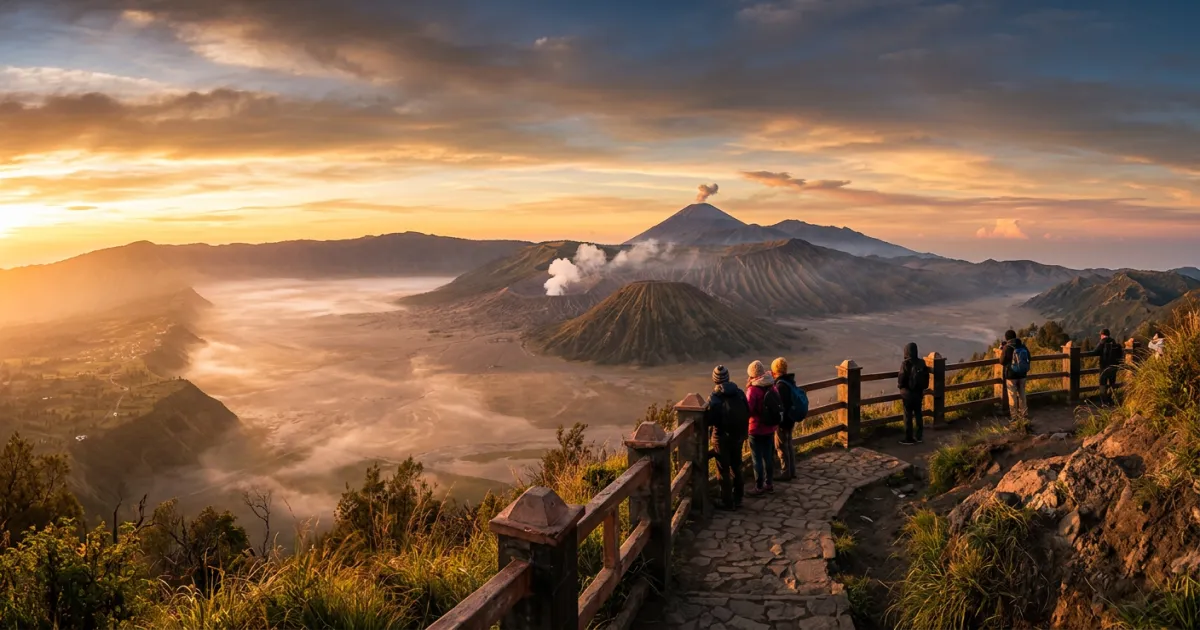
- Mount Bromo (Java): An active volcano in a vast caldera landscape that looks like the surface of the moon. Sunrise viewpoints are reached by jeep in the early morning hours from nearby Probolinggo or Malang.
- Raja Ampat (Papua): The crown jewel of Indonesian diving with the highest marine biodiversity on Earth. Remote, expensive to reach, and absolutely worth it for divers and snorkelers. Best from October to April.
- Yogyakarta (Java): The cultural capital of Java. Home to Borobudur, the Hindu temple complex of Prambanan, batik workshops, and incredible street food. Two to three days recommended.
Where to Stay
Indonesia has accommodation at every price point. In Bali, Ubud has boutique villas and rice-terrace retreats ($30 to $200 per night), while Seminyak has beach resorts ($50 to $500+). In Yogyakarta, guesthouses start at $10 to $20 per night. Labuan Bajo (gateway to Komodo) has grown rapidly with mid-range hotels for $40 to $100. Raja Ampat homestays run $50 to $80 per person per day including meals. Budget accommodation across Indonesia is remarkably cheap: clean guesthouses for $10 to $25 per night are common outside peak areas.

Sample 7-Day Indonesia Itinerary
- Day 1-3: Bali: Arrive in Bali. Spend time in Ubud exploring the Monkey Forest, Tegallalang Rice Terraces, and local cafes. Visit a waterfall (Tegenungan or Sekumpul). Take a cooking class. Watch sunset at Uluwatu Temple.
- Day 4-5: Yogyakarta (Java): Fly to Yogyakarta. Sunrise at Borobudur. Afternoon at Prambanan temple complex. Explore the city’s street food scene on Malioboro Street. Optional: add a day trip to Mount Bromo from nearby Surabaya.
- Day 6-7: Komodo (Flores): Fly to Labuan Bajo. Join a boat trip to Komodo National Park to see dragons on Rinca or Komodo Island. Snorkel at Pink Beach and Manta Point. Return to Bali or depart from Labuan Bajo.
Budget Estimate
Indonesia is one of the most affordable travel destinations in the world. Budget travelers can live well on $30 to $50 per day with guesthouses, local warung (food stall) meals at $1 to $3, and local transport. Mid-range travelers should plan for $75 to $150 covering comfortable hotels, restaurant meals, tours, and domestic flights. Luxury travelers will spend $200 to $500+ for villas, private guides, and fine dining, which is still a fraction of what the same experience costs in Europe. Domestic flights are the biggest expense for multi-island trips.
Planning Tools
Ready to start building your Indonesia trip? Our free AI trip planner can generate a custom itinerary based on your dates, budget, and interests.
Frequently Asked Questions
How long should I spend in Indonesia?
Two weeks is a good starting point to cover Bali, Java (Yogyakarta and Borobudur), and one additional destination like Komodo or the Gili Islands. One week is enough for Bali alone. Three weeks or more lets you reach more remote destinations like Raja Ampat, Sulawesi, or Sumatra.
Is Indonesia safe for tourists?
Indonesia is generally safe for tourists, especially in well-visited areas like Bali, Java, and Komodo. Standard precautions apply: watch your belongings in crowded places, use reputable tour operators, and be cautious with motorbike rentals. Check travel advisories for specific regions. Bali is one of the safest destinations in Southeast Asia.
Do I need vaccinations for Indonesia?
No vaccinations are required for entry from the US, but the CDC recommends being up to date on routine vaccines and considering Hepatitis A, Typhoid, and in some cases Japanese Encephalitis (for rural areas). Malaria prophylaxis may be recommended for remote eastern islands like Papua. Consult your doctor or a travel clinic before your trip.