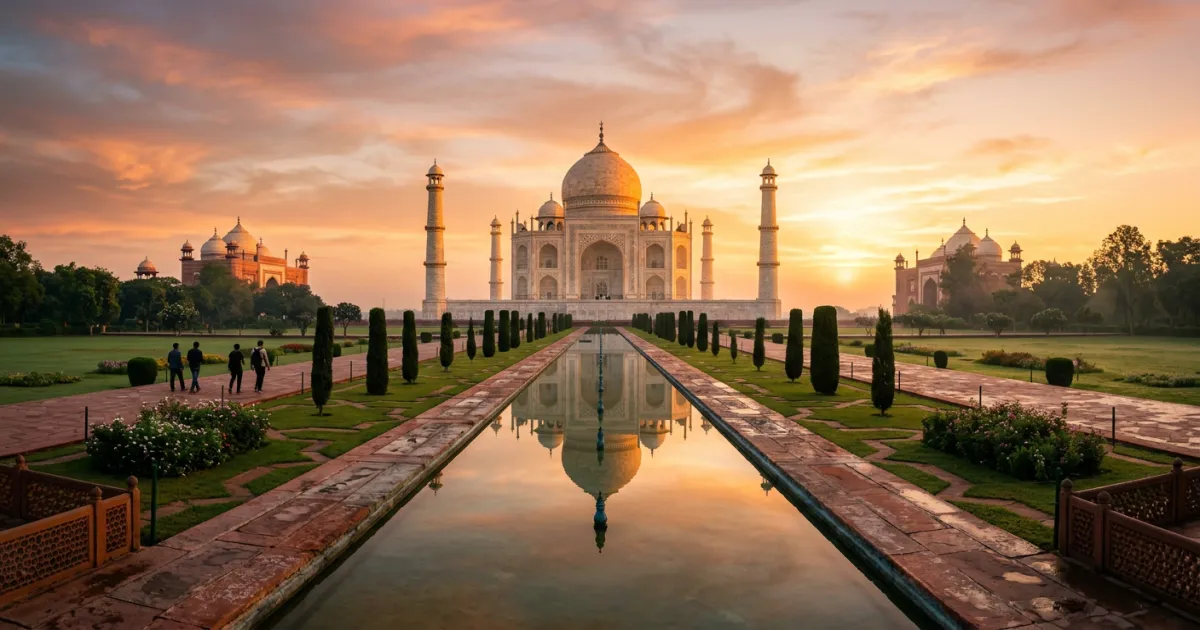
India is a country that overwhelms the senses in the best way. The Taj Mahal at sunrise, the chaos and street food of Old Delhi, the desert palaces of Rajasthan, the backwaters of Kerala, and the beaches of Goa represent just a fraction of what this vast country offers. India is challenging, rewarding, and unlike anywhere else on earth. This guide covers everything you need to plan your trip. For a broader approach, see our step-by-step trip planning guide.
Key Planning Facts
- Location: South Asia, bordered by Pakistan, China, Nepal, Bangladesh, and Sri Lanka
- Currency: Indian Rupee (INR). Approximately 85 to 90 INR per 1 USD
- Language: Hindi and English (official). Hundreds of regional languages. English is widely spoken in tourist areas, hotels, and by educated populations
- Visa for U.S. citizens: Required. E-visa available online at indianvisaonline.gov.in. 30-day e-visa: $25. 1-year multiple entry: $40. 5-year multiple entry: $80. Apply at least 4 days before travel
- Best months to visit: October to March (cool, dry season across most of the country)
- Average daily budget: $25 to $100 per person (India is one of the most affordable destinations in the world)
- Time zone: India Standard Time (IST, UTC+5:30, no daylight saving)
- Flight time from U.S.: 14 to 20 hours (typically via a Gulf hub, London, or direct to Delhi)
- Country size: 1.27 million square miles (seventh-largest country in the world). Delhi to Goa is 1,100 miles. Domestic flights are essential for covering distances
Best Time to Visit India
Cool Season (October to March)
The best time for most of India. Temperatures are comfortable (15 to 30 degrees Celsius depending on region), skies are clear, and it is the peak tourist season. November and December are particularly good: clear air, manageable heat, and the monsoon’s greenness lingers. Rajasthan and the Golden Triangle are at their best. Kerala, Goa, and the south are warm and dry. This is peak season, so book ahead.
Hot Season (April to June)
Very hot across most of India (35 to 45 degrees Celsius in the plains). Not recommended for most travelers except for the Himalayan regions (Ladakh, Shimla, Manali, Darjeeling), which are pleasant in summer. The Taj Mahal crowds thin because of the heat.
Monsoon Season (July to September)
Heavy rain across most of the country, particularly the western coast and northeast. Kerala’s backwaters are lush and green. Goa’s beaches are rough. Rajasthan receives less rain than other regions. Travel is possible but expect disruptions. Prices are at their lowest. Ladakh (in the rain shadow of the Himalayas) has its best weather during monsoon.
How Long to Spend in India
India is vast. A focused 10 to 14 day trip covers one or two regions well. The classic Golden Triangle (Delhi, Agra, Jaipur) takes 5 to 7 days. Adding Varanasi extends to 8 to 10 days. Kerala requires 5 to 7 days on its own. Goa needs 4 to 5 days. A 3-week trip lets you combine two regions comfortably. Do not try to see all of India in one trip.
Budget and Costs
India is one of the most affordable travel destinations in the world. Your money goes extraordinarily far here.
Daily Budget Ranges
- Budget: $15 to $35 per person per day. Hostels or budget guesthouses ($5 to $15 per night), street food and local restaurants ($1 to $3 per meal), trains and local buses
- Mid-range: $40 to $80 per person per day. Hotels ($25 to $60 per night), restaurant meals, domestic flights, auto-rickshaws and taxis
- Luxury: $100 to $250 per person per day. Heritage hotels and palace stays ($80 to $300 per night), fine dining, private drivers, curated experiences
Key Costs
- Taj Mahal entry: INR 1,100 ($13) for foreign tourists, includes shoe covers and water. Open sunrise to sunset, closed Fridays. Arrive at sunrise for the best light and smallest crowds
- Domestic flights: $30 to $100 one way. IndiGo, SpiceJet, and Air India connect major cities. Delhi to Goa: about 2.5 hours. Delhi to Kerala: about 3 hours
- Trains: India’s rail network is vast and affordable. Sleeper class: $5 to $15 for long distances. AC classes: $10 to $40. Book on irctc.co.in. Trains fill up weeks ahead for popular routes
- Auto-rickshaw: $1 to $3 for most city trips. Use Uber or Ola apps for transparent pricing
- Street food meal: $1 to $3 (samosa, dosa, thali, chai). A full thali (plate with multiple dishes) at a local restaurant: $2 to $5
- E-visa: $25 (30-day), $40 (1-year), $80 (5-year). Apply online at least 4 days before travel
Use our free travel budget template to plan your India expenses.
Getting There and Getting Around
Flying In
Indira Gandhi International Airport (DEL) in Delhi and Chhatrapati Shivaji Maharaj International Airport (BOM) in Mumbai are the two main gateways. Direct flights from New York, Chicago, San Francisco, and Washington D.C. to Delhi. Many flights connect through Gulf hubs (Dubai, Doha, Abu Dhabi) or London.
Domestic Flights
Essential for covering India’s vast distances. IndiGo is the largest and most reliable domestic carrier. Delhi to Jaipur: 1 hour. Delhi to Goa: 2.5 hours. Delhi to Kochi (Kerala): 3 hours. Book on airline websites for best fares.
Trains
India’s railway is the lifeline of the country. Over 12,000 trains run daily. Classes range from unreserved (very cheap, very crowded) to AC First Class (comfortable, air-conditioned). The Rajdhani and Shatabdi express trains are the fastest. Book through irctc.co.in or the IRCTC app. Popular routes book up 2 to 4 weeks ahead. Train travel is an experience in itself.
Within Cities
Use Uber or Ola (India’s rideshare app) for transparent pricing. Auto-rickshaws are iconic and cheap (negotiate the fare or insist on the meter). Delhi and several other cities have modern metro systems. Walking is feasible in smaller towns but challenging in large cities due to traffic, heat, and infrastructure.
India’s Regions and Where to Go
The Golden Triangle (Delhi, Agra, Jaipur)
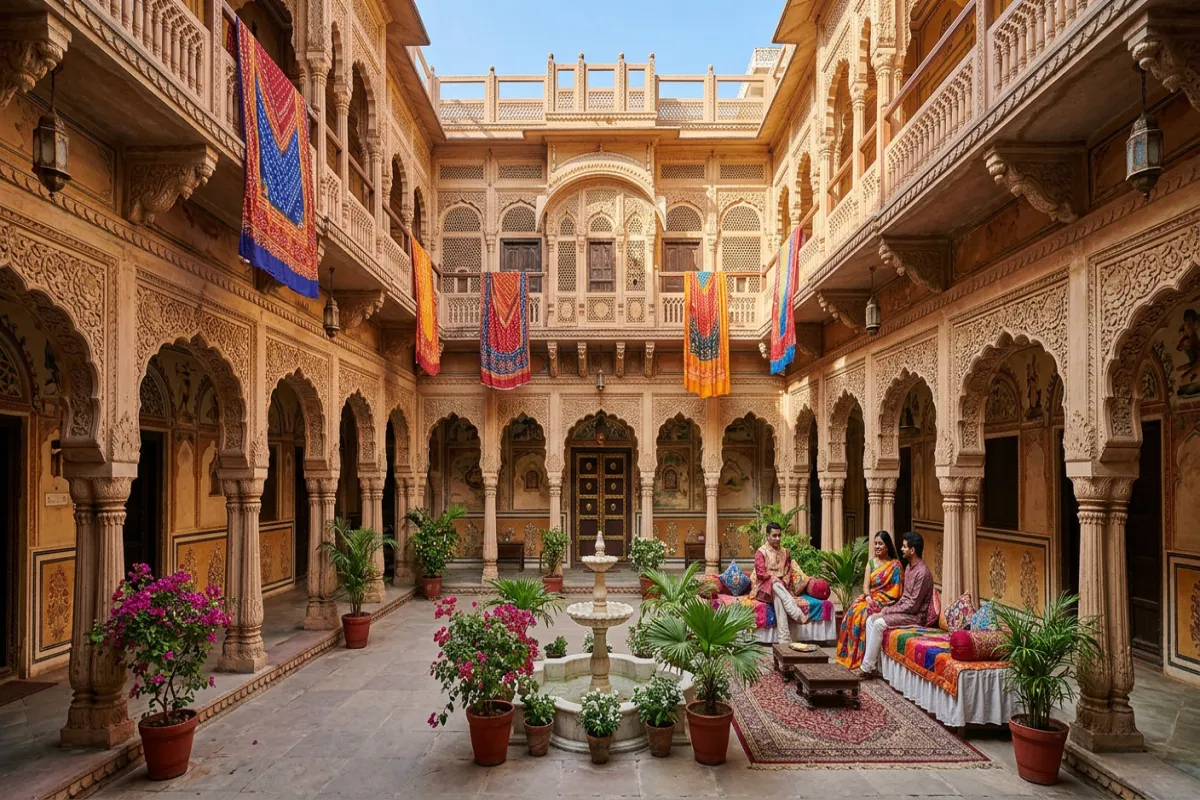
The most popular first-time itinerary. Delhi: Old Delhi’s Mughal monuments (Red Fort, Jama Masjid, Chandni Chowk bazaar), New Delhi’s government buildings and India Gate. Agra: the Taj Mahal, Agra Fort, and the abandoned city of Fatehpur Sikri. Jaipur: the Pink City with Amber Fort, Hawa Mahal (Palace of Winds), City Palace, and vibrant bazaars. The three cities form a triangle connected by trains and highways (3 to 5 hours between each).
Rajasthan
Beyond Jaipur, Rajasthan offers desert landscapes, ornate palaces, and some of India’s most atmospheric cities. Udaipur (the “City of Lakes,” lakeside palaces), Jodhpur (the “Blue City,” Mehrangarh Fort), Jaisalmer (desert fort, camel safaris in the Thar Desert), and Pushkar (one of India’s holiest cities, with a lake and annual camel fair in November).
Varanasi
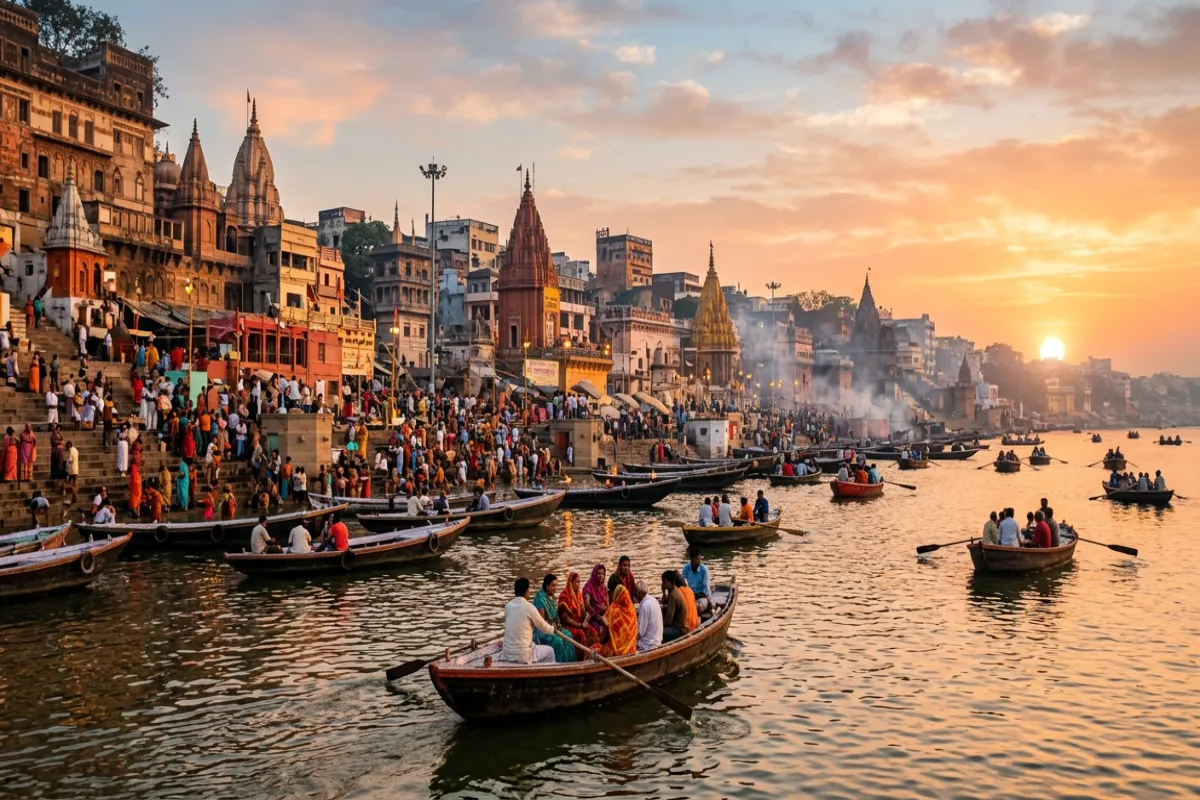
One of the oldest continuously inhabited cities in the world. The ghats (stone steps) along the Ganges River are the spiritual heart of Hinduism. Watch the evening Ganga Aarti ceremony (a fire ritual on the river, held nightly). Take a sunrise boat ride on the Ganges. Varanasi is intense, spiritual, and unlike anywhere else.
Kerala
“God’s Own Country” in southern India. Backwaters (houseboat cruises through palm-lined canals), tea plantations in Munnar, wildlife in Periyar National Park, beaches in Kovalam and Varkala, and Ayurvedic spa treatments. Kerala has the highest literacy rate in India and a distinctly different culture from the north.
Goa
India’s beach destination. Former Portuguese colony with colonial architecture, churches, and a laid-back atmosphere. North Goa has lively beaches, nightlife, and backpacker culture. South Goa is quieter and more upscale. Fresh seafood, Goan curries (vindaloo originated here), and cashew feni (local spirit).
Must-See Attractions and Experiences
Taj Mahal
One of the most beautiful buildings ever created. Built by Mughal Emperor Shah Jahan in memory of his wife Mumtaz Mahal (completed 1653). Visit at sunrise for the most magical light and smallest crowds. Closed on Fridays. Entry: INR 1,100 for foreign tourists. Allow 2 to 3 hours.
Varanasi Ghats
Over 80 ghats line the Ganges River. Dashashwamedh Ghat hosts the nightly Ganga Aarti ceremony (fire offerings, chanting, and bells). A sunrise boat ride past the ghats is one of the most powerful travel experiences in the world.
Amber Fort (Jaipur)
A massive hillside fort built from red sandstone and marble. Elephant rides (controversial) or jeep rides take you to the entrance. The Sheesh Mahal (Mirror Palace) is covered in tiny mirrors that reflect candlelight. One of the most impressive forts in India.
Kerala Backwater Houseboat
Cruise through Alleppey’s (Alappuzha) network of palm-lined canals, lakes, and villages on a traditional houseboat. Overnight houseboats include meals cooked on board with fresh local ingredients. A quintessentially Kerala experience.
Old Delhi Food Walk
Chandni Chowk (Old Delhi’s main bazaar, dating to the 17th century) has some of the best street food in India: parathas (stuffed flatbreads), chaat (savory snacks), kebabs, jalebis (syrupy fried sweets), and kulfi (Indian ice cream). A guided food walk is the best way to navigate the chaotic, delicious streets.
Food and Dining
Indian food varies enormously by region. Every state has its own cuisine, and the diversity is staggering.
- North Indian: Butter chicken, naan, biryani, dal makhani, paneer dishes. Rich, creamy, and flavorful. The cuisine most familiar to Western travelers
- South Indian: Dosa (crispy rice crepe), idli (steamed rice cakes), sambar (lentil stew), and coconut-based curries. Lighter and often vegetarian
- Street food: Samosas, pani puri (hollow crispy balls filled with spiced water), vada pav (spicy potato fritter in a bun, Mumbai’s street food), chaat (tangy savory snacks). Sold everywhere for $0.25 to $1
- Thali: A plate with multiple small dishes, rice, bread, and sometimes dessert. The best way to taste many flavors in one meal. $2 to $5 at a local restaurant, $10 to $20 at a mid-range restaurant
- Chai: Spiced milk tea, served everywhere from train stations to five-star hotels. A cup of street chai costs INR 10 to 20 ($0.12 to $0.25). It is India’s universal drink
- Lassi: A yogurt drink, sweet or salted. Mango lassi is the most popular
Vegetarian note: India has more vegetarians than any other country. Vegetarian food is excellent, widely available, and often better than the non-vegetarian options. Restaurants marked with a green dot serve only vegetarian food.
Tipping: Not expected at street stalls or casual restaurants. 10 percent at mid-range and upscale restaurants. Tip guides and drivers at the end of tours ($5 to $10 per day is appreciated).
Safety and Practical Tips
- Stomach health: “Delhi belly” is common. Drink only bottled or filtered water. Avoid ice from unknown sources (hotels and upscale restaurants use purified ice). Eat at busy street stalls (high turnover means fresh food). Carry antidiarrheal medication
- Scams: Common tourist scams include overcharging taxi/rickshaw drivers (use Uber/Ola), “the monument is closed” redirects, and gem/carpet shop detours. Politely decline unsolicited help from strangers at tourist sites
- Women travelers: Solo women travelers should exercise extra caution, especially at night. Dress modestly (cover shoulders and knees), avoid isolated areas after dark, and use reputable transport. Many women travel India safely but awareness is important
- Bargaining: Expected at markets, street vendors, and with auto-rickshaw drivers. Start at 50 percent of the asking price and negotiate politely. Fixed prices at supermarkets, malls, and government shops (called “emporium”)
- Traffic: Indian traffic is chaotic by Western standards. Crossing the street requires confidence and a willingness to walk slowly and steadily (similar to Vietnam). Use ride-hailing apps rather than driving yourself
- Temples and mosques: Remove shoes before entering. Cover shoulders and knees. Some temples require removing leather items (belts, bags). Some temples do not allow non-Hindus into inner sanctums
- SIM card: Buy a local SIM at the airport (Jio or Airtel) for inexpensive data. Requires passport and photo. Data is extraordinarily cheap in India
- Electrical outlets: Type C, D, and M plugs. 230V. Bring a universal adapter
- Emergency number: 112
Sample 10-Day Golden Triangle + Varanasi Itinerary
Days 1 to 3: Delhi
Fly into Delhi (DEL). Day 1: recover from jet lag, explore Connaught Place, India Gate, walk through Lodhi Gardens. Day 2: Old Delhi. Rickshaw ride through Chandni Chowk, Red Fort, Jama Masjid (one of the largest mosques in India), street food walk. Afternoon: Humayun’s Tomb (precursor to the Taj Mahal, UNESCO site). Day 3: Qutub Minar, Lotus Temple, Akshardham Temple. Evening: Hauz Khas Village for dinner and nightlife.
Days 4 to 5: Agra
Train from Delhi to Agra (Gatimaan Express, 100 minutes, India’s fastest train). Day 4: Taj Mahal at sunrise (arrive 30 minutes before gates open). Afternoon: Agra Fort. Day 5: Fatehpur Sikri (abandoned Mughal capital, 40 km from Agra). Afternoon train to Jaipur (4 to 5 hours).
Days 6 to 7: Jaipur
Day 6: Amber Fort (morning, before heat), City Palace, Hawa Mahal (photograph from the street), Jantar Mantar (astronomical observatory). Evening: bazaar shopping on Johari Bazaar. Day 7: explore the Pink City on foot. Visit Nahargarh Fort for sunset views over Jaipur. Evening: dinner at a rooftop restaurant with fort views.
Days 8 to 10: Varanasi
Fly from Jaipur to Varanasi (1.5 hours with connection). Day 8: evening Ganga Aarti ceremony at Dashashwamedh Ghat. Day 9: sunrise boat ride on the Ganges. Walk the ghats. Visit Kashi Vishwanath Temple. Explore the narrow lanes of the old city. Day 10: morning at the ghats, Sarnath (where Buddha gave his first sermon, 30 minutes from Varanasi). Fly home from Varanasi (VNS).
Planning Your India Trip
Start building your custom itinerary with our free AI trip planner.
For more trip planning resources:
Frequently Asked Questions
Do U.S. citizens need a visa for India?
Yes. Apply for an e-visa online at indianvisaonline.gov.in. 30-day e-visa: $25. 1-year multiple entry: $40. 5-year: $80. Apply at least 4 days before travel. Processing typically takes 3 to 5 business days.
What is the best time to visit India?
October to March (cool, dry season). November to February is ideal for the Golden Triangle, Rajasthan, Kerala, and Goa. April to June is extremely hot. July to September is monsoon season (heavy rain in most regions but ideal for Ladakh).
How cheap is India?
Extremely affordable. Budget travelers can manage on $15 to $35 per day. Street food meals cost $1 to $3. A full thali (multiple dishes) is $2 to $5. Hotels start at $5 to $15 per night. India offers some of the best travel value in the world.
Is India safe for tourists?
Generally safe with common-sense precautions. Main concerns: stomach illness (drink bottled water), scams at tourist sites (use rideshare apps, decline unsolicited help), and traffic (chaotic but manageable). Women travelers should exercise extra caution, especially at night.
What is the Golden Triangle?
A popular tourist circuit connecting Delhi, Agra (Taj Mahal), and Jaipur (Pink City). The three cities form a triangle of 3 to 5 hours between each, connected by trains and highways. Takes 5 to 7 days.
When should I visit the Taj Mahal?
At sunrise. Arrive 30 minutes before gates open for the most magical light and smallest crowds. Closed on Fridays. Entry: INR 1,100 ($13) for foreign tourists. Book tickets online.
Will I get sick in India?
Stomach illness (“Delhi belly”) is common but usually manageable. Drink only bottled or filtered water. Eat at busy stalls (fresh food). Avoid raw salads and unpeeled fruit from questionable sources. Carry antidiarrheal medication. Most travelers recover within a day or two.
How do I get around India?
Domestic flights for long distances (IndiGo is the best carrier). Trains for medium distances and the experience. Uber/Ola apps in cities for transparent pricing. Auto-rickshaws for short trips (negotiate or use the meter).
What should I wear?
Modest clothing that covers shoulders and knees, especially at temples and in conservative areas. Light, breathable fabrics (cotton and linen). Women: a scarf is useful for covering shoulders at religious sites. Men: shorts are fine in tourist areas but long pants at temples. Comfortable walking shoes.
What should I pack?
Light, breathable clothing. Scarf or shawl for temple visits. Sunscreen and hat. Insect repellent. Reusable water bottle with filter. Hand sanitizer and wet wipes. Antidiarrheal medication. Universal power adapter. Padlock for train luggage. A small day bag.