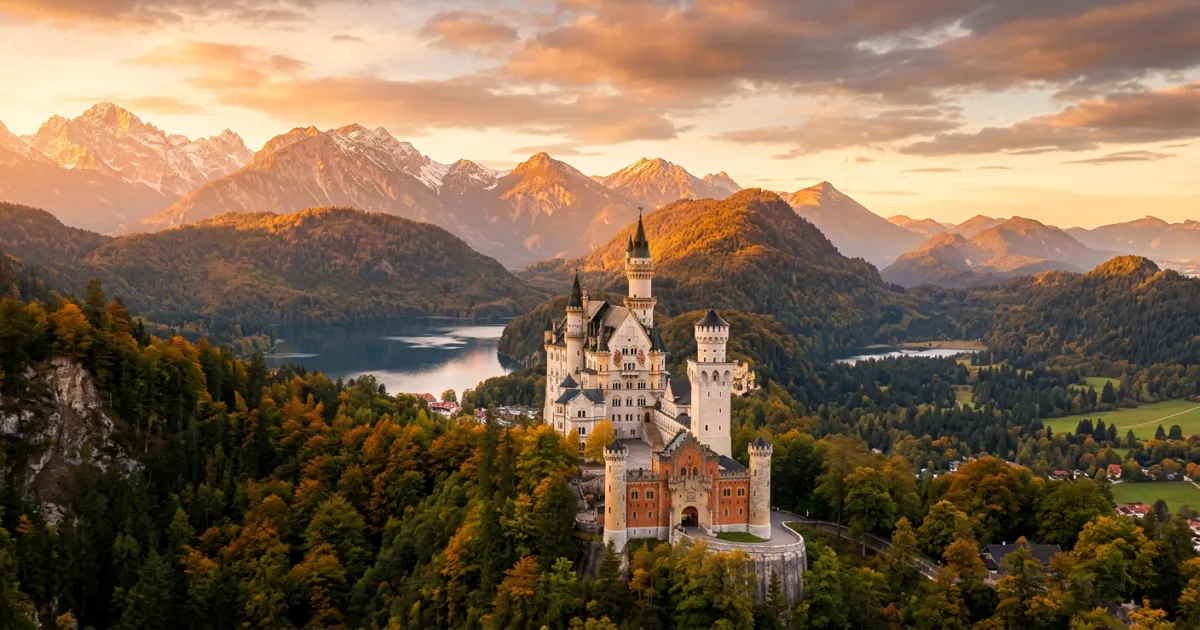
Planning a trip to Germany means choosing between world-class cities, fairy-tale castles, alpine scenery, and some of the best beer and food in Europe. Whether you want to explore Berlin’s history, hike through the Black Forest, cruise the Rhine Valley, or time your visit for Oktoberfest, this guide covers everything you need to plan your trip from start to finish. For a broader framework, check out our step-by-step guide to planning a trip.
Key Planning Facts
- Location: Central Europe, bordered by nine countries
- Currency: Euro (EUR)
- Language: German (English widely spoken in cities and tourist areas)
- Visa for U.S. citizens: Not required for stays up to 90 days (Schengen Area). ETIAS authorization expected to launch Q4 2026 for a fee of EUR 7
- Best months to visit: May to June and September to October
- Average daily budget: EUR 70 to 180 per person depending on travel style
- Time zone: Central European Time (CET, UTC+1; CEST UTC+2 in summer)
- Flight time from U.S.: 8 to 11 hours from East Coast; 11 to 13 hours from West Coast
- Country size: About the size of Montana
Best Time to Visit Germany
Spring (April to June)
Spring is one of the best times to visit Germany. Temperatures range from 10 to 22 degrees Celsius (50 to 72 degrees Fahrenheit), flowers bloom across parks and gardens, and tourism crowds are lighter than summer. May and June are particularly pleasant, with long daylight hours and warm weather ideal for walking cities and hiking. Rhine Valley vineyards come alive during this season, and outdoor beer gardens start opening across Bavaria.
Summer (July to August)
Summer brings the warmest weather (20 to 30 degrees Celsius, or 68 to 86 degrees Fahrenheit) and the longest days. This is peak tourism season, meaning higher hotel prices and larger crowds at popular spots. It is the best time for outdoor activities, festivals, lake swimming, and alpine hiking in the Bavarian Alps. Book accommodation well in advance, especially in Munich, Berlin, and the Black Forest.
Autumn (September to November)
Autumn is arguably the most rewarding season. September and early October offer comfortable temperatures, fall foliage, and regional wine festivals. Oktoberfest in Munich runs from September 20 to October 5, 2026, drawing over six million visitors. Late October and November get cooler and rainier, but crowds thin and prices drop.
Winter (December to February)
Winter in Germany is cold, with temperatures between minus 2 and 8 degrees Celsius (28 to 46 degrees Fahrenheit). The main draw is Christmas markets, which operate from late November through December 24 in over 180 cities. Nuremberg, Dresden, Cologne, and Stuttgart host the most famous markets. If you enjoy skiing or snowboarding, the Bavarian Alps and Black Forest offer reliable winter sports from December through March.
How Long to Spend in Germany
For a first visit, plan for 7 to 10 days. This gives you time to visit two or three cities plus a day trip or two. A compact trip of 5 days works if you focus on one region, like Bavaria or Berlin plus surrounding areas. Two weeks or more lets you combine cities with scenic routes like the Romantic Road or Rhine Valley.
A sample breakdown for a 10-day trip: 3 days in Berlin, 2 days in Munich, 2 days in the Black Forest or Rhine Valley, and day trips to towns like Heidelberg, Rothenburg ob der Tauber, or Neuschwanstein Castle.
Budget and Costs
Germany is moderately priced for Western Europe. It is less expensive than Switzerland or Scandinavia and roughly comparable to Austria and the Netherlands.
Daily Budget Ranges
- Budget: EUR 60 to 90 per person per day. Hostels or budget hotels (EUR 20 to 50 per night), supermarket meals and street food, Deutschland-Ticket for transit
- Mid-range: EUR 150 to 200 per person per day. Three-star hotels (EUR 80 to 130 per night), sit-down restaurants, mix of trains and taxis
- Luxury: EUR 250 and up per person per day. Four- or five-star hotels (EUR 200 and up per night), fine dining, private tours
Key Costs to Know
- Deutschland-Ticket: EUR 63 per month (as of January 2026) for unlimited travel on all regional trains, buses, trams, and subways nationwide. This is one of the best transit deals in Europe
- Meals: A traditional German meal at a sit-down restaurant costs EUR 12 to 25. A beer at a beer garden runs EUR 4 to 7. Street food like currywurst or doner kebab costs EUR 4 to 7
- Long-distance trains: ICE high-speed rail tickets range from EUR 20 to 120 depending on how far ahead you book. Book through Deutsche Bahn (bahn.de) for the best fares
- Museum entry: Most major museums charge EUR 8 to 15. Berlin’s Museum Island combo ticket is EUR 22
Use our free travel budget template to track your Germany expenses.
Getting There and Getting Around
Flying In
Germany has several major international airports. Frankfurt Airport (FRA) and Munich Airport (MUC) are the two largest hubs with the most direct flights from the U.S. Berlin Brandenburg Airport (BER), Dusseldorf (DUS), and Hamburg (HAM) also serve international routes. Budget carriers like Eurowings and Ryanair connect smaller German cities to the rest of Europe.
Trains
Germany’s rail network is one of the best in Europe. Deutsche Bahn operates ICE high-speed trains connecting major cities. Berlin to Munich takes about 4 hours, Frankfurt to Cologne takes about 1 hour, and Hamburg to Berlin takes about 1 hour and 45 minutes. Book tickets on bahn.de as early as possible. Fares start at EUR 17.90 for advance “Sparpreis” tickets.
The Deutschland-Ticket (EUR 63 per month) covers all regional trains, subways, buses, and trams. It does not cover ICE or IC long-distance trains, but it is perfect for city transport and shorter regional journeys.
Driving
Renting a car makes sense if you plan to explore the countryside, the Romantic Road, or the Black Forest. The Autobahn has some sections with no speed limit, but many stretches do have limits, especially near cities. An International Driving Permit is recommended alongside your U.S. license. Fuel costs around EUR 1.60 to 1.90 per liter.
City Transport
Every major German city has efficient public transit. Berlin, Munich, Hamburg, and Cologne all have subway (U-Bahn), commuter rail (S-Bahn), trams, and buses. Single tickets in Berlin cost EUR 3.50, and day passes cost about EUR 9.90. All are covered by the Deutschland-Ticket.
Where to Stay
Berlin
Germany’s capital is best explored from central neighborhoods like Mitte, Kreuzberg, or Prenzlauer Berg. Budget travelers find good hostels in Friedrichshain. Berlin is generally the most affordable major German city for accommodation, with three-star hotels averaging EUR 80 to 130 per night.
Munich
Munich is pricier, especially during Oktoberfest when hotel rates can double or triple. Stay in the Altstadt (Old Town) area for proximity to main sights, or try Schwabing or Maxvorstadt for a quieter, more local feel. Average hotel costs run EUR 100 to 180 per night.
Rhine Valley and Romantic Road
Small towns along these routes have charming guesthouses (Gasthaus or Pension) for EUR 60 to 100 per night. Book well ahead for summer, as these towns have limited capacity.
Black Forest
Freiburg is the best base for the Black Forest. Smaller villages like Triberg or Titisee offer quieter stays surrounded by nature. Prices are slightly lower than major cities.
Must-See Attractions and Experiences
Berlin
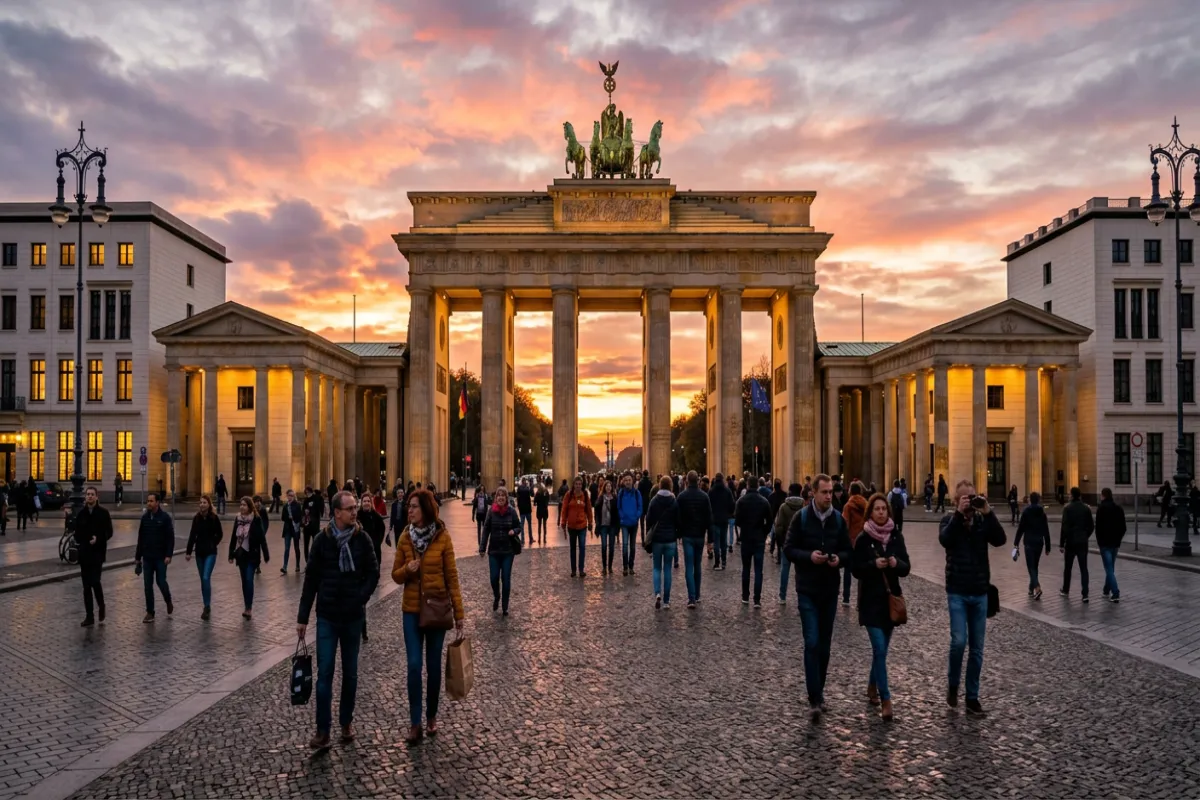
Berlin’s history is visible everywhere. Walk through the Brandenburg Gate, visit the Berlin Wall Memorial and East Side Gallery, explore Museum Island (a UNESCO site with five world-class museums), and see the Holocaust Memorial. The Reichstag building offers free rooftop dome visits with advance registration. Do not miss the vibrant neighborhoods of Kreuzberg and Prenzlauer Berg for street art, food, and nightlife.
Munich and Bavaria
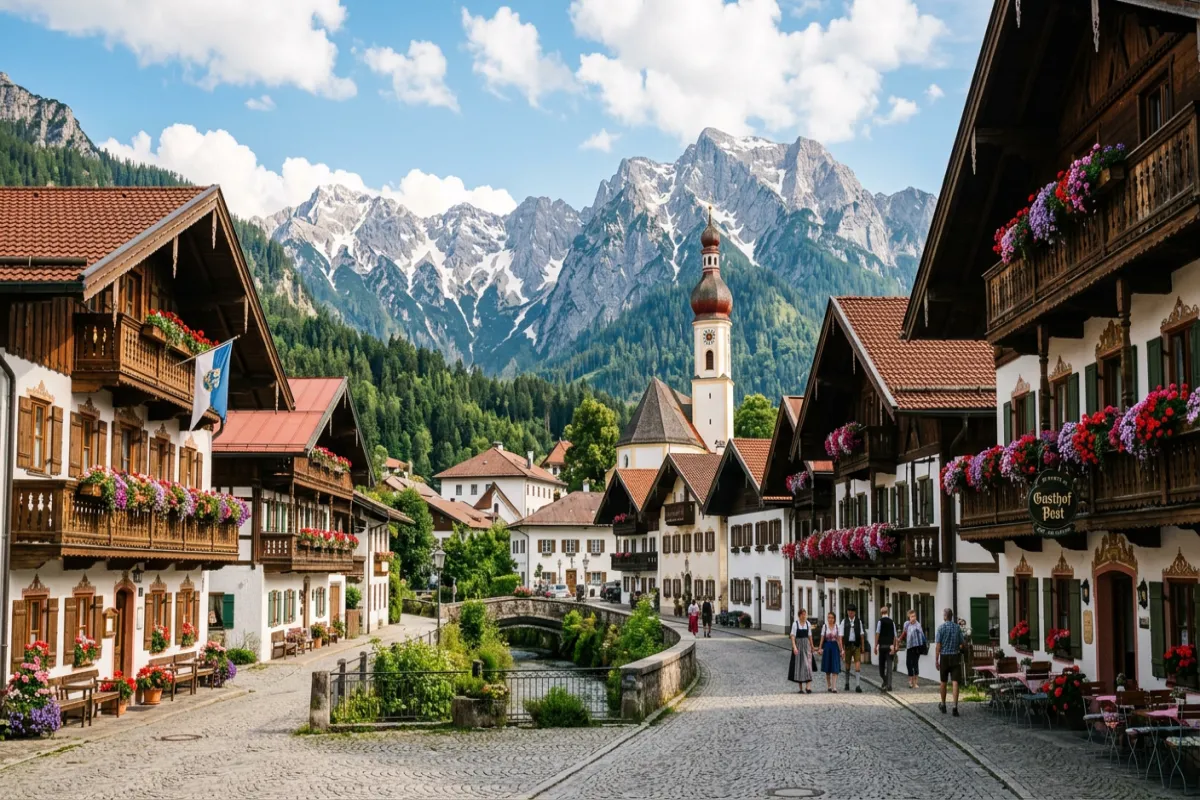
Munich anchors the Bavarian experience. Visit Marienplatz and watch the Glockenspiel, explore the Residenz palace, stroll through the English Garden (one of the world’s largest urban parks), and spend an afternoon in a traditional beer hall. Day trips from Munich include Neuschwanstein Castle (2 hours by train and bus), Salzburg in Austria (1.5 hours by train), and Garmisch-Partenkirchen for alpine hiking.
Rhine Valley
A Rhine River cruise between Koblenz and Rudesheim passes through a UNESCO World Heritage landscape of castles, vineyards, and small towns. You can also drive or take regional trains along the river. The Lorelei rock, Marksburg Castle, and Burg Eltz (technically in the Moselle Valley, but close by) are highlights.
The Romantic Road
This 350-kilometer route runs from Wurzburg to Fussen through medieval towns. Key stops include Rothenburg ob der Tauber (the most photographed medieval town in Germany), Dinkelsbuehl, and Nordlingen. The route ends at Neuschwanstein Castle.
Black Forest
The Black Forest covers over 6,000 square kilometers of dense pine forests, waterfalls, and spa towns. Hike through the Wutach Gorge, visit Triberg Falls (one of Germany’s tallest waterfalls at 163 meters), and explore the spa town of Baden-Baden. The cuckoo clock tradition originates here.
Dresden and Saxony
Dresden’s Baroque old town was rebuilt after World War II and is now one of Germany’s most beautiful cityscapes. The Frauenkirche, Zwinger Palace, and the Green Vault treasury are standouts. Day trip to Saxon Switzerland National Park for dramatic sandstone cliffs and hiking.
Hamburg
Germany’s second-largest city sits on the Elbe River and is known for its port, the Elbphilharmonie concert hall, the historic Speicherstadt warehouse district (UNESCO site), and the Reeperbahn nightlife district. The Miniatur Wunderland is the world’s largest model railway and a surprisingly engaging attraction for all ages.
Cologne
The Cologne Cathedral (Kolner Dom) took over 600 years to build and is Germany’s most visited landmark. Climb 533 steps to the top for city views. The old town along the Rhine is walkable and full of traditional brewhouses serving Kolsch beer.
Food and Dining
German food goes well beyond bratwurst and beer, though both are excellent. Each region has its own specialties.
- Bavaria: Weisswurst (white sausage, eaten before noon traditionally), Schweinshaxe (roasted pork knuckle), pretzels, and Weissbier
- Berlin: Currywurst (sliced sausage with curry ketchup), doner kebab (Berlin has more kebab shops than Istanbul), and Berliner Weisse (sour wheat beer)
- Rhineland: Sauerbraten (marinated pot roast), Reibekuchen (potato pancakes), and Kolsch beer in Cologne
- Black Forest: Black Forest ham, Black Forest cake (Schwarzwalder Kirschtorte), and Flammkuchen (thin-crust flatbread similar to pizza)
- Northern Germany: Fischbrötchen (fish sandwiches) in Hamburg, smoked eel, and Labskaus (a hearty sailor’s stew)
Tipping: Round up to the nearest euro for small bills, or leave 5 to 10 percent at sit-down restaurants. Tell the server your total when paying rather than leaving cash on the table.
Beer culture: Germany has over 1,500 breweries and regional beer styles vary widely. Visit a Biergarten (beer garden) in Bavaria, a Brauhaus (brewhouse) in Cologne, or a Kneipe (pub) in Berlin for the local experience.
Safety and Practical Tips
- Safety: Germany is one of the safest countries in Europe. Exercise normal precautions against pickpocketing in crowded tourist areas and train stations, particularly in Berlin and Munich
- Cash: Germany is more cash-dependent than most of Western Europe. Many smaller shops, bakeries, and some restaurants do not accept credit cards. Always carry at least EUR 50 to 100 in cash
- Sunday closures: Nearly all shops, supermarkets, and pharmacies close on Sundays. Restaurants, museums, and some bakeries stay open. Plan grocery shopping for Saturday
- Quiet hours: Germans observe “Ruhezeit” (quiet time). Avoid loud noise between 10 PM and 6 AM, and all day on Sundays in residential areas
- Tap water: Tap water is safe and high quality throughout Germany, but restaurants usually charge for bottled water. Ask for “Leitungswasser” if you want free tap water, though some restaurants may not serve it
- Recycling: Germany has a bottle deposit system (Pfand). You pay EUR 0.25 extra for plastic bottles and cans, refundable at reverse vending machines in supermarkets
- Electrical outlets: Germany uses Type C and F plugs (round two-pin). Bring a European adapter
- Emergency number: 112 (Europe-wide emergency line)
Sample 10-Day Germany Itinerary
Days 1 to 3: Berlin
Fly into Berlin Brandenburg Airport (BER). Day 1: Brandenburg Gate, Reichstag dome (book free tickets in advance at bundestag.de), Holocaust Memorial, and Unter den Linden boulevard. Day 2: Museum Island (Pergamon Museum, Neues Museum), Berlin Wall Memorial, East Side Gallery, and Kreuzberg neighborhood for dinner. Day 3: Charlottenburg Palace, KaDeWe department store food hall, Tiergarten park, and evening in Prenzlauer Berg.
Day 4: Train to Dresden
Take the ICE train from Berlin to Dresden (about 2 hours). Explore the Frauenkirche, Zwinger Palace, and Bruhl’s Terrace along the Elbe. Overnight in Dresden.
Day 5: Saxon Switzerland, then Train to Munich
Morning trip to the Bastei Bridge viewpoint in Saxon Switzerland National Park (40 minutes from Dresden by S-Bahn). Afternoon ICE train to Munich (about 4.5 hours). Check in and explore Marienplatz.
Days 6 to 7: Munich
Day 6: Marienplatz and Glockenspiel, Viktualienmarkt food market, Residenz palace, and an evening at a traditional beer hall. Day 7: English Garden, BMW Museum or Deutsches Museum (the world’s largest science and technology museum), Nymphenburg Palace, and an evening in the Schwabing district.
Day 8: Neuschwanstein Castle Day Trip
Train from Munich to Fussen (about 2 hours), then bus to Neuschwanstein. Book castle tour tickets in advance at hohenschwangau.de. Explore both Neuschwanstein and Hohenschwangau Castle. Walk to the Marienbrucke bridge for the classic photo. Return to Munich by evening.
Days 9 to 10: Rhine Valley or Black Forest
Option A (Rhine Valley): Train from Munich to Koblenz or Bacharach (about 4 hours). Take a Rhine cruise between Koblenz and Rudesheim, explore riverside castles and wine villages. Train to Frankfurt Airport for departure.
Option B (Black Forest): Train from Munich to Freiburg (about 4 hours). Hike in the Black Forest, visit Triberg Falls, explore Baden-Baden’s thermal baths. Train to Frankfurt or Stuttgart airport for departure.
Planning Your Germany Trip
Start building your custom Germany itinerary with our free AI trip planner. Add destinations, set dates, and organize your days in minutes.
For more trip planning resources:
- How to Plan a Trip to Europe
- Free Travel Itinerary Template (Excel)
- Plan a Trip to Switzerland
- Plan a Trip to France
Frequently Asked Questions
Do U.S. citizens need a visa for Germany?
No. U.S. citizens can visit Germany visa-free for up to 90 days within any 180-day period under Schengen Area rules. Starting in late 2026, you will need an ETIAS travel authorization (EUR 7, valid for 3 years). Your passport must be valid for at least three months beyond your planned departure date and must have been issued within the last 10 years.
What is the best time to visit Germany?
May to June and September to October offer the best combination of weather, moderate crowds, and reasonable prices. Visit in late September for Oktoberfest, or in December for Christmas markets. Summer (July and August) has the warmest weather but the biggest crowds.
How expensive is Germany compared to other European countries?
Germany is mid-range for Western Europe. It is less expensive than Switzerland, Norway, or Denmark, roughly equal to Austria and the Netherlands, and slightly more expensive than Spain or Portugal. Budget travelers can manage on EUR 60 to 90 per day, while mid-range travelers should plan for EUR 150 to 200 per day.
Is the Deutschland-Ticket worth it?
Almost certainly, if you are staying more than a few days. For EUR 63 per month, the Deutschland-Ticket covers all regional trains, subways, buses, and trams nationwide. It does not cover ICE or IC long-distance trains. Even a few days of city transport in Berlin or Munich would cost more than EUR 63 in single tickets.
Do I need to speak German?
Not necessarily. English is widely spoken in major cities, tourist areas, hotels, and restaurants. In smaller towns and rural areas, English proficiency drops. Learning basic German phrases (Danke, Bitte, Entschuldigung) is appreciated and helpful.
Is Germany safe for tourists?
Yes. Germany is one of the safest countries in Europe for travelers. The main risks are petty theft and pickpocketing in crowded tourist areas and on public transit. Use normal big-city precautions in Berlin and Munich.
Can I get by with credit cards in Germany?
Only partially. While hotels, chain stores, and supermarkets accept cards, many smaller shops, bakeries, some restaurants, and rural businesses are cash-only. Always carry EUR 50 to 100 in cash. ATMs (Geldautomaten) are widely available.
How do I get from Frankfurt Airport to other cities?
Frankfurt Airport has its own long-distance train station with direct ICE connections to most major German cities. Frankfurt to Cologne takes about 1 hour, to Munich about 3.5 hours, and to Berlin about 4 hours. Regional trains connect to nearby cities like Heidelberg (about 50 minutes) and Mainz (25 minutes).
Should I rent a car in Germany?
A car is not necessary for visiting major cities, which all have excellent public transit and rail connections. Rent a car if you want to explore the countryside, drive the Romantic Road, tour the Black Forest, or visit smaller villages. Some Autobahn sections have no speed limit, which is a unique experience.
What should I pack for Germany?
Layers are essential. Even in summer, evenings can be cool, especially in the mountains. A light rain jacket is useful year-round. Comfortable walking shoes are a must. For winter trips, bring a warm coat, scarf, gloves, and waterproof boots. German restaurants and cultural venues do not have strict dress codes, but smart casual is standard.