| Czech Republic Quick Facts | |
|---|---|
| Country | Czech Republic (Czechia) |
| Currency | Czech Koruna (CZK). 1 USD = roughly 23 CZK |
| Language | Czech. English common in Prague and tourist areas |
| Time Zone | CET (UTC+1), CEST (UTC+2) in summer |
| Visa (US) | Not required for stays under 90 days (Schengen Area) |
| Daily Budget | $50 to $200+ per person |
| Best Time | April to June, September to October |
The Czech Republic offers one of the best value-for-money travel experiences in Europe. Prague alone could justify the trip: a city of Gothic spires, baroque palaces, and one of the most beautiful old town squares on the continent. But venturing beyond Prague reveals fairy-tale towns like Cesky Krumlov, the spa town of Karlovy Vary, the bone church of Kutna Hora, and a beer culture that rivals Belgium. The Czech Republic has the highest per capita beer consumption in the world, and a half-liter of excellent local lager often costs less than a bottle of water.
For a broader framework for organizing any trip, our how to plan a trip guide covers the fundamentals.
Best Time to Visit Czech Republic
April through June and September through October are ideal. Spring brings comfortable temperatures (55 to 70 F), blooming gardens, and the Easter markets in Prague. Fall offers golden light, wine harvest festivals in Moravia, and fewer tourists than summer. July and August are warm (75 to 85 F) and the most crowded, especially in Prague. Winter (November through February) is cold (25 to 40 F) but the Prague Christmas Markets (late November through January 6) are among the best in Europe.
Getting to Czech Republic
Vaclav Havel Airport Prague (PRG) is the main international gateway with direct flights from New York (JFK), Newark, and several European hubs. From the airport, the Airport Express bus reaches Prague Main Station in about 35 minutes. Within Prague, the metro, tram, and walking cover everything. For trips beyond Prague, RegioJet and Czech Railways run comfortable trains and buses to Cesky Krumlov, Kutna Hora, and other destinations at very low prices ($5 to $15).
Top Things to Do in Czech Republic
- Prague Old Town Square: The heart of Prague with the Astronomical Clock (dating to 1410), Tyn Church, and colorful baroque buildings. Watch the clock’s hourly show, then explore the narrow lanes leading off the square.
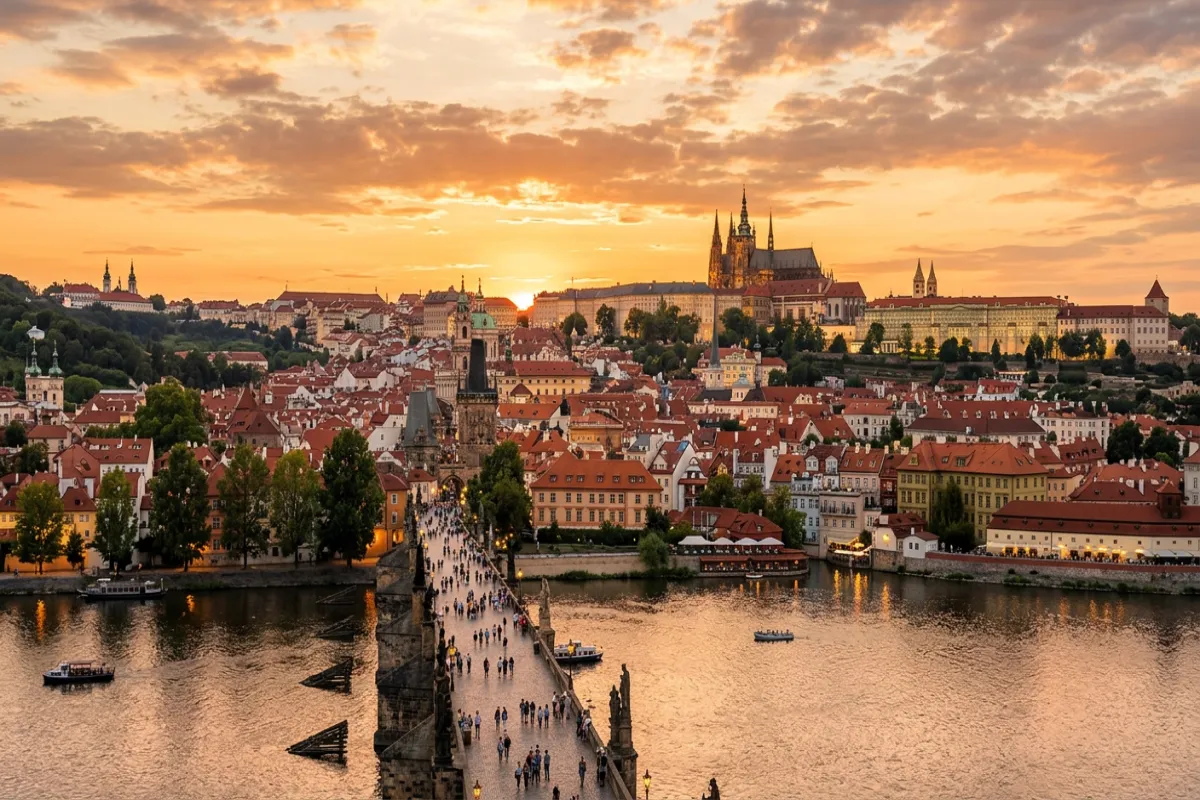
- Charles Bridge: The iconic 14th-century stone bridge lined with 30 baroque statues. Cross it early morning or late evening to avoid the heaviest crowds. Views of Prague Castle and the Vltava River are unforgettable.
- Prague Castle: The largest ancient castle complex in the world. Includes St. Vitus Cathedral, the Old Royal Palace, and Golden Lane. Allow 2 to 3 hours. Entry to the grounds is free; exhibits require tickets.
- Cesky Krumlov: A UNESCO-listed medieval town in southern Bohemia built around a loop in the Vltava River. Cobblestone streets, a castle with a painted tower, and rafting on the river. An easy day trip or overnight from Prague (2.5 hours by bus).
- Beer Culture: Czech beer is exceptional and remarkably cheap. A half-liter of Pilsner Urquell or a local craft lager costs 40 to 60 CZK ($2 to $3) in a pub. Visit a traditional beer hall like U Fleku (brewing since 1499) or explore Prague’s growing craft beer scene.
- Kutna Hora Bone Church: The Sedlec Ossuary, decorated with the bones of over 40,000 people, is one of the most unusual sights in Europe. Kutna Hora is about 1 hour east of Prague by train.
Where to Stay
In Prague, Old Town (Stare Mesto) puts you steps from the main sights but at the highest prices ($100 to $250 per night). Mala Strana (below the castle) is quieter and romantic. Vinohrady and Zizkov are local neighborhoods with great restaurants, lower prices ($60 to $120), and easy metro access to the center. For Cesky Krumlov, stay inside the old town to enjoy the atmosphere after day-trippers leave. Prague hostels are excellent and affordable ($15 to $30 per bed).
Sample 3-Day Czech Republic Itinerary
- Day 1 – Prague Old Town and Castle: Morning at Old Town Square and the Astronomical Clock. Walk across Charles Bridge to Mala Strana. Climb to Prague Castle and St. Vitus Cathedral. Afternoon exploring the castle gardens and Strahov Monastery (great views and a library). Evening beer hall dinner at a traditional pub.
- Day 2 – Prague Neighborhoods: Explore the Jewish Quarter (Josefov) and its synagogues. Afternoon in Vinohrady or along the riverbank at Naplavka farmers market (weekends). Visit the Lennon Wall and Petrin Hill for sunset views. Evening craft beer crawl or jazz club.
- Day 3 – Day Trip: Take a bus or train to Cesky Krumlov (2.5 hours) for a full day exploring the old town, castle, and river. Or visit Kutna Hora for the Bone Church and the Gothic Cathedral of St. Barbara. Return to Prague in the evening.
Budget Estimate
The Czech Republic is one of the most affordable countries in Western/Central Europe. Budget travelers can manage on $50 to $80 per day with hostel beds, pub meals, and free walking tours. Mid-range travelers should plan for $100 to $200 covering a comfortable hotel, restaurant meals, museum entries, and a day trip. Luxury travelers will spend $200 to $400 for boutique hotels, fine dining, and private tours, still well below Western European prices. Beer in pubs costs $2 to $3 for a half-liter. Restaurant meals run $8 to $20 per person.
Planning Tools
Ready to start building your Czech Republic trip? Our free AI trip planner can generate a custom itinerary based on your dates, budget, and interests.
Frequently Asked Questions
Is Prague expensive?
Prague is significantly cheaper than Paris, London, or Rome. Accommodation, food, and especially beer are well below Western European prices. The main tourist sights charge modest entry fees. The biggest costs are flights and any luxury dining. Budget travelers can have an excellent time on $50 to $80 per day.
Do they use the Euro in the Czech Republic?
No. The Czech Republic uses the Czech Koruna (CZK). Some tourist businesses in Prague accept Euros, but at poor exchange rates. Use ATMs to withdraw Koruna for the best rates. Avoid exchange offices in tourist areas, especially those advertising ‘0% commission’ as they often have terrible rates.
Is 3 days enough for the Czech Republic?
Three days gives you a solid Prague experience including a day trip. For a deeper exploration adding Cesky Krumlov, Brno, or the Moravian wine region, plan 5 to 7 days. Prague itself deserves at least 2 full days.