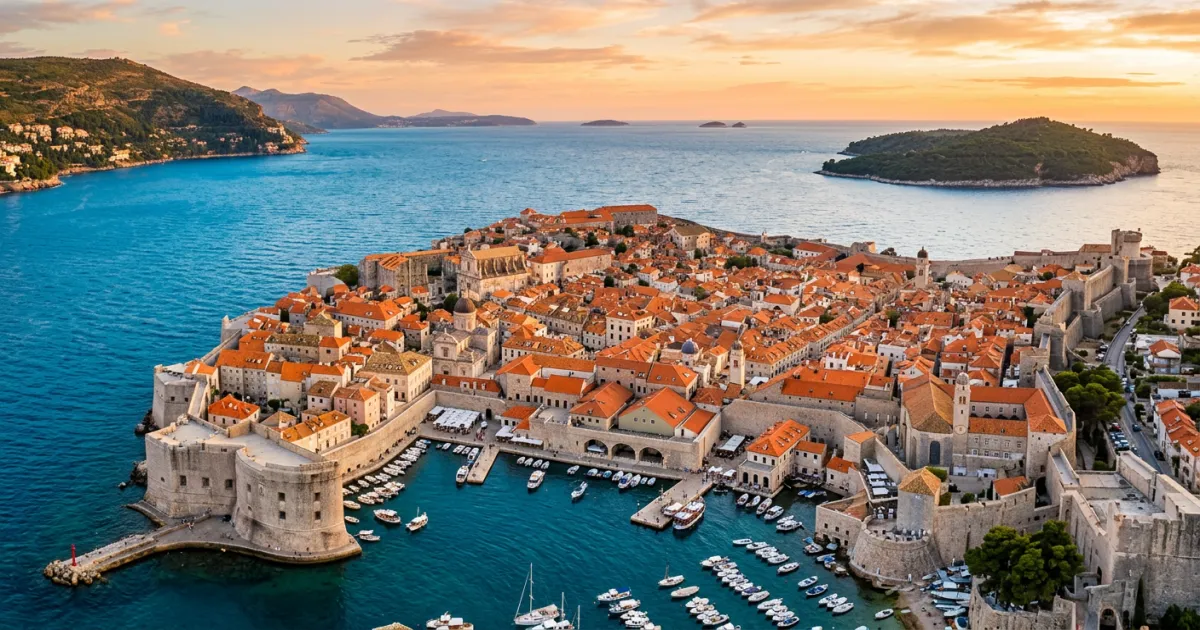
Croatia has become one of Europe’s most popular destinations, and for good reason. The Dalmatian Coast combines medieval walled cities, island-hopping, national parks with waterfalls, and some of the clearest water in the Mediterranean. From the Game of Thrones backdrop of Dubrovnik to the Roman ruins of Split and the cascading lakes of Plitvice, Croatia delivers dramatic scenery at every turn. For a broader approach, start with our step-by-step trip planning guide.
Key Planning Facts
- Location: Southeastern Europe, along the Adriatic Sea
- Currency: Euro (EUR). Croatia adopted the euro in January 2023, replacing the Croatian Kuna
- Language: Croatian (English widely spoken in tourist areas)
- Visa for U.S. citizens: Not required for stays up to 90 days (Schengen Area since January 2023). ETIAS authorization expected late 2026, EUR 7
- Best months to visit: Late May to mid-June and September to early October
- Average daily budget: EUR 80 to 200 per person depending on travel style
- Time zone: Central European Time (CET, UTC+1; CEST UTC+2 in summer)
- Flight time from U.S.: 10 to 13 hours (typically one connection through a European hub)
- Coastline: Over 1,100 islands (67 inhabited), 1,104 miles of mainland coast
Best Time to Visit Croatia
Late Spring (May to Mid-June)
The best time to visit for most travelers. Temperatures are warm (22 to 28 degrees Celsius, or 72 to 82 degrees Fahrenheit), the sea is warm enough for swimming by June, crowds are moderate, and prices are 30 to 40 percent lower than peak summer. Plitvice Lakes are at their fullest from spring rainfall.
Peak Summer (July to August)
The warmest and busiest months (28 to 35 degrees Celsius). Beaches and islands are packed, cruise ships crowd Dubrovnik, and prices are at their highest. If you visit in July or August, book accommodation months in advance and arrive at popular sites early in the morning.
Early Fall (September to Early October)
An excellent time to visit. Crowds thin dramatically after September 1, prices drop 40 to 50 percent in hotspots like Dubrovnik and Hvar, the sea is still warm from summer, and the light is beautiful for photography. Late September may bring occasional rain.
Off-Season (November to April)
Many coastal businesses, restaurants, and island ferries shut down or reduce service. Dubrovnik and Split remain open year-round and are pleasant for sightseeing without crowds. Plitvice Lakes are open but some paths may be closed. Zagreb has a popular Christmas market.
How Long to Spend in Croatia
A week is enough for the highlights: Dubrovnik (2 days), Split (2 days), one island (1 to 2 days), and Plitvice Lakes (1 day). 10 to 14 days lets you explore more islands, add Zadar or the Istrian peninsula, and travel at a relaxed pace. Croatia rewards slow travel, particularly on the islands where the pace of life is part of the experience.
Budget and Costs
Croatia is mid-range for Mediterranean Europe. It is less expensive than Italy or France but more expensive than it was a decade ago, especially along the coast in peak summer.
Daily Budget Ranges
- Budget: EUR 50 to 80 per person per day. Hostels or private rooms (EUR 20 to 50 per night), local bakeries and market meals, public buses and ferries
- Mid-range: EUR 100 to 180 per person per day. Boutique hotels or apartments (EUR 60 to 120 per night), seafood restaurant dinners, ferries and some taxis
- Luxury: EUR 250 and up per person per day. Four and five-star hotels (EUR 200 to 400 per night), fine dining, private boat tours, yacht excursions
Key Costs
- Ferries: Jadrolinija ferries between Split and islands like Hvar or Brac cost EUR 5 to 15 for foot passengers. Car ferry crossings are EUR 35 to 50. Catamaran fast ferries are slightly more expensive
- Buses: Split to Dubrovnik: EUR 15 to 25 (4.5 hours). Zagreb to Split: EUR 15 to 25 (5 to 6 hours). Zagreb to Plitvice: EUR 10 to 15 (2 to 2.5 hours)
- Meals: Burek (meat or cheese pastry): EUR 2 to 3. Pizza or pasta: EUR 8 to 14. Seafood dinner: EUR 20 to 40. Coffee: EUR 1.50 to 3
- Plitvice Lakes entry: EUR 23.50 to 39.80 per adult depending on season (timed entry, book online in advance)
- Dubrovnik city walls: EUR 35 per adult
- Rental car: EUR 35 to 60 per day. Useful for Istria and road trips, less necessary for the Dubrovnik-Split-islands route
Use our free travel budget template to plan your Croatia expenses.
Getting There and Getting Around
Flying In
Dubrovnik Airport (DBV) and Split Airport (SPU) are the two main gateways for the Dalmatian Coast. Zagreb Airport (ZAG) serves the capital. Most U.S. flights connect through London, Frankfurt, Munich, or Amsterdam. Some seasonal direct routes operate from major U.S. cities to Dubrovnik in summer.
Ferries and Catamarans
Jadrolinija operates the main ferry network connecting the mainland (Split, Dubrovnik, Zadar) to the islands. Catamarans are faster but more expensive and do not carry cars. Krilo and TP Line run popular catamaran routes. Book in advance for summer, especially if bringing a car.
Buses
Croatia’s intercity bus network is reliable and affordable. FlixBus and Arriva connect all major cities. The coastal route from Split to Dubrovnik is scenic but winding. Book on getbybus.com or flixbus.com.
Driving
Renting a car is best for Istria, the northern coast, and inland areas. The A1 motorway connects Zagreb to Split in about 4 hours. Coastal roads are scenic but slow and winding. Parking in old town areas of Dubrovnik and Split is limited and expensive. An International Driving Permit is recommended.
Where to Stay
Dubrovnik
Stay inside or near the Old Town walls for proximity to everything. Apartments within the walls are atmospheric but involve stairs (the city is built on hills). Lapad and Babin Kuk neighborhoods are 15 to 20 minutes away by bus and offer better value.
Split
Stay near Diocletian’s Palace in the Old Town for the best experience. The Riva waterfront promenade is the center of city life. Budget options are more available here than in Dubrovnik.
Islands
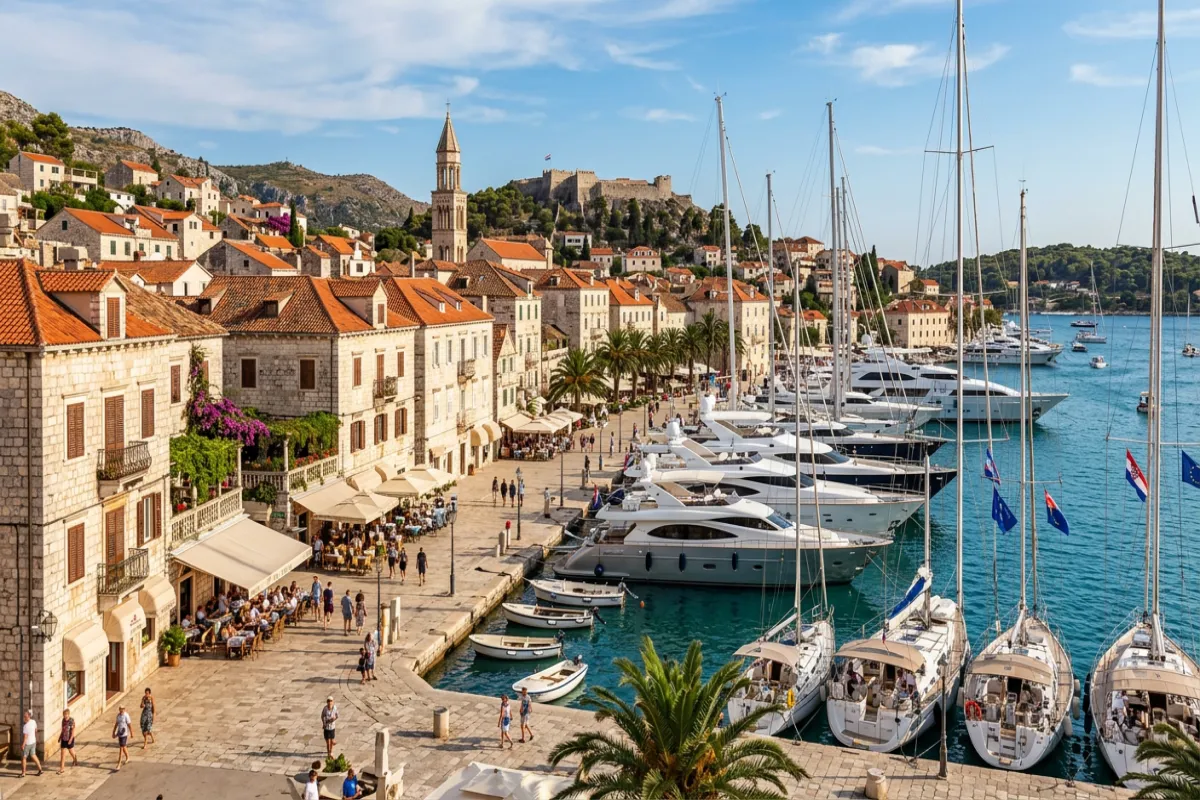
Hvar Town is the most popular (and expensive) island base, with nightlife and restaurants. Korcula has a quieter, more authentic feel. Brac (Bol) has the famous Zlatni Rat beach. Vis is the most remote and unspoiled of the commonly visited islands.
Plitvice Lakes
Stay in guesthouses near the park entrance the night before to start early. Accommodation is basic but affordable (EUR 40 to 80 per night). The park has two entrances; Entrance 1 is closer to the lower lakes (most popular starting point).
Must-See Attractions and Experiences
Dubrovnik Old Town and City Walls
Walk the 2-kilometer circuit along the top of the medieval city walls for views over terracotta rooftops and the Adriatic. The walls date to the 13th century and are the most complete medieval fortification system in Europe. Go early morning or late afternoon to avoid midday heat and cruise ship crowds. Cost: EUR 35 per adult.
Diocletian’s Palace, Split
A Roman palace built in the 4th century that is now a living part of the city. People live, shop, and dine inside the palace walls. The basement halls, Peristyle square, and Cathedral of St. Domnius are highlights. It is one of the best-preserved Roman structures in the world.
Plitvice Lakes National Park
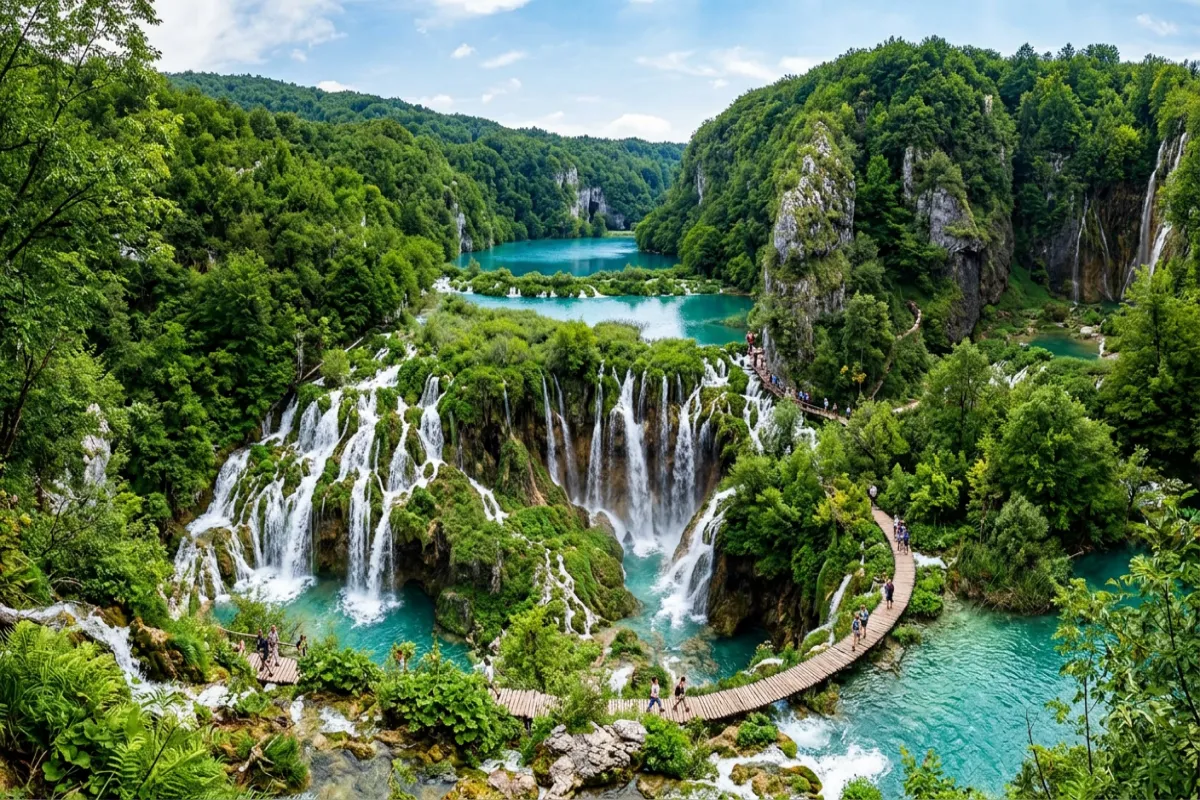
Sixteen terraced lakes connected by waterfalls flowing through dense forest. Wooden boardwalks wind through the park. The upper lakes are set among thick forests; the lower lakes end in the Great Waterfall (78 meters). Plan 4 to 6 hours. Book timed-entry tickets online in advance because they sell out during peak season.
Island Hopping
Take a ferry or catamaran from Split to explore the islands. Hvar is known for lavender fields, nightlife, and Venetian architecture. Brac has the Zlatni Rat beach (a white pebble spit that changes shape with the currents). Vis is quieter, with the Blue Cave on nearby Bisevo island. Korcula claims to be the birthplace of Marco Polo.
Krka National Park
A less crowded alternative to Plitvice, about an hour from Split. The highlight is Skradinski Buk, a series of cascading waterfalls. Swimming was historically allowed at the base (check current rules for 2026 as policies have changed). Boat trips from Skradin are the most scenic way to enter.
Zadar
An underrated coastal city with the Sea Organ (a musical instrument played by ocean waves) and the Sun Salutation (a light installation). Zadar also has excellent Roman ruins and is a good base for trips to Kornati Islands National Park.
Food and Dining
Croatian cuisine varies from coastal Mediterranean to inland Central European, with fresh seafood dominating the coast.
- Seafood: Grilled fish (whole, by weight), black risotto (crni rizot, made with cuttlefish ink), octopus salad, and mussels. Best along the coast, especially in smaller towns
- Peka: Meat or seafood slow-roasted under a bell-shaped lid with potatoes and vegetables. Order at least 2 hours in advance at most restaurants
- Burek: Flaky pastry filled with cheese (sirnica) or meat. Sold at bakeries for EUR 2 to 3. The perfect cheap breakfast
- Istrian truffles: The Istrian peninsula is one of Europe’s top truffle regions. Truffle pasta, risotto, and omelets are specialties in Motovun and surrounding hill towns
- Pag cheese: A sharp, sheep’s milk cheese from the island of Pag. Available across Croatia
- Wine: Croatia has excellent wines that are underrated internationally. Try Plavac Mali (red) from the Peljesac peninsula and Posip or Grk (white) from Korcula
Tipping: Not obligatory but appreciated. Round up the bill or leave 10 percent at sit-down restaurants. Service is not usually included.
Safety and Practical Tips
- Safety: Croatia is very safe for tourists. Crime rates are low. Standard precautions against pickpocketing in crowded tourist areas (Dubrovnik, Split) apply
- Cruise ship crowds: Dubrovnik can receive multiple large cruise ships per day in summer, flooding the Old Town. Check cruise ship schedules online and plan your Old Town visit for cruise-free days or early morning
- Water: Tap water is safe to drink throughout Croatia
- Sun and heat: Summer temperatures on the coast regularly exceed 30 degrees Celsius. Carry water, wear sunscreen, and plan indoor activities during midday heat (1 to 4 PM)
- Beach culture: Most Croatian beaches are pebble or rock rather than sand. Bring water shoes. Topless sunbathing is common and accepted
- Plitvice tips: Arrive as early as possible (park opens at 7 AM in summer). Wear shoes with grip because boardwalks get wet and slippery. Do not swim in the lakes (prohibited). Book tickets online weeks in advance for summer visits
- Electrical outlets: Type C and F plugs (round two-pin, same as mainland Europe). 230V
- Emergency number: 112
Sample 10-Day Croatia Itinerary
Days 1 to 2: Dubrovnik
Fly into Dubrovnik (DBV). Day 1: Walk the city walls (go early), explore the Old Town, Stradun (main street), Rector’s Palace, and Franciscan Monastery. Take the cable car to Mount Srd for sunset views. Day 2: Kayak around the walls, visit Lokrum Island (15-minute ferry, nature reserve with peacocks and a Dead Sea swimming pool), afternoon at Banje Beach.
Day 3: Travel to Hvar
Morning bus or drive from Dubrovnik to Split (4.5 hours). Afternoon catamaran from Split to Hvar Town (1 hour). Evening walk through Hvar’s main square and harbor.
Day 4: Hvar Island
Rent a scooter to explore the island’s lavender fields and quiet beaches. Visit the Pakleni Islands by boat for swimming in hidden coves. Evening: dinner at a waterfront restaurant in Hvar Town.
Days 5 to 6: Split
Ferry back to Split. Day 5: Explore Diocletian’s Palace, the Peristyle, basement halls, and Cathedral. Walk the Riva waterfront. Climb Marjan Hill for views. Day 6: Day trip to Krka National Park (1 hour each way) for waterfalls and swimming. Return to Split for evening.
Day 7: Travel to Plitvice Lakes
Bus from Split to Plitvice Lakes (about 4 hours). Check into a guesthouse near the park entrance. Relax and prepare for an early start.
Day 8: Plitvice Lakes National Park
Enter at park opening (7 AM in summer). Walk the lower lakes first, take the boat across Lake Kozjak, then explore the upper lakes. The full circuit takes 4 to 6 hours. Afternoon: bus to Zagreb (2 to 2.5 hours).
Days 9 to 10: Zagreb
Day 9: Explore the Upper Town (Gornji Grad): St. Mark’s Church, Stone Gate, Lotrscak Tower (cannon fires at noon daily). Walk through Dolac Market. Visit the Museum of Broken Relationships (a unique Zagreb experience). Day 10: Lower Town museums, Maksimir Park, or a day trip to the Istrian coast. Fly out of Zagreb (ZAG).
Ready-Made Croatia Itineraries
We have built day-by-day itineraries with activities, travel times, budgets, and local tips. Clone any into your trip planner to customize:
Or build a custom itinerary with our free AI trip planner.
More Planning Resources
- Plan a Trip to Italy
- Plan a Trip to Greece
- Plan a Trip to Europe
- Free Travel Itinerary Template (Excel)
Frequently Asked Questions
Do U.S. citizens need a visa for Croatia?
No. Croatia joined the Schengen Area in January 2023. U.S. citizens can visit visa-free for up to 90 days within any 180-day period. An ETIAS travel authorization (EUR 7, valid 3 years) is expected to launch in late 2026.
What is the best time to visit Croatia?
Late May to mid-June and September to early October. These shoulder months offer warm weather, swimmable seas, manageable crowds, and prices 30 to 50 percent lower than July and August.
How expensive is Croatia?
Mid-range for Mediterranean Europe. Budget travelers can manage on EUR 50 to 80 per day. Mid-range travelers should plan EUR 100 to 180 per day. It is less expensive than Italy or France but more expensive than it was a decade ago.
What currency does Croatia use?
The Euro (EUR). Croatia adopted the euro in January 2023, replacing the Croatian Kuna. Credit cards are widely accepted in tourist areas.
Do I need to book Plitvice Lakes tickets in advance?
Yes. Plitvice uses a timed-entry ticket system. During peak season (June through September), tickets sell out days or weeks in advance. Book online at np-plitvicka-jezera.hr. Arrive at park opening (7 AM in summer) for the best experience.
How do I get between Dubrovnik and Split?
By bus (4.5 hours, EUR 15 to 25), by car (3.5 hours via the coastal road), or by domestic flight (seasonal). The bus ride is scenic but winding. Alternatively, there are catamaran services in summer.
Which Croatian island should I visit?
Hvar for nightlife and restaurants. Korcula for a quieter, historic feel. Brac for the Zlatni Rat beach. Vis for the most unspoiled, off-the-beaten-path experience. Pick one island and stay at least one night rather than trying to see multiple islands in a day.
Are Croatian beaches sandy?
Most are pebble or rock, not sand. Bring water shoes. Some sandy beaches exist, particularly on Brac and in the Dubrovnik area, but they are the exception. The water is crystal clear and warm in summer.
Is Croatia safe?
Very safe. Croatia has low crime rates and is welcoming to tourists. Standard precautions against pickpocketing in crowded areas (Dubrovnik Old Town, Split) are sufficient.
Should I rent a car in Croatia?
Useful for Istria and inland Croatia. Not necessary for the Dubrovnik-Split-islands route, which is well served by buses, ferries, and catamarans. Parking in old town areas is limited and expensive.