| China Quick Facts | |
|---|---|
| Country | China (People’s Republic of China) |
| Currency | Chinese Yuan / Renminbi (CNY). 1 USD = roughly 7.2 CNY |
| Language | Mandarin Chinese. English limited outside major hotels |
| Time Zone | CST (UTC+8, single time zone for all of China) |
| Visa (US) | Required. Apply at Chinese embassy/consulate. Check for transit visa exemptions. |
| Daily Budget | $40 to $300+ per person |
| Best Time | April to May, September to October |
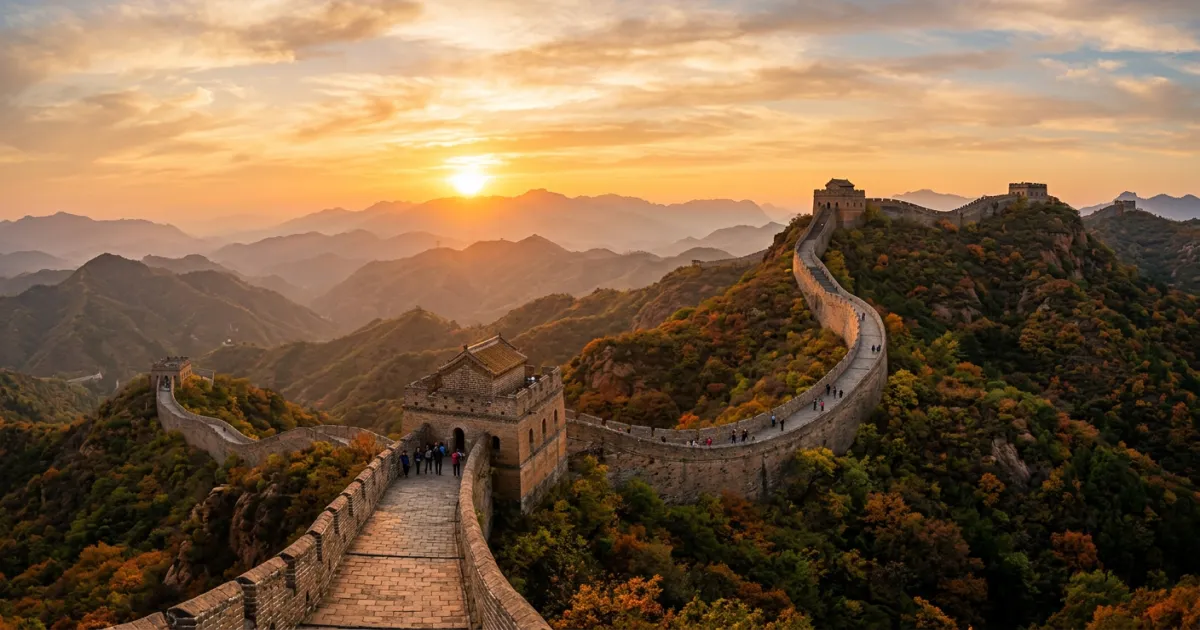
China is a country of staggering scale and depth. The Great Wall, the Terracotta Warriors, the karst mountains of Guilin, and the modern skylines of Shanghai and Shenzhen represent just a fraction of what the country offers. China can be challenging for independent travelers due to the language barrier, the Great Firewall (which blocks Google, WhatsApp, and many Western apps), and the cash-to-mobile-payment transition. But with preparation, the rewards are extraordinary: world-class food, 5,000 years of history, and landscapes that span from Himalayan peaks to tropical beaches.
For a broader framework for organizing any trip, our how to plan a trip guide covers the fundamentals.
Best Time to Visit China
April through May and September through October are the best months. Spring brings comfortable weather and blooming landscapes. Fall has clear skies and pleasant temperatures. Avoid Golden Week (October 1 to 7) and Chinese New Year (late January to February) when domestic travel surges and prices spike. Summer (June through August) is hot and humid in the south and rainy in many regions. Winter is cold in the north (Beijing can be below freezing) but pleasant in the south.
Getting to China
Major international airports include Beijing Capital (PEK), Beijing Daxing (PKX), Shanghai Pudong (PVG), and Guangzhou Baiyun (CAN). Direct flights from the US are available from several cities (12 to 15 hours). China’s high-speed rail network is extraordinary: the bullet train from Beijing to Shanghai takes 4.5 hours and covers 800 miles. Domestic flights are frequent and affordable. Download a VPN before arrival to access Google Maps, WhatsApp, and other blocked services.
Top Things to Do in China
- Great Wall of China: Multiple sections near Beijing. Mutianyu (restored, less crowded, cable car access) is best for most visitors. Jinshanling (partially wild, excellent for hiking) is best for photographers. Avoid Badaling (most crowded).
- Forbidden City (Beijing): The massive imperial palace complex with 980 buildings, now a museum. Book tickets online in advance (cap of 80,000 visitors per day). Allow 3 to 4 hours.
- Terracotta Warriors (Xi’an): Thousands of life-sized clay soldiers buried with Emperor Qin Shi Huang in 210 BC. One of the greatest archaeological discoveries in history. About $20 entry.
- Shanghai Bund and Pudong: The Bund’s colonial-era waterfront faces the futuristic Pudong skyline across the Huangpu River. Best at night when both sides are illuminated. Walk the Bund for free; observation decks in Pudong ($20 to $30).
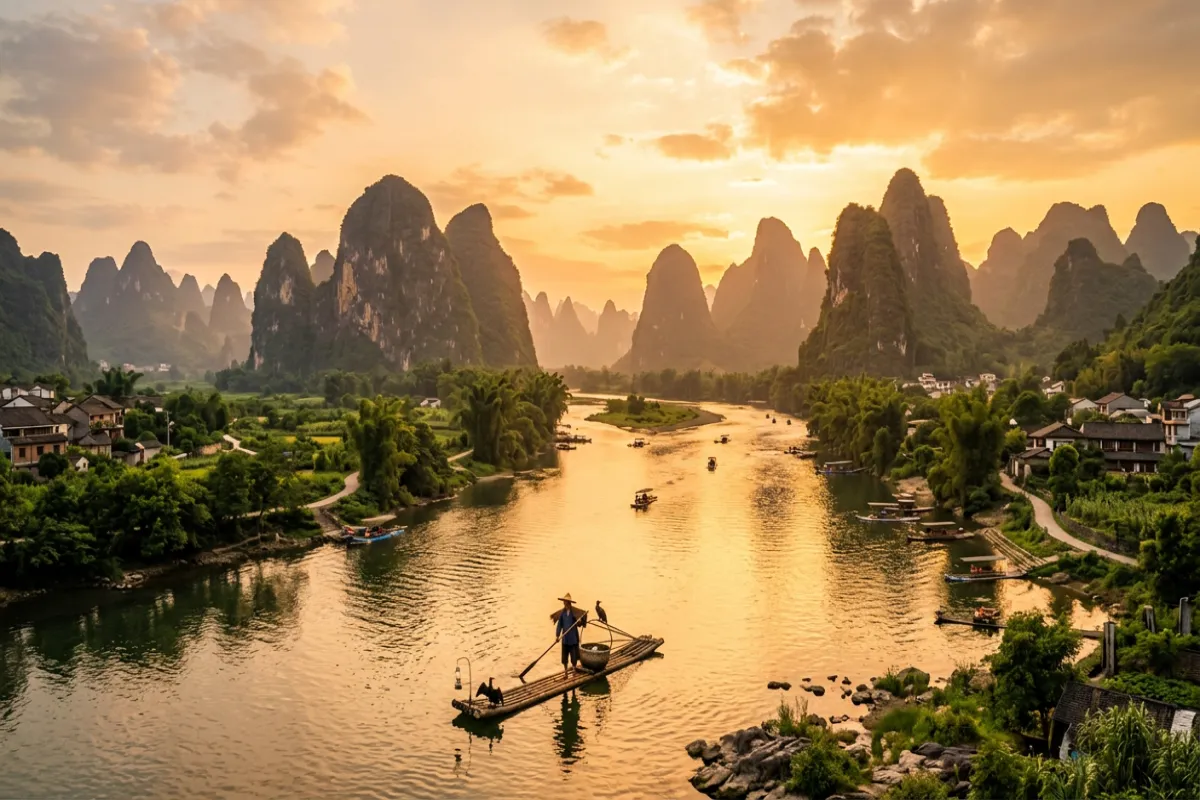
- Li River Cruise (Guilin): A 4-hour boat cruise through karst limestone mountains that inspired countless Chinese paintings. One of the most scenic river journeys in the world. About $40 to $80.
- Chinese Food (Real Chinese Food): Every province has its own cuisine. Sichuan (spicy, numbing peppercorn), Cantonese (dim sum), Beijing (Peking duck), Yunnan (mushrooms, minority cuisines), and Shanghainese (soup dumplings). Street food costs $1 to $3 per dish.
Where to Stay
Beijing has hotels from $30 to $400+. Stay near the Forbidden City or in a hutong (traditional alleyway neighborhood) for atmosphere. Shanghai has a massive hotel market ($40 to $500+). The French Concession is the most charming neighborhood. Hostels are excellent and affordable ($8 to $20 per bed) in all major cities. International hotel chains (Marriott, Hilton, Hyatt) are widely available. Booking platforms: use Trip.com or Agoda, as Booking.com has limited China coverage.
Sample 7-Day China Itinerary
- Day 1-3: Beijing: Forbidden City, Temple of Heaven, Summer Palace. Day trip to the Great Wall (Mutianyu section). Peking duck dinner. Hutong walking tour.
- Day 4-5: Xi’an: High-speed train from Beijing (4.5 hours) or fly. Terracotta Warriors, Ancient City Wall (bike around it), and Muslim Quarter street food.
- Day 6-7: Shanghai: Fly or train from Xi’an. Walk the Bund, explore the French Concession, Yu Garden, and the Shanghai Museum. Soup dumplings at every opportunity.
Budget Estimate
China is affordable once you get there. Budget travelers can manage on $40 to $70 per day with hostels, street food and local restaurants, and trains. Mid-range travelers should plan for $100 to $200 covering comfortable hotels, mix of restaurant types, attraction tickets ($10 to $30 each), and high-speed rail. International flights are the biggest cost. Payment note: China has largely moved to mobile payment (WeChat Pay, Alipay). Cash is still accepted but bring a linked international card or set up Alipay Tour Pass before arrival.
Planning Tools
Ready to start building your China trip? Our free AI trip planner can generate a custom itinerary based on your dates, budget, and interests.
Frequently Asked Questions
Do I need a visa for China?
US citizens generally need a visa. Apply at the Chinese embassy or consulate. Tourist visas (L visa) require an application, photos, itinerary, and hotel bookings. Some cities offer transit visa exemptions (72 to 144 hours) if you are transiting through China to a third country. Check current policies as they change frequently.
Can I use Google and WhatsApp in China?
No. Google services (Maps, Gmail, Search), WhatsApp, Facebook, Instagram, and many Western apps are blocked by the Great Firewall. Download a VPN before entering China. ExpressVPN and Astrill are commonly recommended. Download offline maps and communicate via WeChat (the Chinese super-app).
Is China safe for tourists?
China is very safe in terms of personal safety. Violent crime against tourists is extremely rare. Petty theft exists in crowded tourist areas. The main challenges are the language barrier, internet restrictions, and navigating a different cultural context. Major cities are well-organized for tourists.