Brazil is a country of superlatives: the world’s largest carnival, the most powerful waterfalls, the biggest rainforest, and some of the most beautiful beaches on earth. From the iconic beaches and mountains of Rio de Janeiro to the 275 waterfalls of Iguazu, the jungle lodges of the Amazon, and the Afro-Brazilian culture of Salvador, Brazil offers experiences on a scale that few countries can match. This guide covers everything you need to plan your trip. For a broader approach, see our step-by-step trip planning guide.
Key Planning Facts
- Location: South America, spanning the Atlantic coast and the Amazon basin
- Currency: Brazilian Real (BRL). Approximately 5 BRL per 1 USD
- Language: Portuguese (not Spanish). English is limited outside major tourist areas. Learning basic Portuguese phrases is very helpful
- Visa for U.S. citizens: E-visa required. Apply online before travel. Cost: $80.90 USD. Valid 10 years, multiple entry. Processing takes several days. Apply at the VFSeVisa portal
- Best months to visit: May to October (dry season in most regions). December to March for beaches and Carnival
- Average daily budget: $50 to $120 per person depending on travel style
- Time zone: Brasilia Time (BRT, UTC-3) for most of the country
- Flight time from U.S.: 8 to 11 hours from East Coast; 12 to 14 hours from West Coast
- Country size: Fifth-largest country in the world. Brazil is larger than the contiguous United States. Domestic flights are essential
- Carnival 2026: February 13 to 17 (Rio, Salvador, and nationwide)
Best Time to Visit Brazil
Brazilian Summer and Carnival (December to March)
The warmest season (24 to 35 degrees Celsius). Best for beaches, Rio, and Carnival. Carnival 2026 falls February 13 to 17. Rio’s Sambadrome parades and up to 500 free street parties (blocos) are a once-in-a-lifetime experience. Prices peak during Carnival week. Book flights and accommodation 6 to 12 months ahead.
Dry Season (May to September)
The best overall time for a multi-destination trip. Cooler temperatures, lower humidity, and less rain across most of the country. Ideal for Rio sightseeing (less heat), Iguazu Falls (fewer mosquitoes, good water flow), and the Pantanal wetlands (wildlife concentrates around water sources). Amazon low-water season (June to November) is best for jungle hiking and wildlife spotting.
Shoulder Season (April and October)
Good weather, fewer tourists, and reasonable prices. April is the transition from summer to dry season. October is warming up before the summer rains return. Good value for most destinations.
How Long to Spend in Brazil
Brazil is enormous. Pick 2 to 3 regions for a 10 to 14 day trip. The classic route (Rio, Iguazu Falls, and one more destination) takes 10 to 12 days. Adding the Amazon requires at least 3 to 4 extra days. Carnival alone deserves 5 to 6 days in Rio. Do not try to see all of Brazil in one trip.
Budget and Costs
Brazil is moderately priced for South America, cheaper than Argentina or Chile but more expensive than Bolivia or Peru.
Daily Budget Ranges
- Budget: $35 to $60 per person per day. Hostels ($10 to $25 per night), street food and per-kilo restaurants ($3 to $8 per meal), public buses
- Mid-range: $60 to $120 per person per day. Hotels ($40 to $80 per night), restaurant meals, domestic flights, guided tours
- Luxury: $150 to $350 per person per day. Boutique hotels ($100 to $300 per night), fine dining, private tours, Amazon eco-lodges
Key Costs
- Domestic flights: $50 to $150 one way. LATAM, Gol, and Azul connect major cities. Rio to Foz do Iguacu (Iguazu Falls): about 2 hours. Rio to Manaus (Amazon): about 4 hours. Book early
- Iguazu Falls entry: Brazilian side: about BRL 100 ($20). Argentine side: separate entry. Visit both sides for the full experience (2 days recommended)
- Amazon lodge: $100 to $300 per person per night (all-inclusive with guides, meals, and excursions). 3 to 4 night packages are standard
- Meals: Per-kilo buffet (local favorite, pay by weight): $4 to $8. Street food (acai, pastel, coxinha): $1 to $4. Restaurant dinner: $10 to $25. Caipirinha: $3 to $6
- Carnival Sambadrome tickets: BRL 200 to 2,000+ ($40 to $400+) depending on section. Street parties (blocos) are free
- E-visa: $80.90 USD. Apply before travel. 10-year validity, multiple entry
Use our free travel budget template to plan your Brazil expenses.
Getting There and Getting Around
Flying In
Guarulhos International Airport (GRU) in Sao Paulo and Galeao International Airport (GIG) in Rio de Janeiro are the two main gateways with direct flights from the U.S. (Miami, New York, Houston, Atlanta). Flight time from the East Coast: 8 to 10 hours.
Domestic Flights
Essential for covering Brazil’s enormous distances. LATAM, Gol, and Azul operate extensive domestic networks. Book early for the best fares. Key routes: Rio to Iguazu Falls (2 hours), Rio to Salvador (2.5 hours), Sao Paulo to Manaus (4 hours).
Within Cities
Rio and Sao Paulo have metro systems. Uber works well in all major Brazilian cities and is safer and cheaper than taxis. Public buses cover most routes but can be confusing for visitors. In Rio, the metro covers the main tourist zones (Copacabana, Ipanema, Centro, Maracana).
Where to Go
Rio de Janeiro
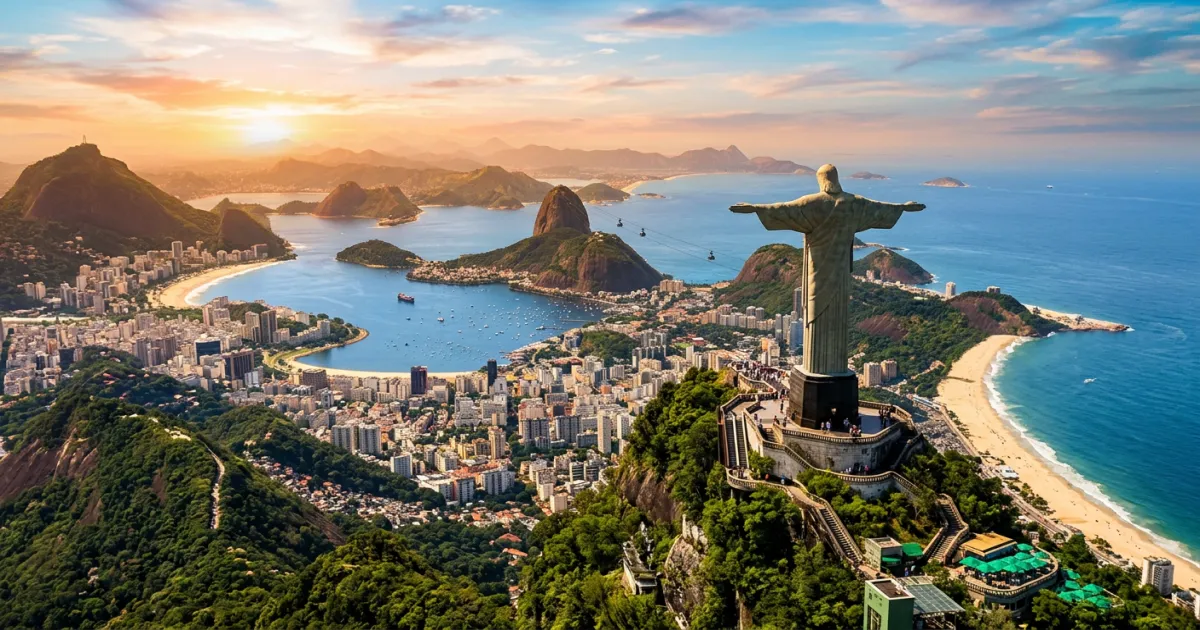
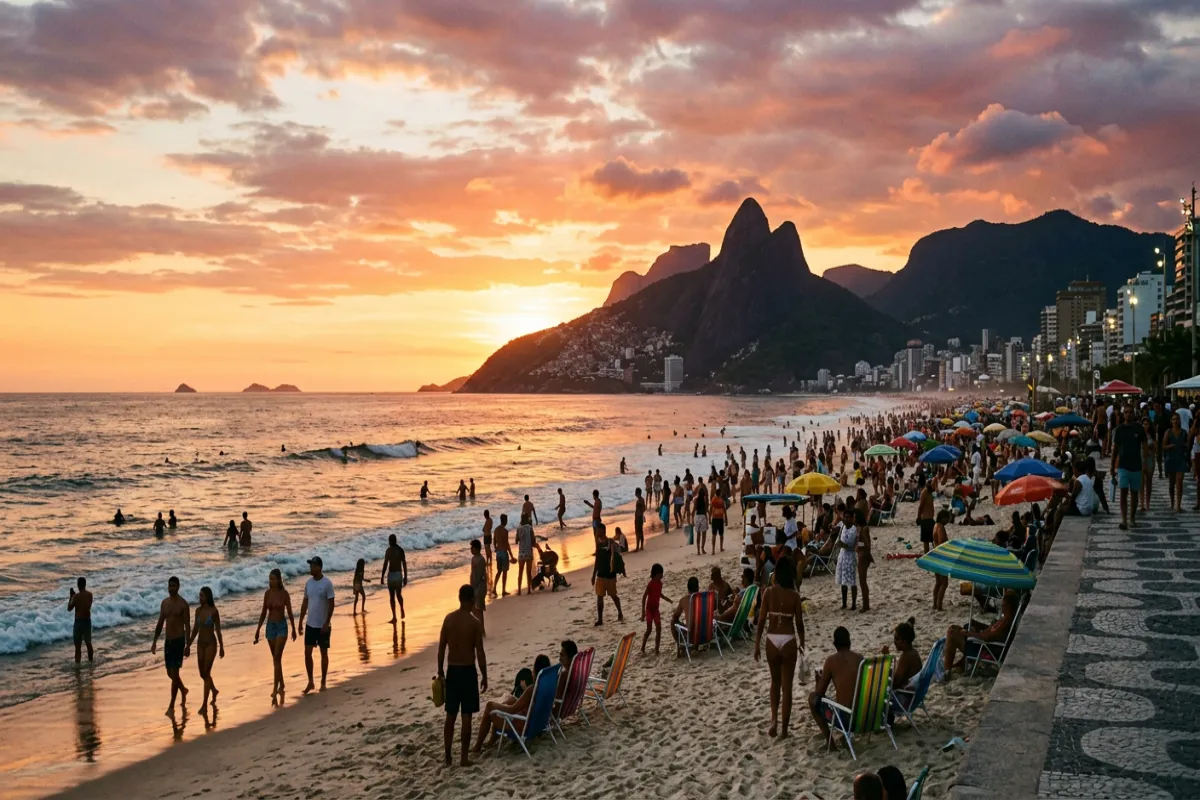
Christ the Redeemer (Corcovado), Sugarloaf Mountain (cable car), Copacabana and Ipanema beaches, the lively Lapa nightlife district, Santa Teresa neighborhood (bohemian hilltop area), and the Botanical Garden. Rio is dramatic, energetic, and photogenic. Allow 3 to 4 days (more for Carnival).
Iguazu Falls
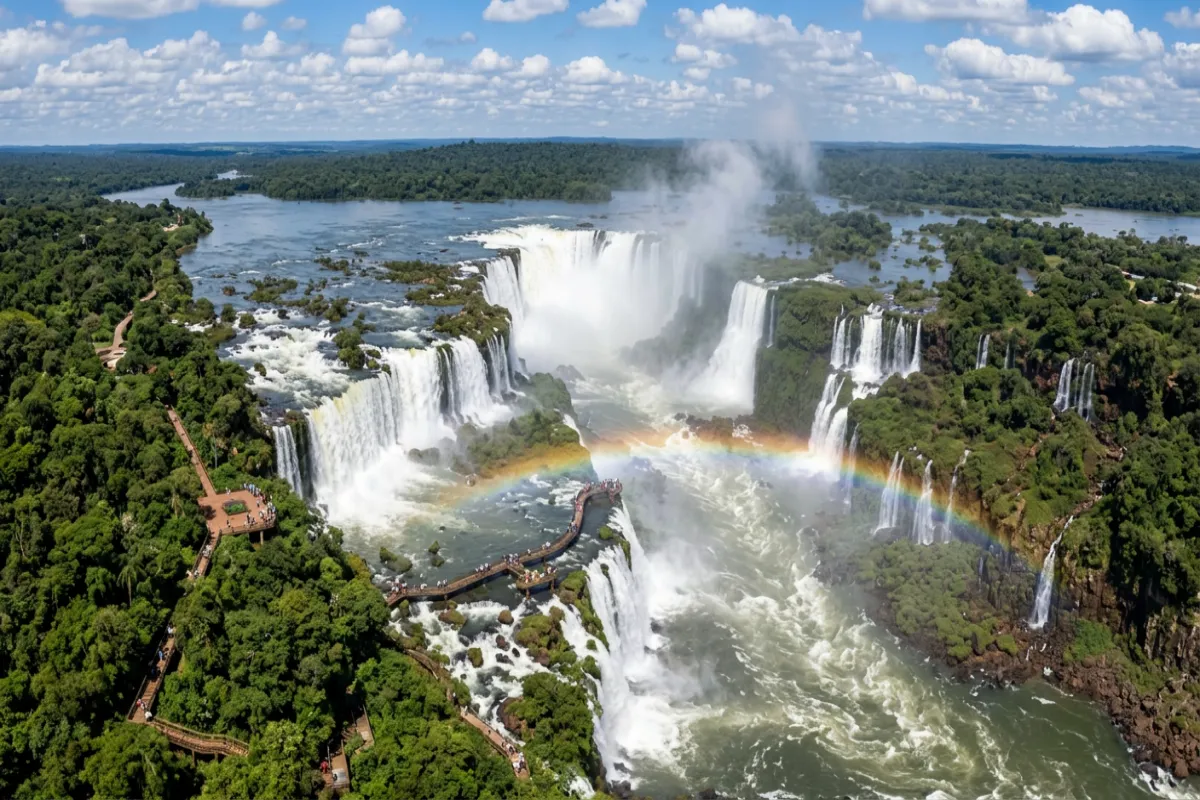
275 waterfalls stretching nearly 3 kilometers along the Brazil-Argentina border. The Brazilian side provides panoramic views; the Argentine side puts you closer to individual falls (including the Devil’s Throat, the most powerful section). Visit both sides over 2 days. Fly to Foz do Iguacu (IGU) from Rio or Sao Paulo.
Amazon Rainforest
Manaus is the gateway city in the heart of the Amazon. Stay in a jungle lodge for 3 to 4 nights: canoe through flooded forests, spot pink river dolphins, piranha fish, hike through primary rainforest, and visit indigenous communities. The “Meeting of the Waters” (where the dark Rio Negro and sandy Amazon River flow side by side without mixing) is visible near Manaus.
Salvador
The capital of Afro-Brazilian culture. The Pelourinho (historic center, UNESCO site) has colorful colonial buildings, capoeira performances, and Candomble temples. Salvador’s Carnival is the largest street party in the world (Guinness record), with massive sound trucks (trios eletricos) leading crowds through the streets. Beaches stretch north of the city.
Fernando de Noronha
An archipelago 350 km off the northeast coast. Praia do Sancho is regularly ranked the best beach in the world. Pristine diving and snorkeling, sea turtles, dolphins, and limited visitor numbers (to protect the ecosystem). Expensive (environmental taxes and limited accommodation) but unforgettable. Fly from Recife or Natal.
Florianopolis
An island city in southern Brazil with 42 beaches. Known for surfing, hiking, and a mix of beach culture and nightlife. Popular with Brazilians and South American travelers. More affordable than Rio with equally beautiful coastline.
Must-See Experiences
Christ the Redeemer (Corcovado)
The iconic 30-meter statue overlooking Rio from Corcovado mountain (710 meters). Access by cog train from Cosme Velho or van from Paineiras. Go early morning or late afternoon for the best light and smallest crowds. One of the New Seven Wonders of the World.
Sugarloaf Mountain
A two-stage cable car to the top of Sugarloaf (396 meters) for 360-degree views of Rio, Guanabara Bay, and the surrounding mountains. Sunset from the top is spectacular.
Iguazu Falls (Brazilian Side)
A walkway leads to a platform directly in front of the Devil’s Throat. You will get wet. The panoramic views of the entire waterfall system from the Brazilian side are unmatched.
Amazon Jungle Experience
Night hikes (to find caimans and tarantulas), canoe trips through flooded forests, piranha fishing, and visits to local communities. The sounds of the jungle at night are unforgettable. Eco-lodges range from basic to luxurious.
Carnival in Rio
The Sambadrome parades (ticketed) feature elaborate floats, costumes, and samba schools competing for the annual championship. The street parties (blocos) are free, open-air, and scattered across Rio’s neighborhoods. Both experiences are essential for the full Carnival experience.
Food and Dining
- Feijoada: Brazil’s national dish. A rich stew of black beans, pork, and sausage, served with rice, farofa (toasted cassava flour), collard greens, and orange slices. Traditionally eaten on Saturdays
- Churrasco: Brazilian barbecue. Rodizio-style restaurants serve an all-you-can-eat parade of grilled meats carved at your table. $20 to $50 per person
- Acai: A thick frozen acai berry bowl topped with granola and banana. Originated in the Amazon and is available everywhere. The best acai in Brazil is in Belem (the Amazon port city)
- Pao de queijo: Cheese bread made from cassava flour. Small, chewy, addictive. Found at bakeries and snack bars everywhere. $0.50 to $1 each
- Caipirinha: Brazil’s national cocktail. Cachaca (sugarcane spirit), lime, sugar, and ice. Simple and strong. $3 to $6
- Moqueca: A rich seafood stew with coconut milk, palm oil, peppers, and cilantro. The signature dish of Bahia (Salvador). $10 to $20
- Per-kilo restaurants: Buffet-style restaurants where you pay by the weight of your plate. An excellent, affordable way to try many dishes. $4 to $8 for a full meal
Tipping: Most restaurants add a 10 percent service charge to the bill. Additional tipping is not expected but appreciated for exceptional service.
Safety and Practical Tips
- Safety: Brazil requires awareness but is manageable with common sense. Stick to busy, well-lit areas. Use Uber rather than hailing taxis. Do not wear flashy jewelry or carry expensive cameras in the open, especially in Rio and Salvador. Avoid beaches and parks after dark. Tourist areas in Rio (Copacabana, Ipanema, Santa Teresa, Lapa) are patrolled but not risk-free
- Portuguese: Brazil speaks Portuguese, not Spanish. English is limited outside upscale hotels and tourist agencies. Download Google Translate with Portuguese offline. Basic phrases (obrigado/obrigada, por favor, bom dia) go a long way
- E-visa: Required before travel for U.S. citizens. Apply online ($80.90). Do not arrive without it. Processing takes several days. 10-year, multiple-entry validity
- Uber: Works in all major Brazilian cities and is the safest, most convenient way to get around. Cheaper than taxis. Use it
- Sun: Brazil is tropical. Wear sunscreen, a hat, and sunglasses. Reapply constantly, especially at the beach
- Water: Do not drink tap water. Bottled water is cheap and widely available. Ice at restaurants and hotels is made from purified water
- Cash vs. cards: Credit cards work at most restaurants and shops. Street vendors, markets, and smaller businesses prefer cash (BRL). ATMs are widely available
- Yellow fever: A yellow fever vaccination is recommended for travel to the Amazon, Pantanal, and Iguazu Falls areas. Some countries require proof of vaccination if you are arriving from Brazil
- Electrical outlets: Type N plugs (unique to Brazil, three round pins). Bring a universal adapter. Voltage varies: 127V in Rio and Sao Paulo, 220V in other regions
- Emergency number: 190 (police), 192 (ambulance), 193 (fire)
Sample 12-Day Brazil Itinerary
Days 1 to 4: Rio de Janeiro
Fly into GIG. Day 1: Copacabana Beach, walk the promenade, evening in Lapa (live samba music). Day 2: Corcovado (Christ the Redeemer) in the morning, Santa Teresa neighborhood, Selaron Steps. Day 3: Sugarloaf Mountain (sunset cable car), Ipanema Beach, evening at a churrascaria (rodizio barbecue). Day 4: Botanical Garden, Tijuca Forest hike (urban rainforest), or Niteroi Contemporary Art Museum (Oscar Niemeyer building, ferry across the bay).
Days 5 to 6: Iguazu Falls
Fly from Rio to Foz do Iguacu (2 hours). Day 5: Brazilian side of the falls. Walk to the Devil’s Throat viewing platform. Bird Park (adjacent to the park entrance). Day 6: Cross to the Argentine side (passport required). Walk the upper and lower trails. Take the boat ride under the falls (you will get soaked). Evening: fly to Manaus.
Days 7 to 9: Amazon Rainforest
Fly to Manaus (4 hours from Iguazu via connection). Transfer to a jungle lodge. Day 7: canoe through flooded forest, spot monkeys and birds. Day 8: jungle hike, piranha fishing, visit a local community. Night hike to find caimans. Day 9: “Meeting of the Waters” (where two rivers meet without mixing), pink river dolphin spotting. Return to Manaus.
Days 10 to 12: Salvador
Fly from Manaus to Salvador (3.5 hours). Day 10: Pelourinho (historic center), colonial churches, capoeira performance, Candomble cultural center. Day 11: beach day (Praia do Forte or Itapua). Evening: live music and acaraje (Bahian street food). Day 12: Mercado Modelo shopping, final walk through Pelourinho. Fly home from Salvador (SSA) or connect through Sao Paulo.
Planning Your Brazil Trip
Start building your custom itinerary with our free AI trip planner.
For more trip planning resources:
Frequently Asked Questions
Do U.S. citizens need a visa for Brazil?
Yes. An e-visa is required. Apply online before travel at the VFSeVisa portal. Cost: $80.90 USD. Valid 10 years, multiple entry. Processing takes several days. Do not arrive without it.
What is the best time to visit Brazil?
May to September (dry season) for most destinations. December to March for beaches and Carnival. Carnival 2026 is February 13 to 17. The Amazon is best June to November (low water, better wildlife spotting).
Is Brazil safe?
Manageable with awareness. Use Uber, avoid flashy jewelry, stick to busy areas, and avoid beaches after dark. Tourist areas in Rio, Salvador, and Iguazu are patrolled. Most travelers have safe trips.
Does Brazil speak Spanish?
No. Brazil speaks Portuguese. Spanish is understood to some degree but Portuguese is the only official language. English is limited outside upscale tourist areas. Download Google Translate with Portuguese offline.
How much does Carnival cost?
Street parties (blocos) are free. Sambadrome parade tickets: $40 to $400+ depending on section. Hotels triple or quadruple in price during Carnival week. Budget $200 to $500+ per day total during Carnival in Rio.
How do I visit Iguazu Falls?
Fly to Foz do Iguacu (IGU) from Rio or Sao Paulo (2 hours). Visit both the Brazilian side (panoramic views) and Argentine side (up-close walkways). Allow 2 days. Park entry for each side is separate ($20 to $40 each).
What is the Amazon like?
Fly to Manaus and stay in a jungle lodge (3 to 4 nights, $100 to $300/night all-inclusive). Activities: canoe trips, jungle hikes, piranha fishing, wildlife spotting, night excursions. Hot, humid, and buggy but unforgettable.
Do I need a yellow fever vaccination?
Recommended for the Amazon, Pantanal, and Iguazu Falls areas. Some countries require proof of vaccination if arriving from Brazil. Get vaccinated at least 10 days before travel.
How do I get around Brazil?
Domestic flights for long distances (essential, Brazil is enormous). Uber in cities (safer and cheaper than taxis). Metro in Rio and Sao Paulo. Long-distance buses between smaller cities.
What should I pack?
Light, breathable clothing. Swimsuit. Sunscreen and hat. Insect repellent (essential for Amazon and Iguazu). Rain jacket. Comfortable walking shoes. Universal power adapter (Brazil uses unique Type N plugs). Leave jewelry and valuables at home.