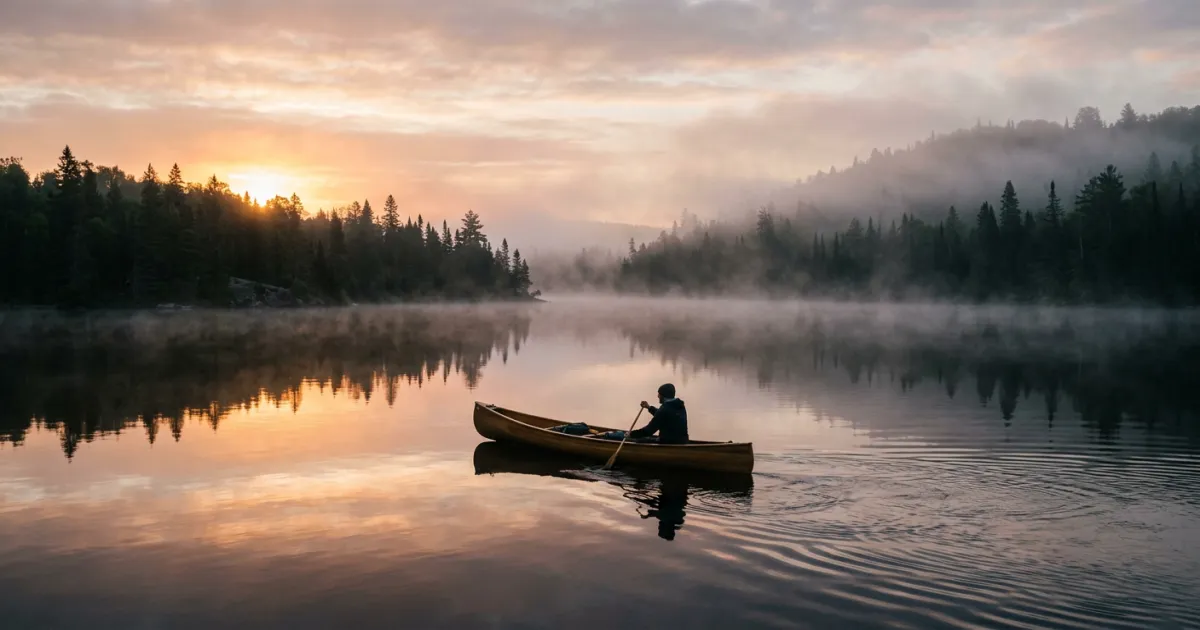
The Boundary Waters Canoe Area Wilderness (BWCAW) in northern Minnesota is over one million acres of pristine lakes, boreal forest, and portage trails with no roads, no motors (on most lakes), and no cell service. It is one of the most heavily protected wilderness areas in the United States and one of the most popular canoeing destinations in the world. If you want to truly disconnect and paddle into wild country, this is the place. For a broader approach, see our step-by-step trip planning guide.
Key Planning Facts
- Location: Northern Minnesota, along the Canadian border (Superior National Forest)
- Currency: US Dollar (USD)
- Language: English
- Permit required: Yes. Overnight quota permits required May 1 to September 30. Reservations open January 28, 2026, at 9:00 AM CST on recreation.gov. Self-issued permits for day use and off-season overnight trips
- Best months to visit: June to September (warmest water and weather), with July and August being peak
- Average daily budget: $30 to $80 per person per day (once you have gear; outfitter packages are more)
- Time zone: Central Time (CT)
- Nearest town: Ely, Minnesota (the primary gateway, about 4.5 hours north of Minneapolis)
- Wilderness size: 1.09 million acres, over 1,100 lakes, 1,500 miles of canoe routes
- Cell service: None inside the wilderness
Best Time to Visit the Boundary Waters
Summer (June to August)
Peak season. Water temperatures are warmest for swimming (65 to 75 degrees Fahrenheit by July). Longest daylight hours (up to 16 hours in June). Fishing is excellent. Mosquitoes and biting flies are heavy, especially in June and early July. Bring strong insect repellent (DEET or picaridin) and a head net. Permits for popular entry points sell out within minutes of the January opening.
September
Many experienced paddlers consider September the best month. Bugs are gone, nights are cool (40s to 50s Fahrenheit), fall colors begin, and the wilderness feels emptier. Water is still warm enough for comfortable paddling. Northern lights are increasingly visible as nights lengthen.
Spring (May to Early June)
Ice-out on the lakes typically occurs in early to mid-May. Water levels are high, portage trails may be muddy, and water is cold. Spring brings wildflowers, migrating birds, and solitude. Fewer paddlers but harsher conditions.
Winter
The BWCAW is open year-round. Winter visitors cross-country ski, snowshoe, and dog sled on frozen lakes. Temperatures can drop well below zero. Self-issued permits (free) are required October 1 through April 30. Winter trips require serious cold-weather gear and backcountry experience.
How Long to Spend
A 3 to 4 day trip is a great introduction: enough time to paddle into the wilderness, camp on lake shores, fish, and experience the silence. A 5 to 7 day trip lets you explore deeper into the backcountry, cover more lakes, and fully disconnect. Longer trips of 7 to 14 days are popular with experienced paddlers who want to reach the most remote areas.
Budget and Costs
The Boundary Waters is one of the most affordable wilderness experiences in the U.S. once you have canoe and camping gear. Outfitters simplify planning if you do not have your own equipment.
Cost Options
- Bring your own gear: $30 to $50 per person per day. Permit fees ($16/adult, $8/child per night) plus food. This is the cheapest option if you already own a canoe, paddles, tent, and camping gear
- Outfitter rental (partial): $60 to $120 per person per day. Rent canoe, paddles, PFDs, and packs from an Ely outfitter. Bring your own camping gear and food. Canoe rental: $35 to $60 per day
- Complete outfitter package: $100 to $200 per person per day. Includes canoe, all gear, food packs, maps, and route planning. Many Ely outfitters offer complete packages that simplify everything for first-timers
- Guided trip: $200 to $400 per person per day. Professional guide, all gear and food, route planning, and wilderness instruction. Best for first-timers who want expert guidance
Permit Fees
- Overnight quota permit (May 1 to Sept 30): $16 per adult per trip, $8 per child (ages 0 to 17)
- Reservation fee: $6 (nonrefundable)
- Deposit: $32 (applied to permit fees)
- Self-issued permits (day use year-round, off-season overnight): Free, available at entry point kiosks
Getting There
Driving
Ely, Minnesota, is the main gateway. From Minneapolis/St. Paul: about 4.5 hours north via I-35 and Highway 169 or Highway 1. From Duluth: about 2 hours north. Grand Marais (Gunflint Trail entry points) is about 5 hours from Minneapolis via Highway 61 along Lake Superior. A car is necessary to reach entry points.
Flying
The nearest commercial airport is Duluth (DLH), about 2 hours from Ely. Minneapolis-St. Paul (MSP) is the closest major hub. Range Regional Airport in Hibbing (HIB) is 1.5 hours from Ely with limited service. Most visitors drive from the Twin Cities.
Permits and Planning
Permit Reservations
Overnight quota permits for May 1 to September 30 are required and limited. All permits release on the last Wednesday of January (January 28, 2026) at 9:00 AM CST on recreation.gov. Popular entry points (Moose Lake, Lake One, Sawbill Lake, Mudro Lake) sell out within minutes. Have backup entry points selected. You can also call 1-877-444-6777.
Group Size
Maximum 9 people and 4 watercraft per group. No exceptions.
Campsites
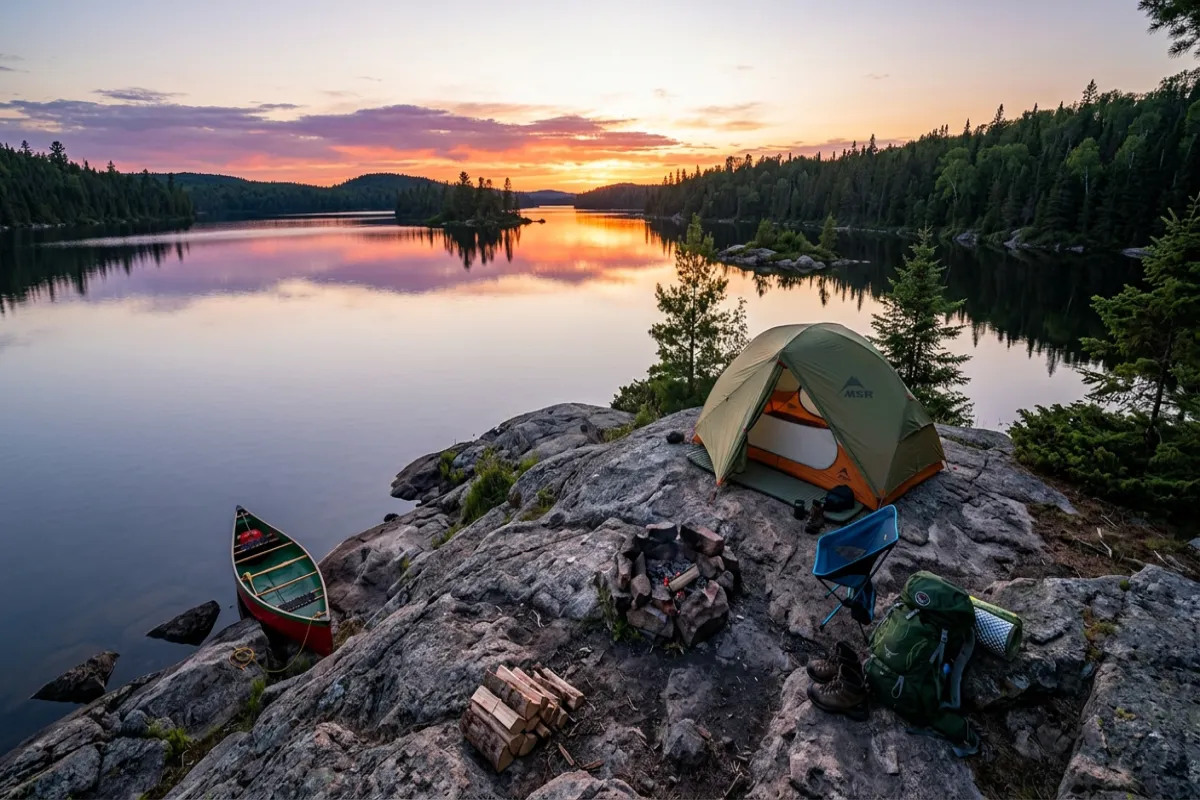
All camping is at designated wilderness campsites (fire grate, latrine, flat tent pads). Campsites cannot be reserved in advance. Arrive at a campsite by early to mid-afternoon to ensure availability, especially in July and August on popular routes.
Outfitters
Ely has over a dozen outfitters who rent canoes, gear, and offer complete trip packages. Popular options include operations on the Kawishiwi River and along the Echo Trail. Most outfitters also provide tow service to remote entry points, shuttles, and route advice. Book outfitter packages early for summer trips.
What to Expect
Canoeing and Portaging
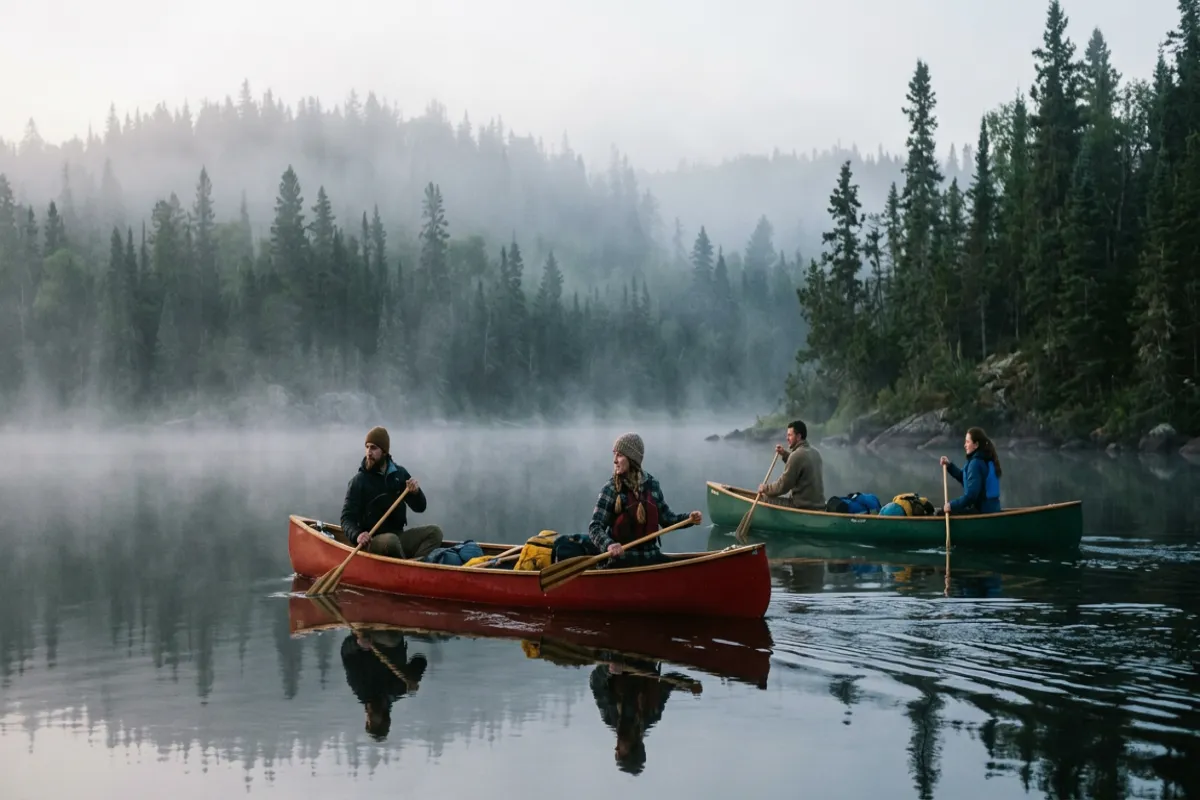
The BWCAW is a canoe-and-portage wilderness. You paddle across lakes and carry (portage) your canoe and gear over land trails between lakes. Portages range from a few dozen yards to over a mile. The Boundary Waters portage system connects over 1,100 lakes. Some routes are all-water with short portages; others require carrying heavy loads up and down rocky trails.
Fishing
Walleye, northern pike, smallmouth bass, and lake trout are the main s
pecies. A Minnesota fishing license is required (available online at mndnr.gov). Walleye and northern pike are excellent eating. Many paddlers catch and cook their dinner each night.
Wildlife
Moose, black bears, wolves (heard more than seen), bald eagles, loons (their calls are the soundtrack of the Boundary Waters), otters, beavers, and deer. Bear-proof food hanging or bear canisters are required.
Night Sky
With zero light pollution, the Boundary Waters has some of the darkest skies in the eastern United States. The Milky Way is clearly visible on clear nights. Northern lights are visible from late August through October.
Safety and Practical Tips
- No cell service: There is no cell coverage in the BWCAW. Leave your itinerary with someone at home. Consider carrying a satellite communicator (Garmin inReach or similar) for emergencies
- Bears: Black bears are present. Hang food in a bear bag at least 200 feet from camp and 10 feet off the ground. Bear canisters are an alternative. Never store food in your tent
- Water treatment: All water from lakes and streams must be filtered or treated before drinking. Bring a water filter or purification tablets
- Insects: Mosquitoes and black flies are intense from late May through mid-July. DEET-based repellent, a head net, and long sleeves are essential. Bug pressure drops significantly by August and September
- Weather: Thunderstorms can develop quickly, especially in summer. Get off the water immediately if lightning threatens. Afternoons are the highest risk period. Check weather before departing (no way to check once inside)
- Leave no trace: Pack out all trash. Use fire grates for campfires only. Scatter dishwater away from lakes. Use the latrine. The BWCAW is pristine because visitors protect it
- Portage safety: Wet rocks and roots on portage trails are slippery. Wear sturdy footwear (not flip-flops). Carry loads carefully. An overloaded portage is the most common cause of injuries
- Hypothermia: Water temperatures, even in summer, can cause hypothermia if you capsize. Wear a PFD at all times. Pack dry clothes in waterproof bags
Sample 5-Day Boundary Waters Itinerary
Day 0: Arrive in Ely
Drive to Ely, Minnesota (4.5 hours from Minneapolis). Check in with your outfitter, pick up canoe and gear, review your route and maps. Get a good night’s sleep. Many outfitters offer bunkhouse accommodation for the night before your trip.
Day 1: Enter the Wilderness
Drive to your entry point. Launch canoes and paddle your first lake. Navigate your first portage (start with easier routes if it is your first time). Claim a campsite by early afternoon. Set up camp, hang the bear bag, swim, fish, and enjoy the silence.
Days 2 to 3: Explore Deeper
Paddle and portage to new lakes each day, or base camp on one lake and do day paddles. Fish for walleye and northern pike. Swim. Watch for moose at dawn. Listen for loons. Cook over the campfire. At night, watch for the Milky Way and northern lights.
Day 4: Last Full Day
Explore a nearby lake or take a rest day at camp. Fish, read, swim. Enjoy one final evening under the stars. Start thinking about the portages back tomorrow.
Day 5: Paddle Out
Break camp early. Paddle and portage back to your entry point. Return canoe and gear to the outfitter. Drive to Ely for a hot meal. Begin the drive home or spend another night.
Planning Your Trip
Start planning with our free AI trip planner.
For more trip planning resources:
Frequently Asked Questions
Do I need a permit for the Boundary Waters?
Yes. Overnight trips from May 1 to September 30 require a quota permit reserved through recreation.gov. Permits release January 28, 2026, at 9 AM CST and popular entry points sell out in minutes. Day use and off-season overnight trips require free self-issued permits available at entry point kiosks.
When should I go?
July and August for the warmest weather and water. September for fewer bugs, fall colors, and fewer people. June for wildflowers and long days (but heavy bugs). Experienced paddlers consider September the best overall month.
Do I need my own canoe and gear?
No. Ely outfitters rent canoes, paddles, PFDs, packs, tents, and cooking gear. Complete packages (gear + food) are available for $100 to $200 per person per day. This is the easiest option for first-timers.
How difficult are the portages?
Portages range from a few dozen yards to over a mile. Trails can be rocky, rooty, and muddy. You carry your canoe and all gear. Start with routes that have short, flat portages if it is your first time. Outfitters can recommend beginner-friendly routes.
Are there bears?
Yes. Black bears are present. Hang food in a bear bag (200 feet from camp, 10 feet off the ground) or use a bear canister. Never keep food in your tent. Bears are rarely aggressive but will investigate unsecured food.
Is there cell service?
No. Zero coverage inside the wilderness. Leave your itinerary with someone at home. Consider a satellite communicator for emergencies.
Can I fish?
Yes. A Minnesota fishing license is required (buy online at mndnr.gov). Walleye, northern pike, smallmouth bass, and lake trout are the main species. Many paddlers catch dinner each night.
How do I prepare for bugs?
Mosquitoes and black flies are intense from late May through mid-July. Bring DEET-based repellent, a head net, long sleeves, and long pants. Bug pressure drops significantly by August. September has almost no bugs.
Is the Boundary Waters good for beginners?
Yes, with proper preparation. Choose a route with short portages and well-traveled lakes. Use an outfitter for gear and route advice. A guided trip is the best option for complete beginners. The main skills needed are basic canoeing and camping.
What should I pack?
Quick-dry clothing layers, rain gear, sturdy footwear (not sandals for portages), PFD, water filter, headlamp, fire starter, insect repellent, head net, sunscreen, first aid kit, dry bags for clothes, and a fishing rod and license if you plan to fish. Outfitters provide gear lists with their rental packages.