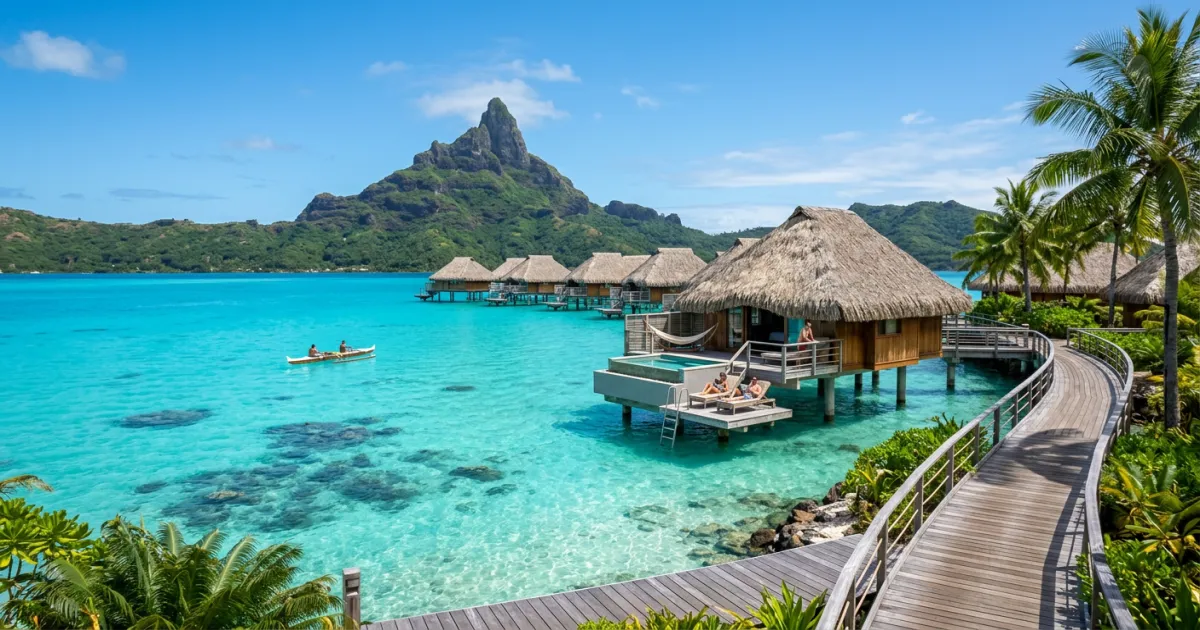
Bora Bora is a volcanic island surrounded by a turquoise lagoon and a barrier reef in French Polynesia. The overwater bungalows, dramatic Mount Otemanu backdrop, and crystal-clear water make it one of the most iconic tropical destinations in the world. While it has a reputation as a luxury-only destination, there are ways to experience Bora Bora at different price points, from family-run pensions to world-class resorts. This guide covers everything you need to plan your trip. For a broader approach, see our step-by-step trip planning guide.
Key Planning Facts
- Location: French Polynesia, South Pacific Ocean, about 160 miles northwest of Tahiti
- Currency: CFP Franc (XPF). Approximately 110 XPF per 1 USD. Euros and U.S. dollars accepted at some resorts
- Language: French and Tahitian (English spoken at resorts and tourist businesses)
- Visa for U.S. citizens: Not required for stays up to 90 days within any 6-month period. Valid passport and return ticket required
- Best months to visit: May to October (dry season, cooler temperatures)
- Average daily budget: $200 to $1,000+ per person (Bora Bora is very expensive)
- Time zone: Tahiti Time (TAHT, UTC-10)
- Getting there: Fly to Tahiti (PPT) from Los Angeles, San Francisco, or Auckland. Then a 50-minute domestic flight to Bora Bora (BOB) on Air Tahiti
- Island size: About 12 square miles (small, the main island can be circled by car in about 1 hour)
Best Time to Visit Bora Bora
Dry Season (May to October)
The best weather. Sunny, lower humidity, cooler temperatures (24 to 28 degrees Celsius, or 75 to 82 degrees Fahrenheit), and the calmest lagoon conditions for snorkeling and diving. Visibility in the lagoon can reach 40 meters. This is peak season with the highest prices and most visitors. July and August are the busiest months.
Wet Season (November to April)
Warmer (28 to 32 degrees Celsius) and more humid with occasional rain showers (usually short bursts, not all-day rain). Lower prices (November and April are the cheapest months), fewer tourists, and still beautiful weather between rain. Water temperature is warmer for swimming. Cyclone risk exists but is low for any specific trip.
How Long to Spend
3 to 5 nights is typical. Four nights is the sweet spot: enough time to enjoy the resort, do a lagoon tour, snorkel, and explore the island. Bora Bora is small and activity-focused rather than destination-diverse, so longer stays are about relaxation rather than new sights. Many travelers combine Bora Bora with Moorea (3 nights) and Tahiti (1 to 2 nights) for a 10 to 14 day French Polynesia trip.
Budget and Costs
Bora Bora is one of the most expensive destinations in the world. Everything from accommodation to food to activities carries a premium due to the remote location and imported goods.
Daily Budget Ranges
- Budget (pension stay): $150 to $300 per person per day. Family-run pensions on the main island ($60 to $130 per night, often with breakfast), local restaurants, self-guided snorkeling from the beach
- Mid-range (resort): $500 to $800 per person per day. Mid-tier resort ($400 to $800 per night), resort restaurants, lagoon tours
- Luxury (overwater bungalow): $800 to $2,000+ per person per day. Five-star resorts ($800 to $3,000+ per night), overwater bungalows with glass floors, private dining, spa, premium excursions
Key Costs
- Overwater bungalow: $800 to $3,000+ per night at luxury resorts (Four Seasons, St. Regis, Conrad). The iconic Bora Bora experience
- Pension (guesthouse): $60 to $130 per night. Simple but comfortable rooms on the main island. Often include breakfast. The budget-friendly alternative
- Lagoon tour: $80 to $150 per person (half day). Includes snorkeling with sharks and rays, visit to a motu (small island), and a barbecue lunch. The most popular excursion
- Meals: Restaurant dinner: $40 to $80 per person. Pizza or casual food: $20 to $30. Resort restaurants: $60 to $150+. Groceries are expensive (most food is imported)
- Flights: Los Angeles to Tahiti: $800 to $1,400 round trip. Tahiti to Bora Bora (Air Tahiti): $200 to $350 round trip
- Scuba diving: $80 to $120 per dive. Sharks, rays, and coral gardens in the lagoon
Use our free travel budget template to plan your Bora Bora expenses.
Getting There
Step 1: Fly to Tahiti (Papeete)
Faa’a International Airport (PPT) in Papeete, Tahiti is the gateway to French Polynesia. Air Tahiti Nui flies direct from Los Angeles (about 8 hours). French Bee flies from San Francisco. Air New Zealand connects from Auckland. Most flights arrive late at night; plan one night in Tahiti.
Step 2: Fly to Bora Bora
Air Tahiti operates domestic flights from Papeete to Bora Bora Airport (BOB), about 50 minutes. Multiple flights daily. Book domestic flights early as they fill up.
Step 3: Airport Transfer
Bora Bora’s airport is on a motu (small island) in the lagoon. Your resort or pension arranges a boat transfer from the airport to the main island or directly to the resort. Most resorts include airport boat transfers.
Where to Stay
Overwater Bungalows (Resorts)
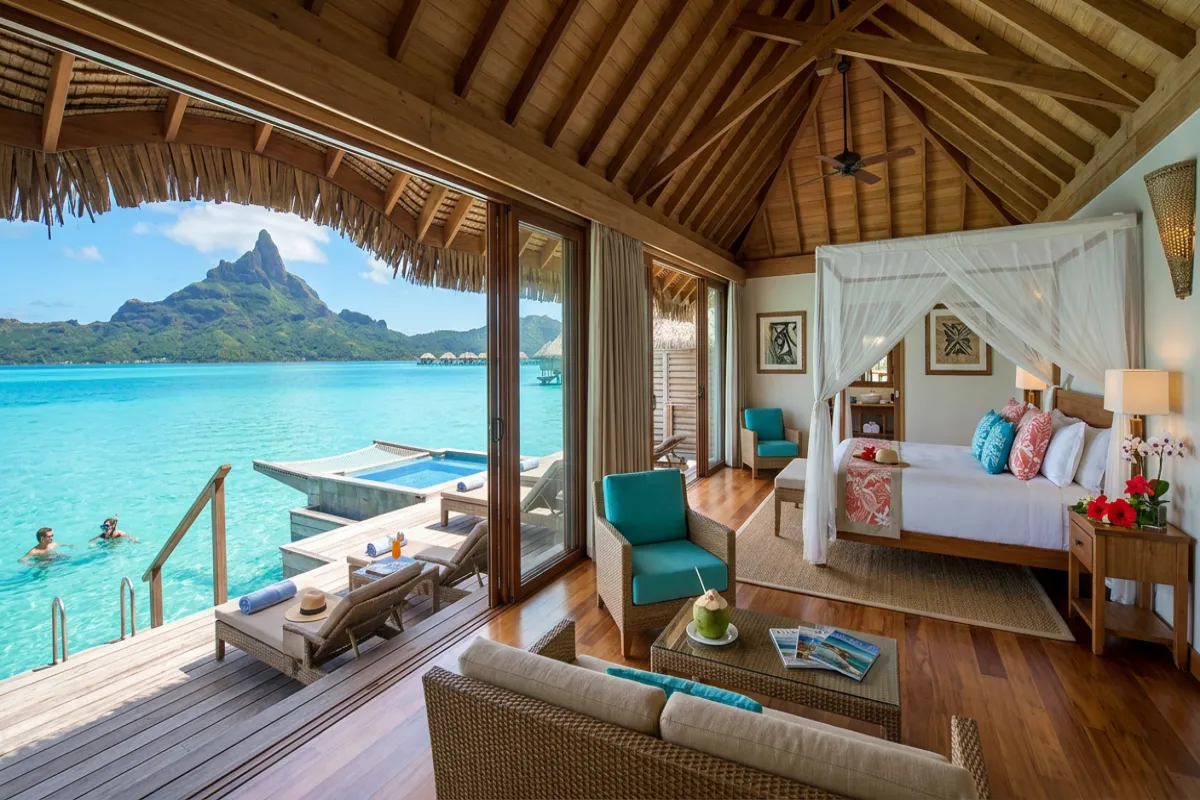
The iconic Bora Bora experience. Glass floor panels for watching fish below, direct lagoon access by ladder, private decks over the water. Eight resorts offer overwater bungalows at prices from $800 to $3,000+ per night. The Four Seasons, St. Regis, Conrad, and InterContinental are the most famous. Book 3 to 6 months ahead for peak season.
Beach Bungalows and Garden Rooms (Resorts)
Resorts also offer beachside and garden rooms at lower prices ($300 to $600 per night). Same resort amenities and lagoon access without the overwater premium.
Pensions (Main Island)
Family-run guesthouses on the main island of Bora Bora. Simple, clean rooms from $60 to $130 per night. Many include breakfast. Some have lagoon-front locations. This is how locals live and the most authentic (and affordable) way to experience the island.
Must-See Experiences
Lagoon Tour
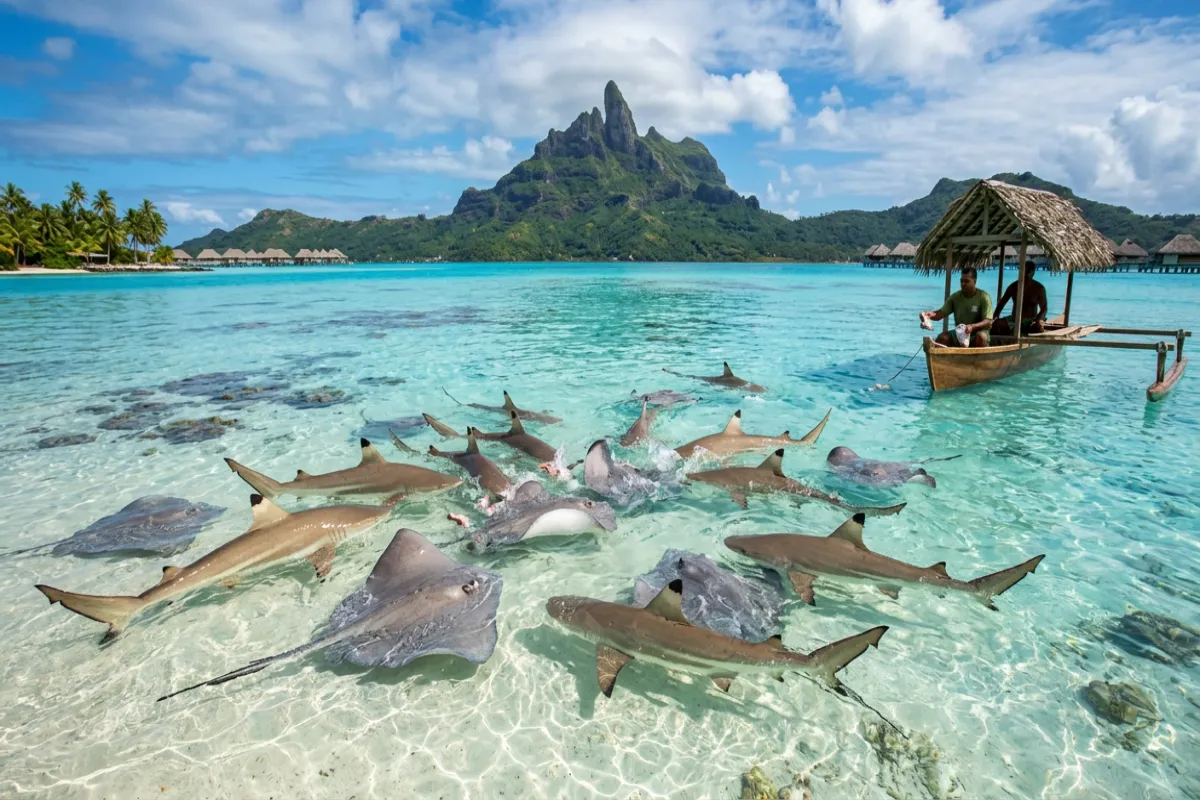
The essential Bora Bora experience. A half-day boat tour of the lagoon includes snorkeling with blacktip reef sharks and stingrays (in shallow, safe water), visiting a coral garden, and a motu (small island) barbecue lunch. $80 to $150 per person. Book through your resort or pension.
Mount Otemanu
The 727-meter volcanic peak that dominates the Bora Bora skyline. You cannot summit Otemanu (it is too steep and crumbly at the top), but guided hikes go partway up for lagoon views. The best views of Otemanu are from the water or from the resort motus.
Snorkeling
The lagoon’s shallow, warm water is perfect for snorkeling. Coral gardens are accessible from many resort beaches. Blacktip reef sharks, stingrays, tropical fish, and sea turtles are common. Many resorts provide complimentary snorkel gear.
Jet Ski Tour
Circle the island by jet ski for panoramic views of Mount Otemanu, the lagoon, and the surrounding motus. Tours cost $150 to $250 for 1 to 2 hours. A thrilling way to see the island.
Sunset Cruise
A catamaran or outrigger canoe cruise at sunset with drinks and appetizers. Watch the sky turn pink and orange behind Mount Otemanu. Most resorts offer sunset excursions ($50 to $100 per person).
Matira Beach
The only public beach on Bora Bora. White sand, shallow turquoise water, and the best sunset views on the island. Free. The southern tip of the main island.
Food and Dining
- Poisson cru: French Polynesia’s national dish. Raw tuna marinated in lime juice and coconut milk with vegetables. Available everywhere from pensions to five-star resorts
- French-Polynesian fusion: French cooking techniques with local ingredients: fresh tuna, mahi-mahi, lobster, vanilla, and tropical fruits
- Resort dining: Multi-course dinners, overwater restaurants, and private beach dining. Beautiful but expensive ($60 to $150+ per person)
- Roulottes: Food trucks at Vaitape (the main town). Crepes, poisson cru, grilled chicken, and burgers for $10 to $20. The best budget option on the island
- Tahitian vanilla: Tahitian vanilla is world-famous. Ice cream, desserts, and even cocktails feature local vanilla. Buy vanilla beans or extract as a souvenir
Tipping: Not customary in French Polynesia. Service charges are not added. Tipping is appreciated for exceptional service but not expected.
Safety and Practical Tips
- Safety: Bora Bora is very safe. Crime is virtually nonexistent. The biggest risks are sunburn and coral cuts while snorkeling
- Sun: Equatorial-strength sun. Wear reef-safe sunscreen (SPF 50+), a hat, and rash guard for snorkeling. The water reflection intensifies UV exposure
- Coral protection: Do not touch or stand on coral. Reef-safe sunscreen is essential to protect the lagoon ecosystem
- Cost preparation: Bora Bora is expensive. Budget accordingly. Consider half-board or full-board meal plans at resorts to manage food costs. Buy groceries at the small supermarket in Vaitape for pension stays
- Cash: ATMs are available in Vaitape. Some smaller businesses prefer cash (XPF). Resorts accept credit cards
- Mosquitoes: Present year-round. Bring repellent. Dengue exists in French Polynesia; take precautions
- Electricity: 220V with Type C/E plugs (European-style). Bring an adapter from the U.S.
Sample 5-Day Bora Bora Itinerary
Day 1: Arrival
Fly from Tahiti to Bora Bora. Boat transfer to your resort or pension. Settle in. Afternoon: snorkel from the beach or explore your resort. Sunset from the deck or Matira Beach.
Day 2: Lagoon Tour
Half-day lagoon tour: snorkel with sharks and rays, visit coral gardens, barbecue lunch on a motu. Afternoon: relax at the resort pool or beach. Evening: dinner overlooking the lagoon.
Day 3: Island Exploration
Rent a bicycle or car and circle the main island (about 20 miles). Stop in Vaitape (the main town), visit local art galleries, and explore the WWII gun emplacements. Lunch at a roulotte (food truck). Afternoon: kayak or paddleboard in the lagoon.
Day 4: Water Activities
Morning: scuba dive or jet ski tour. Afternoon: Matira Beach for swimming and sunbathing. Evening: sunset cruise with drinks and appetizers.
Day 5: Final Morning and Departure
Morning: last swim in the lagoon. Breakfast at the resort. Boat transfer to the airport. Fly to Tahiti for connection home or continue to Moorea.
Planning Your Bora Bora Trip
Start building your custom itinerary with our free AI trip planner.
For more trip planning resources:
Frequently Asked Questions
How do I get to Bora Bora?
Fly to Tahiti (Papeete) from Los Angeles or San Francisco (about 8 hours). Then a 50-minute domestic flight to Bora Bora on Air Tahiti. No direct international flights to Bora Bora.
Do I need a visa?
No. U.S. citizens can visit French Polynesia for up to 90 days without a visa. Valid passport and return ticket required.
How expensive is Bora Bora?
Very expensive. Budget option (pension): $150 to $300 per day. Mid-range resort: $500 to $800. Overwater bungalow: $800 to $2,000+. Everything is imported, making food and activities costly.
Can I visit Bora Bora on a budget?
Yes, with pensions (family-run guesthouses, $60 to $130 per night), food trucks in Vaitape ($10 to $20 per meal), and self-guided snorkeling. It will not be cheap, but you can experience Bora Bora for $150 to $300 per day instead of $1,000+.
What is the best time to visit?
May to October (dry season). Best weather, lower humidity, calmest lagoon. July and August busiest. November and April are the cheapest months with decent weather.
How long should I stay?
3 to 5 nights. Four nights is the sweet spot. Combine with Moorea (3 nights) and Tahiti (1 to 2 nights) for a full French Polynesia trip.
Are the overwater bungalows worth it?
If budget allows, yes. Glass floor panels, direct lagoon access, and waking up over turquoise water is the quintessential Bora Bora experience. If budget is tight, a pension with lagoon views still provides a magical experience.
Is the snorkeling good?
Excellent. Blacktip reef sharks, stingrays, sea turtles, and tropical fish in warm, clear water. Many spots accessible from shore. Lagoon tours provide the best snorkeling.
Is Bora Bora safe?
Very safe. Virtually no crime. Biggest risks are sunburn and coral cuts. Take standard ocean precautions.
What should I pack?
Light resort clothing, swimsuits, reef-safe sunscreen (SPF 50+), rash guard for snorkeling, sunglasses, hat, insect repellent, European power adapter (220V, Type C/E), waterproof camera or phone case.