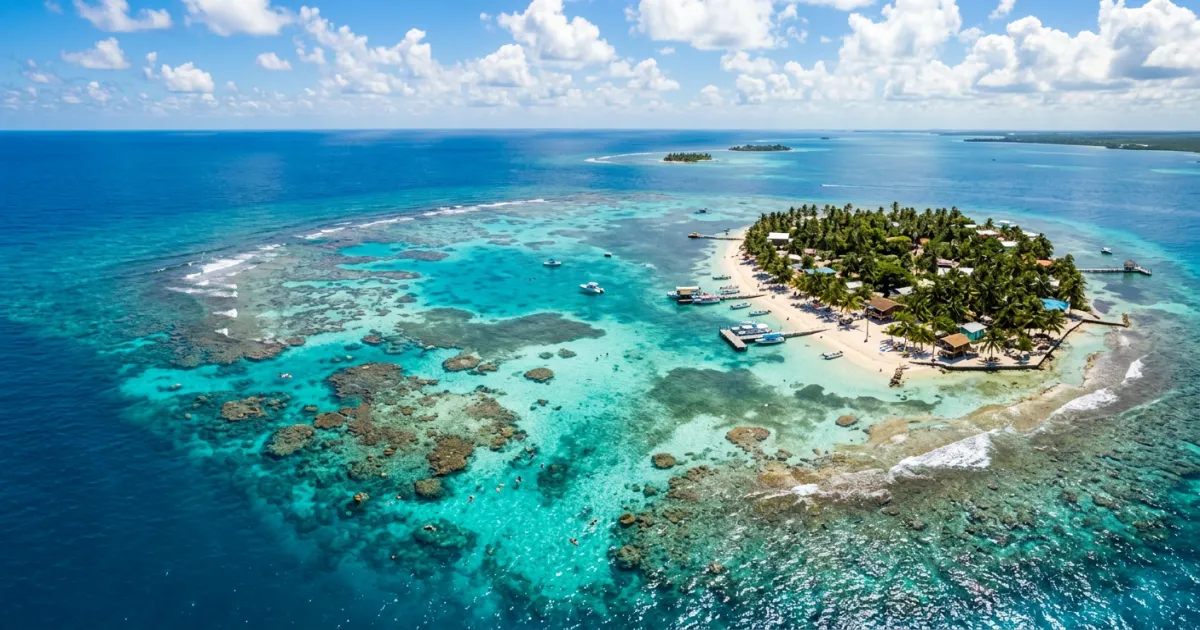
Belize is one of the most accessible tropical destinations from the United States, offering a rare combination of the world’s second-largest barrier reef, ancient Maya ruins hidden in jungle, cave systems you can kayak through, and laid-back Caribbean islands where the national motto is “Go Slow.” It is the only English-speaking country in Central America, making it easy to navigate. This guide covers everything you need to plan your trip. For a broader framework, see our step-by-step trip planning guide.
Key Planning Facts
- Location: Central America, Caribbean coast, bordered by Mexico and Guatemala
- Currency: Belize Dollar (BZD), pegged at 2 BZD = 1 USD. U.S. dollars are accepted everywhere
- Language: English (official), Kriol, Spanish also widely spoken
- Visa for U.S. citizens: Not required for stays up to 30 days. Valid passport required. Extensions available in one-month increments. Proof of sufficient funds ($75 USD/day) and return ticket required
- Best months to visit: December to May (dry season), with March and April being ideal
- Average daily budget: $80 to $200 per person depending on travel style
- Time zone: Central Standard Time (CST, UTC-6, no daylight saving)
- Flight time from U.S.: 2 to 4 hours from southern U.S. cities; 4 to 5 hours from the northeast
- Exit fee: Approximately $40 USD (may be included in airline ticket, check before travel)
- Country size: About the size of Massachusetts, the smallest country in Central America by mainland area
Best Time to Visit Belize
Dry Season (December to May)
The best time to visit. Sunny skies, low humidity, and temperatures around 75 to 85 degrees Fahrenheit. This is peak tourist season, so prices are 20 to 30 percent higher and popular hotels book up early. March and April are particularly pleasant, with the clearest skies. Avoid Easter and Holy Week if you want to dodge crowds.
Wet/Green Season (June to November)
Rain falls in short afternoon bursts rather than all-day downpours. Temperatures are warmer (80 to 90 degrees Fahrenheit) and humidity is higher. Hotel prices drop significantly, often 30 to 40 percent below dry season rates. This is a good time for budget travelers. Hurricane season runs June through November, with peak risk August to October.
Best Time for Specific Activities
- Snorkeling and diving: April to June for the clearest visibility
- Whale shark season: March to June at Gladden Spit
- Maya ruins: February to April (dry, cooler, accessible trails)
- Birdwatching: November to May (migratory species present)
How Long to Spend in Belize
A 7-day trip is the sweet spot for a first visit: 3 to 4 days on the islands (Caye Caulker or Ambergris Caye) for reef snorkeling and relaxation, plus 3 to 4 days inland for ruins, caves, and jungle. 10 to 14 days lets you explore more of the coast (Placencia, Hopkins) and deeper inland (Mountain Pine Ridge, Caracol).
Budget and Costs
Belize is the most expensive country in Central America, but still affordable by U.S. standards. The cayes (islands) are pricier than the mainland.
Daily Budget Ranges
- Budget: $55 to $90 per person per day. Hostels or budget guesthouses ($25 to $50 per night), local rice-and-beans meals, water taxis, public buses
- Mid-range: $130 to $220 per person per day. Boutique hotels ($80 to $130 per night), restaurant meals, guided tours, domestic flights
- Luxury: $300 and up per person per day. Eco-lodges and resorts ($200 to $400 per night), private tours, diving packages
Key Costs
- Water taxi (Belize City to Caye Caulker): About $16 USD one way (45 minutes)
- Water taxi (Belize City to Ambergris Caye): About $16 to $20 USD one way (75 minutes)
- Domestic flight: $55 to $90 USD one way between Belize City and islands or other destinations. Maya Island Air and Tropic Air operate small planes
- Meals: Local rice-and-beans plate: $5 to $8 USD. Fry jacks: $2 to $4. Tourist restaurant dinner: $15 to $30. Fresh lobster dinner (in season, June 15 to Feb 14): $20 to $40
- Snorkeling tour: $35 to $70 USD per person (half day). Includes Hol Chan and Shark Ray Alley
- Cave tubing: $50 to $80 USD per person with guide
- Maya ruin entrance: $10 to $25 USD per site
Use our free travel budget template to plan your Belize expenses.
Getting There and Getting Around
Flying In
Philip Goldson International Airport (BZE) near Belize City is the main international airport. Direct flights operate from Houston, Dallas, Miami, Fort Lauderdale, Denver, Los Angeles, and several other U.S. cities. Flight time is 2 to 5 hours depending on your origin.
Getting to the Islands
From Belize City, take a water taxi (Caye Caulker Water Taxi or San Pedro Belize Express) or a short domestic flight to the cayes. Water taxis depart from the Marine Terminal in Belize City. Domestic flights from the Belize City Municipal Airport (TZA) are faster and offer aerial views of the reef.
Getting Around the Mainland
Buses connect major towns along the main highways (Belize City to San Ignacio, Belmopan, Orange Walk, Dangriga, Placencia). Buses are inexpensive ($2 to $10 USD for most routes) but slow. Rental cars are useful for the mainland, particularly for reaching ruins and the Mountain Pine Ridge area. Roads vary from paved highways to dirt tracks.
Island Transport
Caye Caulker is small enough to walk or rent a bicycle. Ambergris Caye (San Pedro) is larger; golf carts are the primary mode of transport and can be rented for about $60 to $80 USD per day.
Where to Stay
Caye Caulker
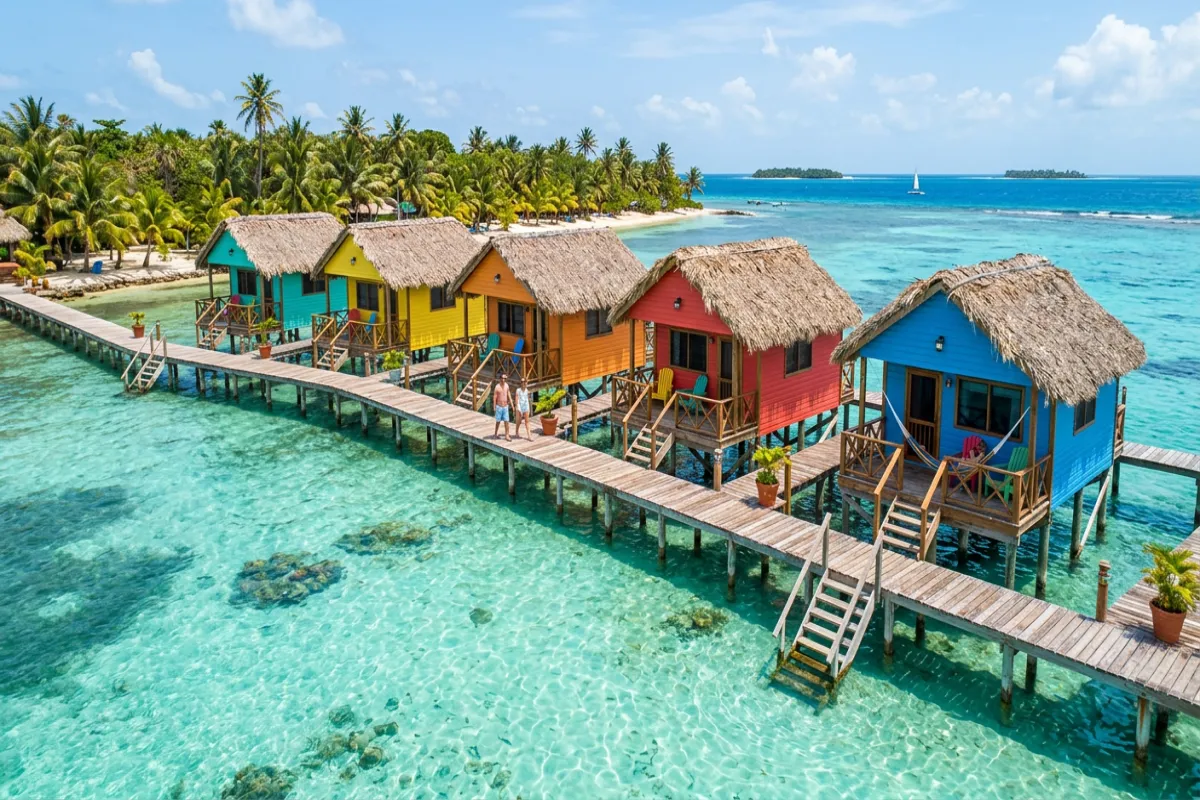
The backpacker-friendly island with a “Go Slow” attitude. Small guesthouses, hostels, and budget hotels line the sandy streets. The Split is the social hub, a channel between the north and south sides of the island where people swim, sun, and socialize. No cars on the island.
Ambergris Caye (San Pedro)
The largest caye and the most developed. More resort options, upscale restaurants, and family-friendly accommodation. The town of San Pedro has a lively waterfront. Better diving and snorkeling access to the barrier reef. Golf carts replace cars.
San Ignacio
The gateway to Belize’s interior. Base for visiting Xunantunich and Caracol ruins, cave tubing at Caves Branch, and the Mountain Pine Ridge Forest Reserve. Budget-friendly with hostels, guesthouses, and eco-lodges in the surrounding jungle.
Placencia
A quiet peninsula on the southern coast. Long sandy beach (rare in Belize, where most beaches are narrow), waterfront restaurants, and access to whale shark diving at Gladden Spit in season. More relaxed than the northern cayes.
Hopkins
A small Garifuna village on the coast south of Dangriga. Authentic cultural experiences, drumming, and cooking classes. More affordable than Placencia. Increasingly popular with travelers seeking an off-the-beaten-path experience.
Must-See Attractions and Experiences
Belize Barrier Reef
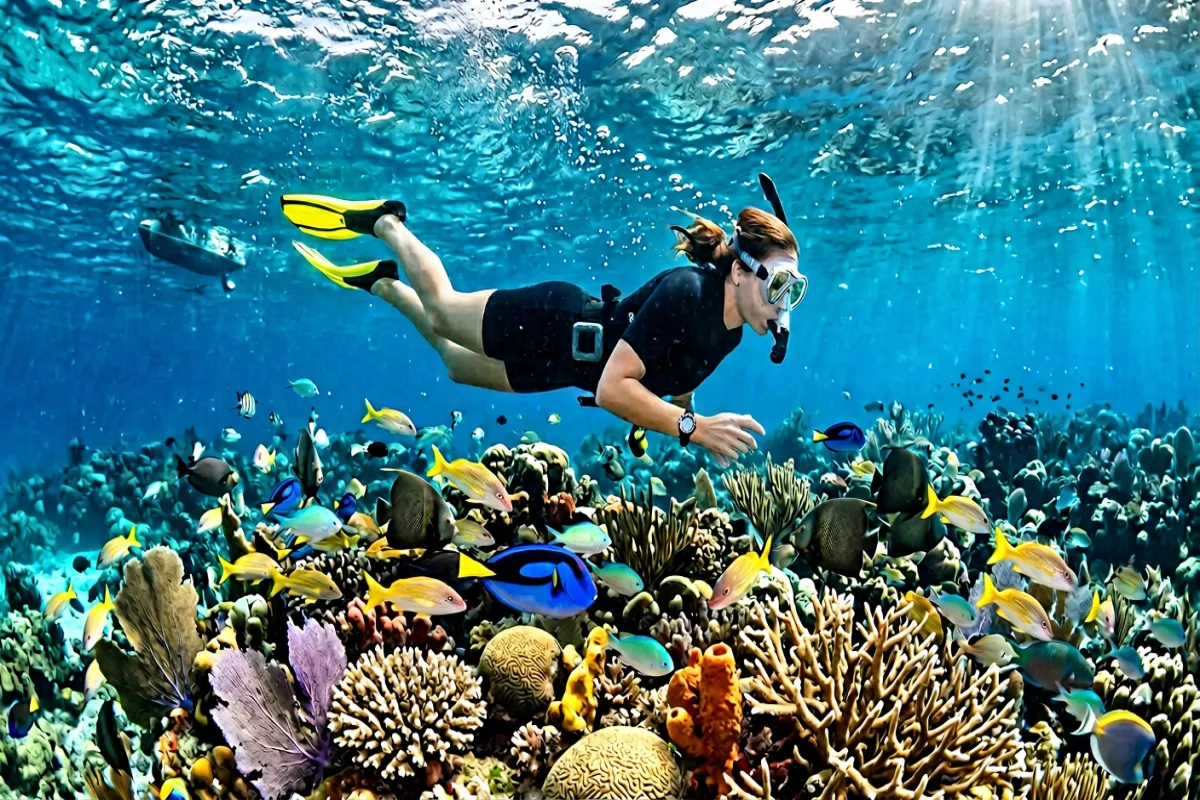
The second-largest barrier reef in the world, stretching 190 miles along the coast. A UNESCO World Heritage Site. Snorkeling and diving are world-class. Hol Chan Marine Reserve and Shark Ray Alley (accessible from both Caye Caulker and Ambergris Caye) are the most popular snorkeling spots. Expect to see nurse sharks, rays, sea turtles, and tropical fish in crystal-clear water.
The Great Blue Hole
A giant marine sinkhole over 300 meters wide and 125 meters deep, visible from space. It is primarily a diving site (advanced certification recommended) but scenic flights over the Blue Hole offer spectacular aerial views. Located about 60 miles offshore from Belize City.
Xunantunich Maya Ruins
One of the most accessible Maya sites, about 10 minutes from San Ignacio. Cross the Mopan River on a hand-cranked ferry, then climb El Castillo pyramid (130 feet tall) for panoramic views across the jungle into Guatemala. Entry: about $10 USD.
Caracol
The largest Maya site in Belize, deep in the Chiquibul Forest. The Caana pyramid (Sky Palace) stands 141 feet tall and was the tallest structure in Belize until modern times. Requires a 2 to 3 hour drive on rough roads from San Ignacio, best visited with a guide.
ATM Cave (Actun Tunichil Muknal)
One of the most unique experiences in Central America. Wade and swim through a cave to find ancient Maya pottery and human remains, including the “Crystal Maiden” skeleton. A licensed guide is required. Cameras are not permitted inside since 2012 (to protect the artifacts). Moderate physical fitness required.
Cave Tubing at Caves Branch
Float through underground cave systems on an inner tube, headlamp on, through a river that runs through ancient Maya ceremonial caves. About 45 minutes from Belize City. A guided tour is required ($50 to $80 USD).
Lamanai Ruins
Accessible by a boat ride up the New River from Orange Walk, passing crocodiles, howler monkeys, and tropical birds along the way. The journey is as memorable as the ruins themselves. The Mask Temple and High Temple are highlights.
Food and Dining
Belizean food is a mix of Caribbean, Maya, Mestizo, and Garifuna influences. Simple, flavorful, and often affordable.
- Rice and beans: The national dish. Red kidney beans cooked in coconut milk, served with stewed chicken, pork, or fish. Available everywhere for $5 to $10 USD
- Fry jacks: Deep-fried dough served for breakfast with beans, cheese, eggs, or jam. A Belizean staple for $2 to $4
- Lobster: In season from June 15 to February 14. Fresh grilled lobster is available at restaurants across the cayes for $20 to $40. Lobster Fest in June celebrates the season opening
- Conch: Served as ceviche, fritters, or grilled. A Caribbean favorite
- Hudut: A Garifuna dish of mashed plantains in coconut fish broth. Best found in Hopkins and Dangriga
- Marie Sharp’s hot sauce: Belize’s famous habanero hot sauce. Available at every table in the country. Bring a bottle home
- Belikin Beer: The national beer, brewed locally. Available everywhere
Tipping: 10 to 15 percent at restaurants if service charge is not included. Tip tour guides $10 to $20 USD per person for a half-day tour.
Safety and Practical Tips
- Safety: Tourist areas (cayes, San Ignacio, Placencia, Hopkins) are generally safe. Avoid the south side of Belize City (south of Haulover Creek). Use registered taxis or hotel-arranged transport, especially at night. Keep valuables out of sight
- Water: Drink bottled water. Tap water is safe in some areas (Belize City, San Pedro) but not consistently throughout the country
- Reef-safe sunscreen: Belize requires reef-safe sunscreen at marine parks and reserves. Avoid products containing oxybenzone or octinoxate. Buy reef-safe sunscreen before your trip
- Mosquitoes: Common, especially inland and at dawn and dusk. Bring DEET-based insect repellent. Dengue and Zika are present in Belize
- Hurricane season: June through November, peak August to October. Monitor weather forecasts for late-season trips
- Cash: U.S. dollars are accepted everywhere at a 2:1 rate (2 BZD = 1 USD). ATMs dispense BZD. Credit cards are accepted at most hotels and tourist businesses but not at smaller local restaurants and shops
- Licensed tour guides: Always use licensed guides for cave tours, jungle hikes, and reef excursions. This is both a safety and a legal requirement for many activities
- Exit fee: $40 USD departure tax. Check with your airline as it may be included in your ticket price
Sample 7-Day Belize Itinerary
Days 1 to 3: Caye Caulker or Ambergris Caye
Fly into Belize City (BZE). Take the water taxi to Caye Caulker (45 minutes) or Ambergris Caye (75 minutes). Day 1: settle in, swim at the Split, sunset drinks. Day 2: full-day snorkeling tour to Hol Chan Marine Reserve and Shark Ray Alley. Day 3: rent a kayak, visit the north side of the island, relax on the beach.
Day 4: Travel to San Ignacio
Water taxi back to Belize City. Bus or shuttle to San Ignacio (about 2.5 hours). Check into a guesthouse or jungle lodge. Explore the town’s Saturday market (if timing works) or walk to Cahal Pech ruins above town.
Day 5: Xunantunich and ATM Cave
Morning: visit Xunantunich ruins (hand-cranked ferry, climb El Castillo). Afternoon: ATM Cave tour (full half-day, moderate physical effort). Return to San Ignacio exhausted and satisfied.
Day 6: Cave Tubing or Caracol
Option A: Cave tubing at Caves Branch (half day). Afternoon: zip-lining or jungle walk. Option B: Full-day trip to Caracol ruins deep in the jungle (long drive, best with a guide and 4WD vehicle).
Day 7: Return and Departure
Morning: one more swim in the river or a short hike. Bus or shuttle back to Belize City or airport for departure. If time allows, stop at the Belize Zoo (the only zoo in the world that houses only native animals).
Planning Your Belize Trip
Start building your custom Belize itinerary with our free AI trip planner. Add destinations, set dates, and organize your days in minutes.
For more trip planning resources:
Frequently Asked Questions
Do U.S. citizens need a visa for Belize?
No. U.S. citizens can enter Belize without a visa for stays up to 30 days. You need a valid passport, proof of sufficient funds ($75 USD per day), and a return or onward ticket. Extensions are available in one-month increments from immigration offices in Belize.
What is the best time to visit Belize?
December to May (dry season) for the best weather. March and April are ideal. April to June offers the clearest water for snorkeling and diving. The wet season (June to November) has lower prices and fewer crowds but brings afternoon rain showers and hurricane risk.
How expensive is Belize?
The most expensive country in Central America, but still affordable by U.S. standards. Budget travelers can manage on $55 to $90 per day. Mid-range: $130 to $220 per day. The cayes (islands) are 20 to 40 percent more expensive than the mainland.
Is Belize safe for tourists?
Tourist areas (cayes, San Ignacio, Placencia, Hopkins) are generally safe. Avoid the south side of Belize City. Use registered taxis, keep valuables out of sight, and book adventure activities with licensed guides.
Caye Caulker or Ambergris Caye?
Caye Caulker is smaller, cheaper, more backpacker-friendly, and car-free. Ambergris Caye (San Pedro) is larger, more developed, with more resort options and restaurants. Both offer excellent reef access. Choose Caye Caulker for simplicity, Ambergris for comfort.
Can I use U.S. dollars in Belize?
Yes. U.S. dollars are accepted everywhere at a 2:1 exchange rate (2 BZD = 1 USD). ATMs dispense Belize dollars. Credit cards work at most hotels and tourist businesses but not always at small local shops.
What is the ATM Cave?
Actun Tunichil Muknal (ATM) is a cave containing ancient Maya artifacts and human remains. You wade and swim through the cave to reach ceremonial chambers. A licensed guide is required. No cameras allowed inside. It is one of the most unique experiences in Central America.
Do I need a rental car in Belize?
Not for the cayes (use water taxis) or Belize City. A car is useful for exploring the mainland interior, especially the Mountain Pine Ridge area and remote ruins. Roads vary from paved to dirt. Public buses cover main routes but are slow.
Is the water safe to drink?
Stick with bottled water to be safe. Tap water quality varies across the country. Bottled water is inexpensive and widely available.
What should I pack for Belize?
Light, breathable clothing. Swimsuit and water shoes. Reef-safe sunscreen (required at marine parks). DEET insect repellent. A light rain jacket (especially in green season). Sturdy shoes for cave tours and ruins. A dry bag for boat rides.